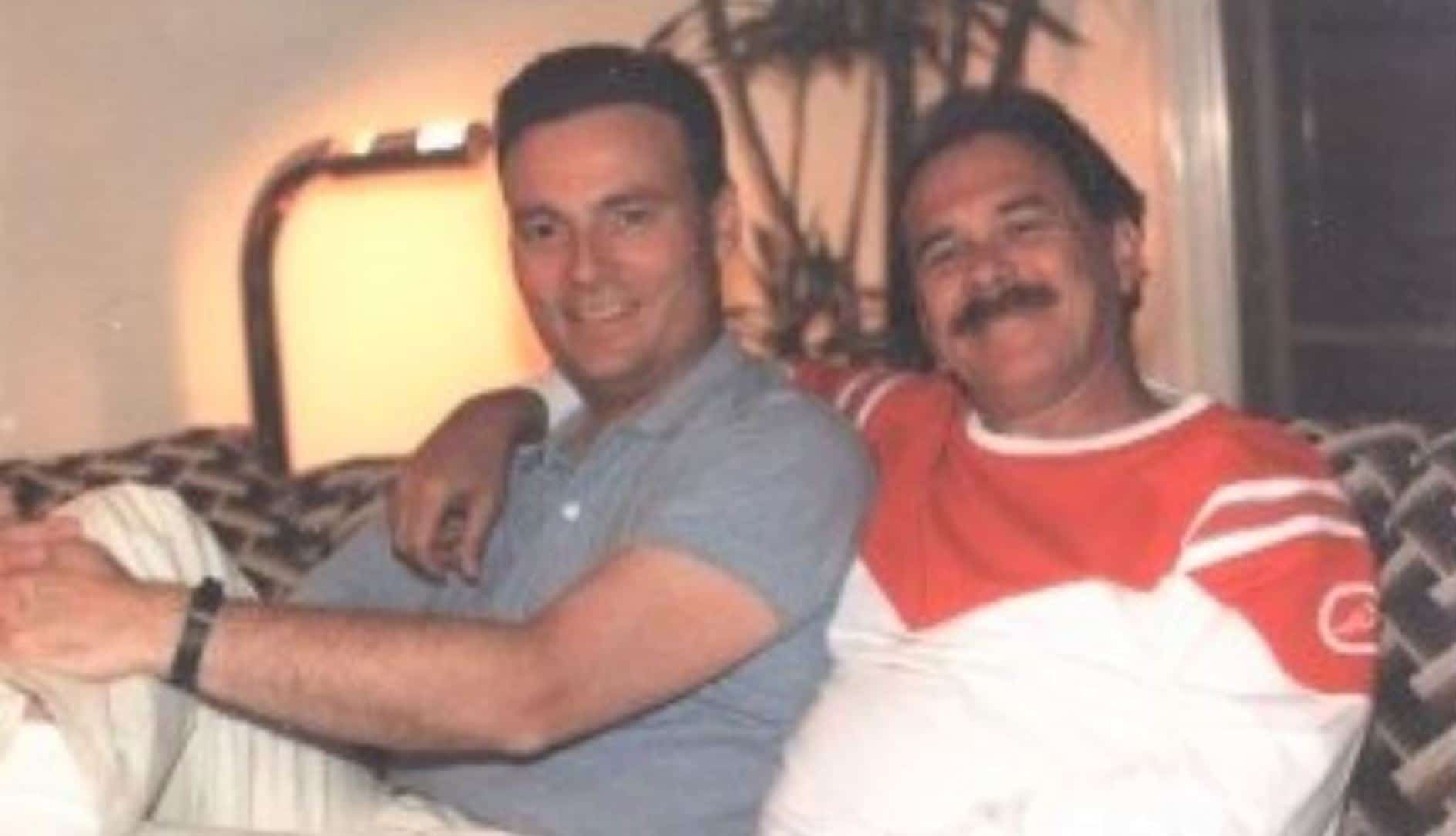
There is so much distance in my mother’s eyes that I fear she may never come close to me again. Circling her stare are wrinkles of pain, betrayal even, and in her hand she holds the watch.
It was December of my senior year of high school, and things had calmed down considerably after my having burst forth from the closet that Fall, wearing go-go boots to school dances and openly flaunting my twenty-something boyfriend. But these were all healthy choices, I told myself.
If there was nothing wrong with being gay, then there should be nothing defiant about letting my family know about it. And my friends. And my teachers. And people at church. Never mind that we lived in Bossier City, Louisiana. Or that it was 1977.
But there was something about that look in my mother’s eyes, in that moment. It took all my arrogance to protect myself from it, to seek refuge from the shocked stare, the battle in her face between heartbreak and fury. She was squeezing tightly to the silver watchband, and her hand shook imperceptibly.
The boyfriend had been my downfall, of course. He was both too old and too immature for me, and Mom knew it. She also knew that spending so much time with him that previous summer wasn’t usual for a 16-year-old. So when she spotted a letter I’d written to him, she figured it would tell her what she wanted to know. She opened it.
It never occurred to me to place blame for that indiscretion. I was relieved when my parents found out, actually, and once that suspense was over I could get on with the business of scandalizing my high school.
There were brief exchanges between us following my big gay reveal, tense moments crowded with frustration and unfocused love. “What’s your problem with it?” I would ask, adorned with multiple pooka shell necklaces or sporting a man-made hickey without shame, “What’s your problem with me being gay?” I possessed more self-righteousness than an HRC dinner.
She would sigh with resignation, hand leaning on the kitchen counter. “Mark, it’s just that I know this won’t be easy. It’s your whole life, and this will just make it difficult.” There were no scripture readings or ignorant signs of homophobia. Just a mother’s perfectly legitimate concern that a child’s life could be tougher.
I didn’t appreciate her enlightenment. I would reply with a teenage shrug, just before some eye rolling and a saunter out of the room that must have made her want to strangle my pretty little gay neck.
As Christmas approached that year, I made it known that there was a gift that would be just swell for a certain high school senior. Something sophisticated, to show his increased maturity.
A watch.
But then, on my birthday two days before Christmas, I walked through the front door prancing like the Queen of Sheba — meaning, more prancing than usual — and on my wrist was a glimmering gold watch, a shiny new gift from my boyfriend. It was not a quality timepiece, not that I knew it, and the gold was destined to fade faster than the relationship. But it looked quite fabulous as I strutted and posed like I had just discovered that I could vogue.
Mother didn’t betray her emotions. She waited. And two days later, wearing a robe and a gold wrist, I opened a Christmas present from Mom and Dad that had been hidden behind the tree and saved for last.
It was a Timex, and it was beautiful. Silver.
There was more than the standard holiday tension as I slipped off my gold watch to try on the Timex. True to form, Mom kept her own counsel, but something told me that I wasn’t simply being presented with an additional watch, but with a choice. And I didn’t want to make it.
All that year I had been trying on a confident young gay identity for size — and that included a boyfriend who had given me what I wanted for Christmas. I valued him and I valued his gift. But family emotions were fairly clear: his gift was a bit much. After all, Mom and Dad could have had the man arrested for taking up with their 16-year-old. Seeing him shower me with jewelry had to push the limits of their patience.
But such concerns were beyond a self centered teen like me. I was convinced that flaunting his gift was about my new-found gay pride, and about respect for my sexuality and all sorts of other lofty, misdirected ideals.
Later that day, after the mountains of wrapping paper had been cleared, Mom and I sat near the tree. “So, this is a bit strange,” she began, as casually as she could muster, “having two watches… what will you do?” She had never had to compete with another gift giver for my gratitude. Someone outside the family. And a man.
“What do you mean by that?” I asked, knowing.
“Maybe you should talk to your friend, and…”
“And what, Mother?” I snapped back, propelled with a little too much righteous indignation. “Look Mom, I have an idea…” I slipped off the Timex and handed it to her. “I think you and Dad should return this. Silver isn’t really my color. You should know that.”
It is then, that moment, which continues to replay in my mental catalogue of regret. I wanted to collect the words from the air and gobble them up, but of course it was too late.
Her face was blank at first, and then a stunned, hurt expression flashed across it that was as heartbreaking to me as it was utterly foreign. She looked like she was the target of some cruel joke. And then suddenly her vulnerability was abolished for her usual calm. Her face made the whole journey in an instant.
I moved to say something more but thought better of it. Instead I reached for the watch in her hands and took it back, my face a silent promise never to give it up again. Mother withdrew without further words.
It was a milestone, a snap of the apron strings, a selfish or brave gesture of independence, depending on your point of view. I can consider whether it was an important step for a gay teen or simply the self-indulgent act of a child, but the debate doesn’t interest me. My minds eye only remembers her face.
Even now, more than thirty years later, I want to take it all back.
Mark
(This posting first apppeared on My Fabulous Disease on December 7, 2010. — Mark)
Our first meeting on-camera was six years ago. The memory of it pains me still, despite my enthusiasm for appearing on national television for any reason whatsoever.
“And how long have you been off drugs?” he asked. The look in his eyes carried a journalist’s skepticism. The intense lights of the CNN studio seemed to brighten at the question.
“Six months,” I answered. The idea of appearing at the anchor desk with Don Lemon was losing its allure. Granted, I wanted to help promote the documentary Meth, and discuss gay men, drug abuse, and my own crystal meth addiction. But the interview had become too real, too well lit, and far too direct for me to escape the truth with my usual manipulations.
“And where are you living now?” Don asked me. I felt flush, reddened by shame and by the pitiful answer I was now obligated to give.
“I live in a halfway house with other men recovering from addiction, Don.”
My mother is watching, I thought. My friends. And people who know me who will be far too polite to ever mention they saw this.
Don Lemon’s news story was insightful and illuminated a very real health threat to gay men. And it featured an actual gay drug addict on camera. A well-spoken one, but an addict just the same.
In the six years since those uncomfortable few minutes, I published a book about living in Los Angeles during the dawn of AIDS. I embraced my HIV status by launching my blog, My Fabulous Disease. And despite relapses and lessons along the way, I have faced my addiction and loosened its grip on my life and productivity.
And so, as fate would have it, I found myself back at Don Lemon’s desk recently, live on the air, to talk about living with HIV and how I was combating stigma with weapons of joy and good humor (pictured above, with video below).
I have no explanation why I should be so lucky as to appear twice on CNN, the second serving to wash away the discomfort of the first. There’s no reason except the unimaginable grace that has carried me through the last six years.
Don’s studio is much larger now, and both his command of the newscast and his popularity have grown accordingly. During the few minutes of commercial break before our segment, he welcomed me to the desk like an old friend.
The lighting was just as intense as my first visit, revealing my bright grin, lined with age and survival and experience. I didn’t complain. I even asked if it could be brighter in the studio. “Madonna lighting, please,” I joked to the crew as I took my seat.
There was no mention of crystal meth. No doubting glances or talk of halfway houses. Instead, Don smiled as he introduced me, assuring his viewers this story about AIDS was a little bit different, and then pronounced me “a trip.” I beamed with pride, more grateful to be there, discussing this topic, than anyone watching could ever know.
I wasn’t the only one who had a newfound lightness of being. Since our first meeting, Don had published Transparent, a book about his life and career that included coming out publicly as a gay man. He’s familiar with being an “other,” and with fighting shame in order to reveal who you are. We had both found a path to freedom paved with rigorous honesty.
We talked about HIV stigma and Madonna lighting. He shared a story of seeing an AIDS patient on a New York City street years ago. I interjected my new favorite topic, the injustice of HIV criminalization. We were two very different men comfortable in our own skin, who refused to allow shame a place at the table.
At the end of our interview I began to shake his hand and something remarkable happened. Don stood and reached out for a hug. It was surprising for an anchor, maybe even awkward for a brief second, and then the sweetness of the gesture won out as we embraced.
The humanity – and perhaps even bravery – of his simple act wasn’t lost on viewers, many of whom wrote to tell me how moving it was.
But for me, it was something more. Don Lemon, who remembered our first visit and never mentioned the circumstances, who knew this interview meant growth for me, a sort of redemption perhaps, and who even knew a little about overcoming shame himself, reached out in a gesture of support.
Richard is handsome and adorably shy. His sister began emailing me a few months ago, wondering if her brother might enjoy the HIV Cruise Retreat, because he isn’t able to disclose his status comfortably in his fairly small town.
On the last night of the cruise I gave him an award for “Sweetest Backstory,” explaining to the crowd that his cruise ticket was a Christmas gift from his sister, who clearly loves him very much (the awards are really just a silly way to acknowledge various people on the ship). He accepted the award with tears streaming down his face, while dozens upon dozens of new friends applauded heartily.
It is that fellowship, that embrace of our lives and all that we are, that best describes the week-long event on the high seas.
For seven days, I lived in a state of enhanced gratitude. For my life, my health, and for the people who organize the retreat.
Sailing from Ft Lauderdale to various islands of the Caribbean, the Cruise Retreat included more than 200 gay men, women and our supporters. We feasted on non-stop food and the loving embrace of friends old and new.
Along the way, there were games, shore excursions and even budding romances. The protective walls that often surround those of us living with HIV came crumbling down, replaced with new relationships, email addresses and phone numbers. By the time we docked back in Ft Lauderdale, hugs were long and new confidants had been established.
I don’t expect that everyone has the ability to afford the trip, but the message of the event – reach out for support and friendships where ever you might find them – echoes in my mind and heart today.
Thanks for watching, and please be well.
Mark
PLUS…
The amazingly prolific HIV advocate and criminalization expert Edwin Bernard has announced the launch of the new web site for the HIV Justice Network, and it is the most comprehensive internet site devoted to the global issue of criminalization. Please join their site for updates or “like” their Facebook page. If you have any doubt that criminalization is the defining HIV issue of our time, then please read (and share!) the recent Huffington Post article by Sean Strub (founder of The SERO Project, which also has a Facebook page). Sean succinctly lays out the insanity of non-disclosure laws and why they should make us all nervous (and how we can participate in advocacy efforts).
Recently I got a pop-up message on Facebook from a name I didn’t recognize. “Hi Mark,” it said. “We went to high school together in Bossier City, Louisiana, and I remember you very distinctly.”
“Uh oh,” I replied. Statements like that always make me nervous. Whatever popularity I had in high school evaporated when I revealed in my senior year that I had a boyfriend. Only my defiantly gay posturing kept the bullies at bay; they didn’t know what the hell to do with me.
“It was apparent you were gay,” the messenger went on, instantly winning Facebook’s Biggest Understatement of 2012, “and that helped me deal with my own sexuality. So I wanted to thank you. You helped me and you didn’t even know it.”
I melted. More than thirty years later, someone I couldn’t pick out of a lineup thanked me for making his life’s journey a little easier. Because I chose to reveal, without shame, a basic fact about myself.
There are rewards for revealing our truths, my friends. They come in the form of instant messages decades after the fact, or can be seen in the face of someone to whom you have just revealed something intimate and real about yourself.
And sometimes, as ridiculous as it feels for me to mention, Instinct Magazine names you as one of their “Leading Men of 2012.” The acknowledgement has floored me, and did something else that’s rare for a self-obsessed, anxiety-ridden man such as myself: it humbled me. Because this recognition is really about all of us who are living with HIV and doing it openly.
There are examples of us everywhere. People like Nick Rhoades and Robert Suttle, who recently testified before the Presidential AIDS Advisory Council and shared their stories of being sent to jail for not disclosing their HIV status (check out the links of their moving testimony). They exhibit a courage that I doubt I could muster. Robert Breining has devoted his time and modest livelihood to creating and maintaining POZIAM, an online poz community. And then there are scores of people with HIV, perhaps like you, that speak out in their communities, write blogs, give interviews, and otherwise speak their truth in ways that affect more people than they can ever know.
If you have the privilege and ability to share your story of life with HIV – or as a gay or lesbian person, or as someone living with disability or hardship – I urge you to do it. The rewards may not be immediate but are nevertheless held in life’s cache.
Until the day, when you least expect it, that an instant message on Facebook appears.
Mark
ALSO…
If you are living with HIV and in recovery from drug or alcohol addiction, I’d like to plug an amazing weekend retreat, Pozitively Fabulous, coming this Spring from April 4-7, 2013 (don’t be fooled by the dates; it’s closer than you realize and they are already nearing capacity) at Cloudland Canyon, a gorgeous retreat center in the majestic Blue Ridge mountains. The retreat is designed for anyone who is HIV+ and dealing with recovery, and is 12-step based. I know and deeply respect the dedicated people organizing this event and plan to be there myself. Check it out!
During my new video blog episode, below, someone asks me incredulously if I would actually march down the street telling people I was HIV positive.
Well, actually, I would. And have. Many Gay Pride parades ago, in 1994, I marched while wearing a t-shirt that said “NO ONE KNOWS I’M HIV POSITIVE.” This was prior to the advent of protease inhibitors, when many were still dying. The shirt felt like an enormous “screw you” to the virus, to the body count, and to anyone who had a problem with my status.
But I have a peculiar lack of shame, or if you will, I’m shameless. And I am very, very fortunate that I can exercise this trait with a minimum of consequences. It’s not something that many people with HIV are able to do. Why? Beyond their personal reticence, there is still an appalling lack of empathy (and education) within families, workplaces, and social networks. The issue of HIV criminalization and the increased prosecutions of people for not disclosing their status only increases the risks of sharing your status.
It may be instructive to point out that, unlike cancer or diabetes, people with HIV are stigmatized, rejected and even prosecuted for their status — and not a small amount of social stigma comes from within our community (HIV is the only viral condition for which you can be prosecuted for not disclosing, even though others, such as Hep C, have become deadlier). I believe one antidote to stigma is pride, and by taking pride in our HIV status we can foster a feeling of responsibility and openness — to seek medical care, to disclose to our partners, to serve as models for those who are too afraid of HIV to even get tested.
During the Atlanta Pride parade and festival, I tried to reconcile my own “HIV OUT” status with those who can’t speak for themselves, and I investigated a simple question: if HIV is nothing to be ashamed of, can it be something to be proud of?
Thanks for watching, and please be well.
Mark
PLUS…
There’s one thing that Volttage (the new online dating site for HIV positive gay men) will never lack: artwork of hot naked men. Not when it has been created in part by HIV hottie and physique model Jack Mackenroth. If you’re gay and poz and single, you might appreciate a dating site in which the maddening question “are you clean?” will never be asked. This kind of selective coupling is known as serosorting (check out the video tour of an HIV positive sex club I did last year), and it can be helpful to both peace of mind and HIV infection risk. But of course, love always enjoys complicating things, so save some room in that heart of yours, just in case the man of your dreams is HIV negative!
The story behind the title of Michael Kearns’ memoir The Truth is Bad Enough is as delicious as the title itself. As Kearns’ parents – themselves worthy of a Tennessee Williams subplot — battled each other at their divorce proceeding when Michael was a child, his father presented damning surveillance of his mother’s many infidelities. The evidence was unimpeachable, but then the father tried raising the stakes by charging that the woman also physically abused him.
Kearns’ mother couldn’t be contained and interrupted the proceedings. “Your honor,” she said. “Why is this man lying? The truth is bad enough!”
The truth is sometimes difficult, to be sure, but in the case of this engaging and fast moving autobiography, it’s also hilarious. There’s nothing more formidable than a drama queen with legitimate drama on their hands, and the life of talented, alcoholic, HIV infected, highly theatrical and perpetually horny Michael Kearns has had more peril than an Aaron Spelling series.
Kearns began his career in the midst of the “gay lib” of the 1970’s even if Hollywood was tight lipped on the topic, and it is that disconnect that pushes the openly gay Kearns into an unintended activist role and confounds his career aspirations.
After a featured role playing the older brother of John-Boy on The Waltons, Kearns’ future seemed secure. But test audiences reacted poorly to their scenes together because they showed the characters away at college. Kearns’ character never appeared again. Rumors that he was fired because he was openly gay were untrue but persisted for years.
Meanwhile, Kearns had a boyfriend who had written a fictional book called The Happy Hustler, and for which Kearns had modeled for the cover image. In order to generate book sales, a plan was hatched to present Kearns as the actual Happy Hustler – the book’s author – and send him on a press tour. Having been banished from Walton Mountain and still hungry for stardom of some kind, any kind, Kearns agreed to take on the counterfeit persona as a sort of exercise in ongoing performance art.
Keans’ drunken appearance as The Happy Hustler (a role he began taking far too literally in his private life) during a 1976 Tom Snyder interview sets the stage for both career success and life on a runaway crazy train. Kearns revels in drug and alcohol abuse as tricks and acting jobs come and go. He sleeps with celebrities and strangers with equal apathy. His status as the first openly gay actor of note invites curiosity and derision. He agrees to reveal his HIV positive status for an NBC interview almost as a lark, leading to a period of portraying “the gay guy with AIDS” in a collection of acting gigs.
I was drawn to Kearns’ story for the Hollywood gossip –– but I kept reading because of something deeper and far more riveting. And it had everything to do with how our lives were fated to overlap.
My own memoir A Place Like This travels some of the same West Hollywood streets. I was a bottom-feeder on the Hollywood scene (an expression I should probably withdraw now for its literal inaccuracy) and I never knew Kearns, but we did have a liaison in common: our bedding of the detached and unhappy Rock Hudson. However, let the record show that while Kearns’ dalliance was what gay men refer to as “standup sex,” mine was brief but at least horizontal. So, um, I win.
Many other famous faces populate the book – gay, straight, porn stars of various stripes, and the hypocritically closeted that Kearns, God bless him, outs on his pages with regularity. His characterizations of personalities we thought we knew are enlightening, gentle when need be, and sometimes quite sad.
The funny but famously acerbic Paul Lynde was kind and helpful to Kearns. Stage legend Leonard Frey (birthday boy Harold from Boys in the Band) sat despondently during a sexy gay house party, where looks trumped celebrity. The “monstrous” Charles Nelson Reilly was so threatened by Kearns’ sexual identity that he cut short their visit in Florida to work on a project, throwing Kearns out of the guest house and squawking insults from the porch in his orange caftan as Kearns was driven away.
And then, Kearns’ story includes a bizarre intersection between us that I found so revelatory and disturbing that I had to actually put the book down for several days while I reexamined an entire section of my life.
During the 1980’s I owned a gay phone sex company, Telerotic. It predated party lines and the internet; customers called our office and “ordered” the type man they wished to speak with, and one of my employees (struggling actors, every one) would call back the customer and take on the persona of whatever the client had ordered. I had opened the company after working for a competitor and discovering I was a very popular choice among the clients and had, well, a way with words.
One day, playwright James Carroll Pickett contacted me. He wanted to interview me, observe me doing calls with clients, and get a feel for the business as research for a play he was writing. We spent a few evenings together, as I answered questions, smoked cigarettes, made funny faces while talking to clients, and snorted copious amounts of cocaine in my bathroom.
Months later I attended a performance of Dream Man, which would become the most heralded collaboration between the playwright and his theatrical partner, who performed the role of the phone sex caller in the searing one-man show.
The actor was Michael Kearns.
Watching the performance nearly thirty years ago was a surreal experience, but it was the playwrights inclusion of the mechanics of my nightly calls that were so striking to me: the rolodex box filled with client notes, the gimmicks I used to appear more engaged than I actually was, my tricks to get the client to call again by teasing him with an upcoming sexual adventure I wanted to be sure to share with him.
And I missed the point entirely. It wasn’t until I read Kearns’ book that the facts of the character he portrayed came into view: an isolated, frenzied and increasingly unhinged gay man with no prospects or esteem, playing to an audience of one – whatever desolate client he could hold hostage during their phone call.
The play was an aria of anguish, but all I could focus on during that performance so many years ago was the damn rolodex cards. I was incapable of facing the “dark density” of the character, because if I scratched its surface I would have clearly identified the drug addicted, desperate young man that the playwright had come to interview. And I may have revealed far more to him than I ever imagined.
Dream Man would be performed across the country, in Spain, Ireland, Germany. And through those years I continued my destructive path, having lost an opportunity for my own moment of clarity in the dim light of that West Hollywood playhouse. Reading about it now, in this book, rattled me to the core, and the book sat untouched on my nightstand for several days.
The last third of the book focuses on Kearns’ adoption of a baby girl born to a crack addicted mother, his selfless love for her, and how their bond throughout her upbringing conjures everything from his fears of AIDS mortality to his unresolved issues with his own troubled parents. These pages are filled with a grace and maturity that are miles away from the drug- and celebrity-induced selfishness of his life thus far, as Kearns gently guides the reader down to earth, into the bosom of family, after pages and years of breathless shenanigans.
“Acceptance is the answer to all my problems today” is a common refrain among those, like Kearns, dealing with recovery from drug and alcohol addiction. His book is imbued with that acceptance, just as reading it allowed me to accept whatever part of me was on display in the lonely, reckless stage creation Kearns most famously brought to shattering existence.
There is a folder, tucked within a folder, buried deep in my computer files. I shouldn’t be looking at its contents, yet I can’t bring myself to delete it altogether. It is labeled MARCUS, and inside the folder is my disease.
During my years of crystal meth addiction I went by the name of Marcus, at least to dealers and tricks and fellow addicts. It helped me determine who was calling my cell phone — those calling for Mark or Marcus usually had very different agendas — and Marcus even became an alternate persona as my drug addiction progressed.
When partying as Marcus, I felt confident and aloof. I took awful chances. I never met a strobe light I didn’t like or a box on a dance floor I wouldn’t jump on. A steroid-crazed gym regimen and the dehydration of drug abuse transformed my body into the low fat, pumped up gay ideal.
Photographs of that body, in full, preening strut, are the contents of the MARCUS folder. The pictures were my calling card for online sex-and-drug pursuits. They suggest nudity but are cropped modestly — although God knows that much more damning images of me surely exist in the dark corners of cyberspace.
In one of the few pictures showing my face, I stand under a running shower — a pitiful Playgirl pose, spray nozzle in hand — with a blank face and shipwrecked eyes. The only emotion on display, just around the edges, is a dull fear.
My life was precisely as pictured. It wouldn’t be long before my drug use trumped my gym schedule, and my status in online chat rooms devolved from intriguing hottie to that crazy mess that doesn’t look like his pictures.
Since then, my recovery from drug addiction has helped me understand that the Gay Strut is key to my disease. It is a sly porthole back to raging insanity.
Explaining all this feels idiotic. What vanity I possess, asking you to gaze upon my former, overwrought beauty as I complain about the consequences. It feels like an invitation to tell me how much healthier I look now, or that recovery is “an inside job.” I know this. I’m just sharing the curious road that got me here.
My recovery depends on healing my mind, body and spirit. At the moment I’m two out of three.
My spirit is happy today. My smiles are joyful and plentiful. My mind is clear, although I don’t kid myself, there are remnants of a brain pickled in methamphetamine for many years. But healing is underway, and my mind and spirit are enjoying the process.
Only my body lags behind, injured, resentful, and suspicious of the path to well being. I’m sedentary and stubborn. I relate being physically fit with something traumatic that once hounded and eventually ruined me.
I want to be healthier, and to control my weight and rising cholesterol. I need to fix this, I tell myself, but I’m afraid to fix this. There’s the potential that I’ll go back to a lifestyle more horrible than my expanding waistline.
It’s good to get in shape again, I tell myself with sincere intentions. The treadmill is really taking off the pounds and I should start weight lifting again and hot damn, that muscle recall really works just look at my arms and I should buy new tank tops and work out even harder and get steroids prescribed again and what’s wrong with hanging out at a bar shirtless and shooting pool and sure I’ll do one hit of that, thanks, and man this body of mine would look damn hot at a sex party right now and who’s your dealer and do you have needles…?
Getting back in shape is an easy call. Except my mind puts physical fitness on the same crazy train as my drug addiction.
There is a solution. There always is. And I’m working on it. The fact I acknowledge my insanity is a good start. Now I can begin the process of teaching my body new tricks.
There are traps on the road to recovery, as anyone getting clean and sober will tell you. I’m much better at seeing them clearly than I used to be. But the vigilance it requires is a full time job.
I get afraid that a dangerous choice might look perfectly innocent. Or be a reasonable part of life. It could be a healthy choice, even, at least for you.
But sometimes, my very reckoning can look as pretty as a picture.
——————————————————————— This piece originally appeared on my blog last year, and is featured in Trevor Hoppe’s upcoming book, Beyond Masculinity. I felt obliged to show some of the Marcus photos, but have cropped and altered them into something less decadent. Any similarity to pictures you may have seen in online chat rooms is purely coincidental. This topic is also something I’ve done my best to separate from my series of fitness videos with expert Nelson Vergel. Why burden the guy with my insanity? — Mark
AIDS2012 was exactly as I had hoped: an enormous “summer camp” for advocates from around the globe, and I had a blast bringing their stories to you. Let others cover the medical updates and the big name speakers. I wanted to give you a sense of the people who are doing the work on the front lines – with a few bigwig interviews along the way.
Every day I sought out stories I thought would interest you and took a ton of footage (with the help of my talented camera person and schlepper Tina Robles). After a bite of free food from whatever reception was happening, I tried to make it to at least one evening event. And then back to my hotel, where I reviewed the footage, did my best to conceive a theme for the day, and then started editing. I’m quick at the editing part, but it still took 4-5 hours, into the wee hours of the morning. Then I’d sleep for a couple hours and start again. I’ll need the two years between now and AIDS2014 just to catch up!
Here are links and a review of each of the six video blogs I produced during the week. Simply click the title to see the posting and watch the video.
Since less than 5% of the programming for AIDS 2012 is targeting to MSMs (Men who have Sex with Men), a special one-day pre-conference is held the day AIDS 2012 convenes to address the needs and issues of this population.
My report includes a chat with United States Rep. Barbara Lee (right), who has just introduced comprehensive HIV prevention and anti-stigma legislation; the advocates fighting laws that criminalize people with HIV (like Sean Strub and Edwin Bernard), a little social research on Grindr (the gay man’s cruise phone app), a chat with Positive Frontiers editor Alex Garner about getting rejected (and rejected others) during the dating process, and a visit to an AIDS2012 Reunion poz social event.
In this brief video episode from the first official day of AIDS2012 the party is rolling, with an outdoor concert (steps away from the AIDS quilt) featuring Weyclef Sean and Cornel West (!), dancing dignitaries, and a somewhat surprise ending!
The fact is, Day One was a light day, the calm before the storm, as people poured into DC and braced themselves for the busy week ahead. And it was my last chance to get a decent night’s sleep.
Day Two of the international AIDS conference (AIDS2012) roared through its first full day on Monday, and there are sights to behold. This episode is a lot of fun.
I spent some time in the exhibit hall critiquing the fashions (and the issues) of various attendees with fashion maven Jack Mackenroth (poz and proud veteran of “Project Runway”), started a YouTube rivalry with inspirational singer Jamar Rogers (“The Voice,” right), and learned about HIV and aging from an expert with the Terrence Higgins Trust. I also had the chance to speak with the head of the CDC’s HIV/AIDS Division about their new “Let’s Stop HIV Together” campaign, in which Jamar and myself both participate.
And, with all the talk at the conference about the devastating effects of HIV stigma, I found validation of my own HIV status in the unlikeliest of places: the Gallery Place subway station.
I know my tank top looks kinda slutty, but it was damn hot, people.
Several contingents marched and protested separately throughout the city – marching for housing, and civil rights, and in protest of the pharmaceutical industry’s “intellectual property” policies – and then convened in front of the White House. Whereas the march and rally at AIDS2010 in Vienna was a peaceful affair, our proximity to the White House, the aggressive crowd and the police on horseback all lent an air of old time activism circa 1987.
The people included in the video can speak for themselves, and quite eloquently. Maybe it was the emotions of the event — anger, nervousness, pride — but it was an exhausting day. I felt the residue of grief for lost friends in a way I haven’t experienced in years.
This is my favorite, no doubt, and I’m proud of the visual and audio techniques I employed to give some historical context to the event.
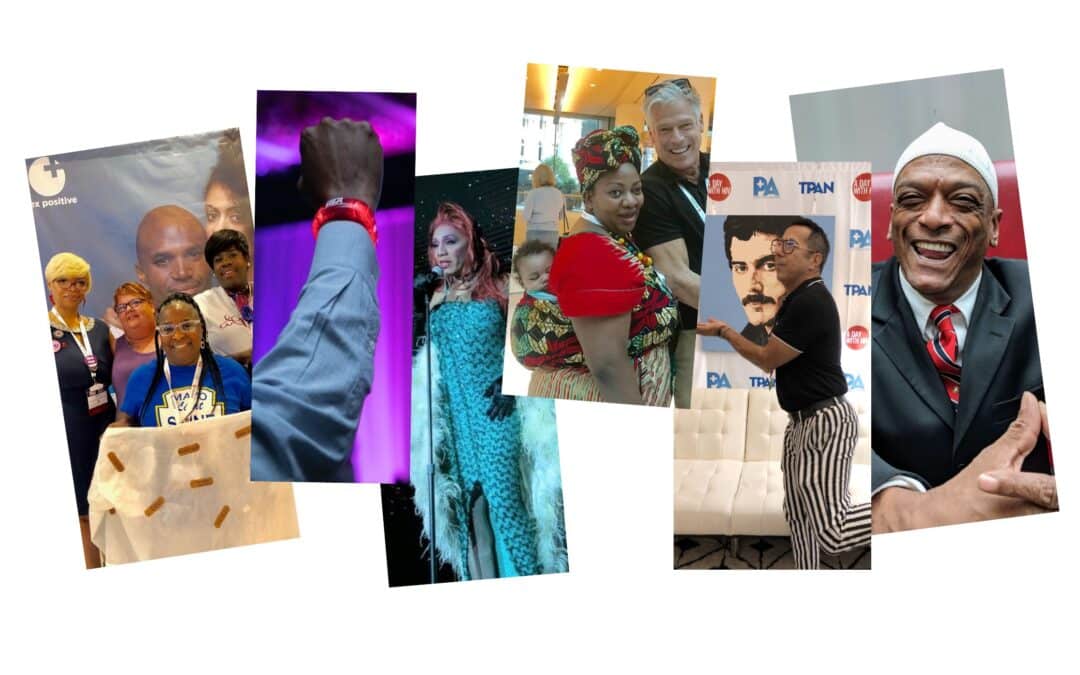
It was time for a tour of the heart and soul of AIDS2012: The Global Village. This massive hall is the only part of the conference open to the public, and it has a grass-roots feel, crafted from the love and devotion of hundreds of community groups who are doing “the work on the ground” in cities and small towns throughout the world.
Thank God I’m a video blogger, because words escape me when trying to describe the colors and displays and most importantly, the committed people behind it all. You’re about to meet drag queens who make their living handing out condoms, sex workers demanding an end to criminalization, young prevention workers from far-flung corners of the planet, a stunning photo exhibit from the Ukraine… the list goes on.
Our little summer camp for global AIDS advocates (and physicians, and commercial interests) had come to a close, and there are images that will be knocking around in my head for weeks to come (and some, forever).
I begin this video with the astonishingly talented performance poet Mary Bowman, a young woman with HIV showing us her heart and soul on stage. It’s a jumping off point for this final, brief video, in which I pay tribute to the people on the front lines who are the very essence of this conference. They are the ones with the “star power.”
This opportunity to share my experiences at AIDS2012 was a distinct honor and privilege, my friends. My deepest thanks to you all for the many cross-postings and shares and tweets. This was a week I will never forget.
Our little summer camp for global AIDS advocates (and physicians, and commercial interests) has come to a close, and there are images that will be knocking around in my head for weeks to come (and some, forever).
The seven foot Mexican drag queen handing out condoms springs to mind, of course. The astonishingly talented performance poet Mary Bowman (right), showing us her heart and soul on stage. And escape artist Daniel Bauer‘s highly personal show mixing magic with confessions from his life as a gay man living with HIV. Seeing presentations by mentors I admire, such as Sean Strub and Edwin Bernard. The Australian chief justice with a gay partner of 43 years, giving me suggestions on maintaining a long marriage (“Give in,” he advised).
In this farewell video posting, I pay tribute to the people on the front lines who are the very essence of this conference. They are the ones with the “star power,” and they fill me with renewed commitment and energy that might possibly last until AIDS2014 in Melbourne, Australia.
Thanks for watching, my friends. It has been my privilege to be your tour guide and I deeply appreciate your many notes and cross-posts and “likes” on Facebook. I like you very much, too.
It’s time for a tour of the heart and soul of the international AIDS conference in Washington, DC: The Global Village. This massive hall is the only part of the conference open to the public, and it has a grass-roots feel, crafted from the love and devotion of hundreds of community groups who are doing “the work on the ground” in cities and small towns throughout the world.
Thank God I’m a video blogger, because words escape me when trying to describe the colors and displays and most importantly, the committed people behind it all. You’re about to meet drag queens who make their living handing out condoms, sex workers demanding an end to criminalization, young prevention workers from far-flung corners of the planet, a stunning photo exhibit from the Ukraine… the list goes on.
Why wait? Take a look at my video report. Welcome to the Global Village!