rss feed

The Body

crystalmeth.org


hivcruise.com

Posts Tagged ‘aids’

I’m Gonna Wipe That AIDS Right Off of My Face

Tuesday, August 2nd, 2011

Several years ago, I told someone that I was HIV positive before I agreed to his invitation for a date. “Yeah, I know,” he casually replied, and then he looked a little embarrassed, as if he shouldn’t have said it. It was too late, of course; I knew exactly what he meant. He knew my HIV status because of the appearance of my face.

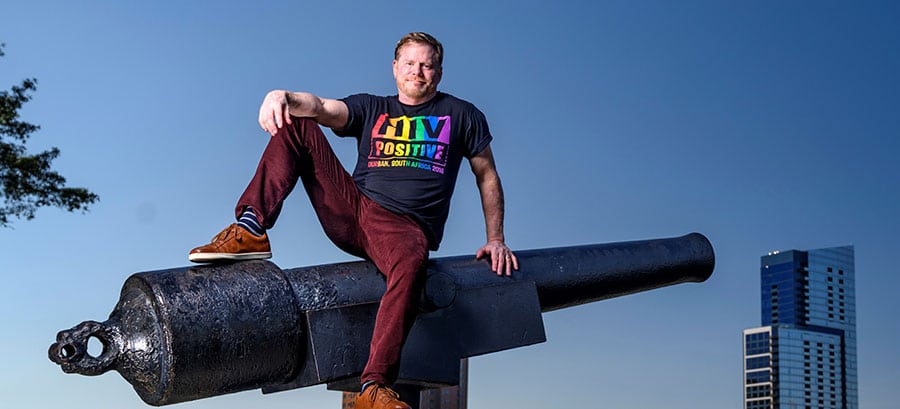
I was crestfallen, and felt something close to shame, certainly embarrassment. Why is it that I can produce this blog, proudly march with HIV POSITIVE on my t-shirt in gay parades, and even write a book about coming of age during the dawn of AIDS — but I get upset if someone can tell I’m positive by how I look?

When I choose to disclose, privately or publicly, it’s on my terms. I choose how and when to tell you. I want you to know.

Facial wasting (known as lipodystrophy) takes that choice away. It’s as if the disease is intruding, is taking the upper hand somehow, and worse, taking away my decision about when and to whom I disclose my status. And as much as I want to claim “Most Out Poz Guy Ever,” I don’t like wearing HIV across my face.

lipo face shotMost of us know “the look.“ It’s the telltale gullies and sunken cheeks associated with longtime HIV infection or (more likely) medications (right). Many of my friends and colleagues in this struggle suffer from it, and they may either be comfortable with it, proud of it as a badge of honor, or simply resigned to it. I salute us all, whether our features tells our HIV story or not. But meanwhile, I’ll do what I can to wipe that shit off my face.

BlogFrameGrab1 - CopyA few years ago I visited Dr. Gerald Pierone in Vero Beach, Florida (regarded as the leading expert in fillers and one of the Ask the Experts team at TheBody.com), and I documented that first visit and my facial filler treatments in a video blog, Treating My Facial Wasting (left). In that video I focused on my own attitudes — Was I ashamed? Trying to look younger? Simply vain? — and on the procedure process itself. Nearly a year later I revisited Dr. Pierone and got another treatment and documented it in my video blog, A Facial Wasting Update.

In this video episode of My Fabulous Disease, I revisit Dr. Pierone for a new treatment with the facial filler products Sculptra and Radiesse. While I’m there, I learn enough about Artefill, the only FDA approved permanent facial filler, to make me strongly consider the product the next time my face needs fluffing.

This video also focuses on very specific information about the actual costs of facial filler treatment. Both Sculptra and Radiesse have patient assistance programs that significantly reduce the cost of the medication, but you still need to pay the physician to do the procedure, and that price can vary. TheBody.com has a great article that outlines all the facial filler choices and how much they cost.

Tip: don’t allow any street corner vendor (or gym or even doctor office) to inject stuff into your face. Do some research and above all, find a physician who has done this many, many times (over 500 would be a good start). Be a smart shopper and empowered patient and ask about their experience level first.

I hope you find the video helpful and that you aren’t too afraid of needles!

In the meantime, my friends, please be well.

Mark

—————————————————–

PLUS…

SLOW 2Compelling, sexy, and courageously paced, the short film “SLOW” by filmmaker Darius Clark Monroe is worth your time. In 13 minutes, the film takes two African-American men on a sexy journey in which one of them discovers that the fast way (to sex, to real intimacy) isn’t the only way. If you are working with MSM outreach, this is a wonderful discussion tool. If you appreciate confident film making with a gay theme, this is it. Director Darius Clark Monroe told me he had nothing to add to the film’s message: “everything I wanted to say is expressed in the work…” and indeed it is. The video is NSFW, due only to brief nudity, but otherwise this flick wants to stimulate you mentally much more than by parading naked men around — a lazy tactic employed by most gay films today. I hope you’ll check it out!

Tags: , , , , ,
Posted in Gay Life, Living with HIV/AIDS, My Fabulous Disease, News | 4 Comments »

The Entire 2011 ADAP Conference in Nine Minutes!

Tuesday, July 19th, 2011

The 2011 ADAP Advocacy Association (aaa+) conference held July 5-7 in Washington, DC, was bursting with spirit. Dozens of advocates from across the country met for three days of workshops and speakers, and in this video blog, you’ll see the entire conference boiled down to only nine minutes. I’m the cliff notes of HIV/AIDS events!

From people like Robert Breining of POZIAM from Philly to Lepena Powell Reed from Tampa, there was no shortage of passionate voices. But there were more than a few things on the conference agenda that really surprised and educated me — and provided resources I never knew existed.

Take the Patient Advocate Foundation, for instance, my great discovery of the conference. Did you know there is a non-profit foundation that focuses on resolving disputes between you and your insurance company or medical provider? Whether they are refusing to pay for a medication, or questioning a procedure, this Foundation will fight for you. They have garnered such a reputation that many companies just fold when they see the Foundation coming.

Group1There may be politics involved here about which I am unaware, but where were our large national organizations? Frankly, I was disappointed to see a conference devoted to arguably the most pressing HIV issue of the day, held right in the DC home of most national agencies, and yet major organizations like the National Minority AIDS Council (NMAC) were not represented. As one speaker shouted from the podium, “WHERE YOU AT?”

(To NMAC’s credit, they recently launched their own web site devoted to the ADAP crisis, with much of the same information available through aaa+. The more the merrier, of course, but I sure wish large organizations would pool their efforts and support one another.)

As usual at these type events, the real value is in the company of like-minded folks trying to do the right thing, and some of our greatest champions were there, like Butch McKay of the Positive Living Conference (one of the last conferences serving those living with HIV, and the best of them all), Dab Garner of Dab the AIDS Bear Project, and Bill Arnold of the Community Access National Network (CANN).

We shared meals and gossiped about news in the HIV/AIDS arena, and ventured out in DC for a dinner here and there. Some of us ventured even later, and further, but young activists these days, whatcha gonna do? I wish I had the stamina of advocates like blogger Christopher Myron, or World AIDS Institute founder David Purdy!

Group 7But back to some great resources for you. Have you heard of the Pre-Existing Insurance Plan (PCIP)? It provides health insurance to those who have been uninsured for six months or have been denied coverage. It’s a governmental program designed to help get people insured while we’re waiting for the new health plan to kick in, which happens in 2014. If it sounds like you qualify, I urge you to contact them at 866-717-5826. The premiums are based on what a healthy person would pay in the same market.

Attending conferences like this one is a privilege and a responsibility. The AIDS Drug Assistance Program waiting list continues to grow on a daily basis, denying patients the very medications that can keep them alive. This national disgrace deserves our attention and our phone calls to our elected officials, urging them not to forget the most vulnerable among us, even in times of fiscal crisis. Today is a great day to pick up the phone and contact your U.S. representatives, and tell them that you want them to support (or keep supporting) funding for ADAP.

In the meantime, my friends, please be well.

Mark
——————————————————

PLUS…

Michelle AndersonIt appears that poz queens like me have got nothing on Michelle Anderson. The Texas beauty was recently crowned the 2011 Ms. Plus America (which celebrates “the essence of the full-figured woman”), and Michelle’s platform is the impact of HIV among women, especially women of color. But there’s more. Michelle is also the first openly HIV positive woman to win a national beauty pageant title! She knew all along that entering the pageant could mean becoming a high-profile HIV positive role model. “I entered the pageant to create a voice for women, while raising awareness, educating and empowering women,” Michelle says. “I wanted to show that in spite of my diagnosis, I can still live a happy and prosperous life!” (Photo credit: Brett Vander Photography)

Mutants_for_Myfaboulose_DiseaseArtist Emilio Aponte is influenced, as he says, “by everything I see, feel and experience…” Considering Emilio is an HIV risk reduction coordinator at the Pride Center in Ft Lauderdale, it’s no wonder that his current exhibit there, “Ribbon HIV,” focuses on HIV prevention and education (at right, a detail shot from his piece, “Mutants”). And what a stunning collection it is — high contrast black and white “manipulated photos” that all have a touch of red somewhere, reminding us the virus is still present in everyone’s lives. Beyond the images themselves, Emilio accompanies them with brief, positive statements about protecting oneself from HIV risk, or taking care of yourself if you are living with HIV. It’s a beautiful collection with a terrific message. The exhibition is open to the public at the Pride Center, Main hall from July 5 to August 7, 2011 from 11:00 am to 9:00 pm.

KoolAIDSTwo exciting new clinical trials have shown the efficacy of “pre-exposure prophylaxis” therapy (taking a drug to reduce your risk of infection before engaging in risky activity). This seemingly bolsters the strategy of using meds for HIV negative people who are at risk of becoming infected, as well as the “treatment as prevention” strategy of having those with HIV on drug treatment. Not so fast, says Poz.com editor Regan Hofmann in her latest blog posting, “Not Drinking the PrEP Kool-AIDS.” Regan isn’t sure the study data is strong enough, and the daunting task of delivering meds to every negative person who might need it is a tall order. She doesn’t mince her words: “PrEP is a profit-driven sex toy for rich Westerners, disguised as a harm-reduction and prevention tool for disenfranchised people at risk for HIV.”

Tags: , , , ,
Posted in Living with HIV/AIDS, My Fabulous Disease, News, Prevention and Policy | 12 Comments »

Should AIDS Activists and Pharma Just Get Along?

Tuesday, July 12th, 2011

I’m having an identity crisis. Am I an AIDS activist, ready to question authority and demand high standards of service for those living with HIV/AIDS? Or am I a “resource” for the pharmaceutical industry, so that they might craft more effective community programs that will lead AIDS patients to “care.”

And that care, no matter how they frame it or how sunny the smiles of their community liaisons, ideally would lead patients to their HIV drug product line.

In this video episode of My Fabulous Disease, I take you along to a community advisory board meeting (CAB) for HIV drug manufacturer Janssen Therapeutics, formerly known as Tibotec. There was something about the cordial way in which the invited HIV advocates provided helpful feedback to the pharmaceutical executives that felt… a little strange.

Although I have agreed to keep the particulars of the meeting private, I will say that there were no fireworks on display – or any real antagonism to speak of. We advocates (“activists” seems like too strong a word) offered our best advice to Janssen, they appreciated it very much, lunch was served, and everyone left happy.

protest10And I felt as if I had failed somehow. I had allowed the topics to be entirely in the hands of our hosts, and any issues that deserved discussion but were not on our elegantly typed agenda – educating patients about treatment risks, or, God forbid, drug pricing – were never discussed. I didn’t feel like much of an activist. I felt like a focus group member.

It’s very possible that my attitude here is outdated. In the early days, we took to the streets because societal apathy and ignorance demanded it. We protested and threw red paint and otherwise shamed the pharmaceuticals into better medications, broader access and more community involvement. Those battles were waged (and largely succeeded) many years ago, while pharma has come through with an astounding arsenal of successful HIV medications. Why does something deep inside me resist civil dialogue that advances our mutual interests? Am I living in the past, being an activist without a cause?

Clearly, we have some common goals, chief among them HIV testing and access to treatment. And pharma has resources that community organizations could only dream of, so advising them on creating the best campaigns possible (to get tested, to “get into care”) makes sense. So why was I so ambivalent?

Activism should make people uncomfortable. Just ask Larry Kramer. I watched the late, great Martin Delaney, founder of Project Inform, demand in similar meetings that more be done in terms of drug efficacy and proper data and experimental drug access. He made me very uncomfortable and I was on his side. Martin usually got what he wanted. And he wanted it for you and me.

At least, through this video, I get an opportunity to discuss some pressing concerns not covered in the community meeting. I question some basic assumptions, such as whether our hard work on the ADAP crisis is pulling attention and resources from the “big picture” of pharma drug pricing and generics, and I offer an indictment of our U.S. health care system for good measure.

There are still confrontations to have and tough arguments to make, and the agendas of advocates and pharma alike should always be questioned.

It just might be a little uncomfortable.

Mark

(“Enjoy AZT” image credit: ACT UP New York)

——————————————

PLUS…

ADAP AwardThis blog is officially an “award winning” blog! The hard working folks at the ADAP Advocacy Association (aaa+) have honored me — and I most sincerely am quite honored — with an award for Social Media Campaign of the Year. The award was part of their first annual ADAP leadership awards dinner, held as part of the ADAP conference held in Washington, DC. aaa+ was impressed with my video blog about the ADAP summit last year, particularly with the simple instructions it gave on contacting your elected official about funding ADAP (it’s not too late to do that, you know). I am in good company: other award winners include Dab “the AIDS Bear” Garner, Butch McKay of the Positive Living Conference, and even my local pharmacy patient advocate here in Ft Lauderdale, Jason King (no relation) of AIDS Healthcare Foundation Pharmacy.

mature-gay-men-dating-tipsI may not be on the singles market, but I sure do appreciate the advice provided by AARP (!) in their online feature, “The Gay Man’s Guide to Dating Over 50.” Most of the piece, by gay writer Dave Singleton, is solid self-esteem building, which is great advice for any age. I’m particularly guilty of being age conscious and grieving my distant youth, so I needed to read this: “Give up trying to be perfect, too, especially if that’s a code word for ‘young.’ Yes, it’s important to take care of your body and your health, but no need to obsess. Instead of trying to be 25 again, get comfortable in your skin. Feel good about your body. That way, when someone touches you, they’ll really feel you, and not a bundle of self-critical tension. Think more about keeping a sparkle in your eyes and less on fighting the fine lines around them.” Maybe next time, Dave will offer a little safer sex advice for those over 50 who actually get lucky.

kiss and tellYou may know that, in a 2010 CDC study of 21 major cities, 1 in 5 gay men were HIV positive. But did you know that half of them do not know they are positive? And that young black and Latino men under 25 were the least likely to know their status? Gay Men’s Health Crisis (GMHC) in New York is hoping to change that in their new “Kiss and Tell” campaign. “Kiss & Tell” encourages black and Latino young gay men to have discussions with partners about their sexual history and HIV status, and includes education, networking and skills training. “This campaign reinforces GMHC’s ongoing commitment — since our earliest days — to addressing homophobia and reducing the spread of HIV among gay men,” said Marjorie Hill, PhD, Chief Executive Officer of GMHC. “The campaign directly challenges homophobia, and acknowledges the value of relationships in the lives of young gay men while encouraging dialogue.”

Tags: , , ,
Posted in Living with HIV/AIDS, My Fabulous Disease, News, Prevention and Policy | 20 Comments »

Dab Garner’s 30 year story of survival.

Tuesday, June 28th, 2011

Storytelling is a crucial part of our culture, and not simply for entertainment value. Sharing our stories can heal our pain, educate others, and help us relive our happiest triumphs.

This video is quite simple, really. One man explains to you what happened to him, from becoming one of the first AIDS patients in San Francisco to his life today in the service of others with HIV. Dab Garner has clearly put things into perspective, and his calm manner shows a man at peace with his fate, his survival, and the ghosts around him.

Dab AIDS BearIt’s an amazing story, actually. And considering the importance of passing our history down to younger people, it might not be a bad idea to share this video with someone you know, maybe even someone under 35 years old.

But for now, let’s allow Dab Garner to simply speak for himself.

Thanks for watching, and please be well.

Mark

——————————————-

PLUS…

Protest11The latest volley in the debate among prevention advocates regarding “test and treat” is an interesting article by AIDS Healthcare Foundation consultant James Driscoll. His Washington Post piece, “HIV Treatment can be HIV prevention,” urges more access to medications and better funding for programs like the AIDS Drug Assistance Program. Driscoll is convinced that we can get a handle on the epidemic through increased testing and by treating those who test positive. As he writes: “Science has proven what many at the people doing primary care and others at the forefront of the epidemic have long suspected: HIV treatment is remarkably effective HIV prevention. A recent study from the National Institutes of Health has shown that treating HIV patients with antiviral drugs makes them 96 percent less likely to pass on the virus.”

Tags: ,
Posted in All Other Video Postings, Living with HIV/AIDS, My Fabulous Disease, News | 8 Comments »

Why Are We Still Haunted by the Boys in the Band?

Tuesday, June 21st, 2011

When I was 15 years old, I couldn’t wait to attend a local community theater production of The Boys in the Band. I was intrigued by the play’s dark and mysterious reputation, and had heard that it included a lot of homosexuality (funny how that word isn’t used much anymore). It sounded like exactly what this budding young queer needed: some lessons about the yellow brick road ahead.

BAND castI didn’t like what I saw. The characters, a group of gay men celebrating a birthday, were mean and sad and angry with one another. And they were all presented like weird, exotic animals, bitching and crying for the lascivious thrill of a very shocked audience in Shreveport, Louisiana. I left the show feeling terribly disenchanted, fearing my life was destined to be drunken and pathetic.

It was the theatrical opposite of an It Gets Better video.

In the insightful and appropriately melancholy new documentary Making the Boys, the remarkable journey of the groundbreaking play and movie adaptation is discussed by playwright Mart Crowley and a host of gay cultural voices, old and new.

makingtheboyssplashWhen The Boys in the Band opened off-Broadway in 1968, homosexuality was still classified as a mental illness. The play’s behind-the-scenes peek at gay men in their natural habitat was fascinating to audiences and greeted with enthusiasm from the gay community. Yes, they were maladjusted, self hating fags, but they were our maladjusted, self hating fags.

But in 1969, as the movie version was being filmed only blocks from the Stonewall bar, a riot occurred at the club in response to constant police harassment. The modern gay rights movement was born. Seemingly overnight, New York gays stood up for themselves and demanded some respect – from others and, more importantly, themselves. By the time the film version of The Boys in the Band opened in 1970, the story and its sad characters felt like a politically incorrect relic. We wanted nothing to do with these old, bitter friends anymore. They didn’t reflect our “pride.”

Opinions about the show vary wildly, as evidenced by the interviews in the documentary. Gay playwright Edward Albee (“Who’s Afraid of Virginia Wolfe?”) always hated the show and still does. The surviving actors (the theatrical cast all recreated their roles for the film) staunchly defend the humanity of their characters. And younger gays interviewed about the show have no idea what the hell we’re talking about. “I don’t really know about any boys in the band,” states perplexed fashion star Christian Siriano. “Honey, I’ve got dresses to make!”

The Boys in the Band has become a litmus test for how you view our ability to love ourselves. And those boys continue to reverberate and reflect our attitudes and tribulations as gay men, and that includes the AIDS crisis.

LA la-et-making-the-boys.2.jpgWatching the film today, I’m struck with an odd compulsion. I see these characters laughing and bitching, and I want to reach through the screen and shake them and warn them, to tell them about something coming, something too awful to describe, of a plague they can’t possibly comprehend that is coming to kill them all.

Indeed, at one point in Making the Boys, we are shown photos of the actors, of the men who played these iconic characters we loved and then hated and then, finally, simply accepted. And listed under each of the actors’ names is the year he died of AIDS. 1984. 1985. 1988. On and on it goes, through what appears to be a majority of the cast.

The moment brings about such emotional confusion, of regret and interrupted affections. It’s like hearing of a death of a long lost friend with whom you had a troubled relationship.

Our boys continue to live on through the film, performing their roles on that screen exactly the same way, defiant in their stereotypes, no matter how many times we revisit the movie.

What has changed, for better and for worse, is us.

—————————————————–

PLUS…

celluloid-closet1You know who would probably have had some choice words to say about this blog posting if he were still alive? Vito Russo, author of the milestone book on gays in film, The Celluloid Closet. On the occasion of the 30th anniversary of the book’s publication, writer Mark Adnum provides a provocative re-examination of the book and the attitude of its author. And to hear Adnum tell it, Russo was a hard-to-please bitch who happened to address the topic of gays in the movies at the right time (although others were there first, according to Adnum). This, from Adnum’s piece: The Celluloid Closet is saturated with frustrated references to “tortured little gay boys,” “homosexual fools,” and “sad-eyed queens.” Russo couldn’t stand “screaming queens” or “doe-eyed, timid faggots,” yet oddly “self-hating gays” really rubbed him the wrong way also. Ouch. So, was Russo a gay activism icon, or just another bitter boy in the band?

Hope Takes ActionHVTN 505, also known as the HIV vaccine clinical trial, continues to struggle to find study participants, and that’s a shame. You know I never miss an opportunity to encourage HIV negative gay men and engage them in the HIV/AIDS arena, and this is the best possible way in which they can make a difference to public health. But… maybe they just aren’t sure what is involved. Well, Kyle Bella outlines his experience as a trial participant in great detail in a recent Bilerico Project posting — from the criteria to the risks to his physical exam — and it’s great information for anyone who might be interested. And be sure to visit Hope Takes Action to browse the list of trial sites.

Elton PetitionThe ADAP Advocacy Association (aaa+) has a new petition that is easy to access and sign — and it adds your voice to all of us who are horrified about this national disgrace. Most recently, Sir Elton John joined the chorus of advocates demanding that Gov. Rick Scott of Florida do something to alleviate the waiting list (there are more than 3500 patients in Florida alone who are waiting to participate in this program). So… just click here to sign a petition at the Elton John AIDS Foundation, asking that ADAP get the funding it desperately needs.

Tags: , , , , , ,
Posted in Books and Writings, Gay Life, Living with HIV/AIDS, My Fabulous Disease | 10 Comments »

Hiding from the “AIDS at 30″ media storm.

Tuesday, June 14th, 2011

I shuttered myself from most of the hoopla surrounding the “AIDS at 30” milestone (we seem to have agreed on June 5, 1981, when an item in the Morbidity and Mortality Weekly Report reported deaths among gay men). The trauma of those early years is tough for me to revisit. Every media piece seemed to be about the past and it all felt emotionally overwrought and indulgent. I skimmed the coverage and secretly wished it would just go away.

DickEmilRevealing the intensely personal isn’t normally a problem for me; I wasn’t shy about addressing our darkest days in my video blog entry Once, When We Were Heroes (right), so it’s not like I can’t go there. Maybe the sheer volume this month of tragic stories and heartfelt blogs and “I Was There” interviews was too much for my scarred psyche.

It could also be an ego thing. All these extra voices showing up and piling on their stories. Hey Missy, that’s my gig, move it along, thank you very much. During the media frenzy of “AIDS at 30″ I felt like a professional drag queen refusing to venture out on Halloween. Too much competition. And from such amateurs.

This week I finally paid more attention to what has been written this month, and of course, it’s pretty damn good.

The 30th (what? Celebration? Anniversary? Commemoration? Did we decide on something?) yielded some tremendous coverage at The Body, my favorite online HIV resource. And obviously, how the hell can people appreciate our AIDS history is we don’t document it at every opportunity?

Asking the gay bloggers at The Body to speak back and forth between generations about their HIV/AIDS experience was inspired. Anyone under 35 is my favorite audience, although the over-40 crowd probably understand me a lot better.

michael_gottliebI also really enjoyed Nelson Vergel’s interview with Dr. Michael Gottlieb (left), the man who published the first report of some rather strange deaths among gay men. Dr. Gottlieb also happened to be my physician in Los Angeles when I was diagnosed with HIV in 1985. During those days, I once forced Dr. Gottlieb to tell me his best guess for my lifespan, and he went out on a limb to say I could make it to 40. That birthday came and went, ten years ago. When the preeminent expert in the field gets it that wrong, you know we’ve had more success treating this virus than anyone had hoped in the early days. Thank God.

regan hoffmanElsewhere, I admired Regan Hofmann’s (right) recent editorial at Poz Magazine immensely. With nary a glance backward, she sat squarely in the present and outlined the thirty issues that are most important to the crisis today and in the future. It was also a solid primer on the emergence (and debates about) new prevention theories like Post-exposure and pre-exposure prophylaxis and “test and treat.”

aids protest 1980sOnce I allowed myself to “face the past” by checking out Karen Ocamb‘s amazing reports from the early days of the crisis, I was happy I did. Karen is a Frontiers news editor who has been covering LGBT issues in Los Angeles for 30 years, and in her collection of stories from the AIDS frontlines of the 1980′s (complete with video she shot herself), she takes us along to an early AIDS protest (left), to early treatment activism meetings and to the unfolding of the AIDS quilt. Karen’s close relationship with history and her “home movies” give the stories amazing intimacy. I recommend the series highly.

The media rush of tragedy and inspiration known as “AIDS at 30” is dying down. As much as I want coverage of HIV and for there to be constant prevention messages, I’m a little relieved. I can comfortably go back to debating our current treatments and campaigns, sharing sweet and funny stories about my life with HIV, and wondering why the hell the media doesn’t pay more attention to HIV/AIDS.

We all have our coping mechanisms. Allow me a little healthy denial.

As always, my friends, please be well.

Mark

—————————————–
PLUS…

sean_strubSean Strub is once again ringing the bell about criminalizing people who do not disclose their HIV status, and it tolls for thee. We covered some of this ground when Sean and I discussed Five Things About HIV They’re Not Telling You, but in Sean’s newest posting at Poz.com, he takes this a bit further. Are we a few short steps away from prosecuting those who do not take their medications? Sean sees the intersection of “test and treat” and the treatment of those with HIV as criminals as a dangerous mix that could theoretically lead to forced treatment, just as a prisoner might be compelled to take meds. It’s a bit chilling, and perhaps fantastical, but whoever thought there would be people with HIV sentenced to jail for 20 years for spitting?

pill 2Our national disgrace known as the AIDS Drug Assistance Program (ADAP) Waiting Lists continues, and the lines keep getting longer for patients waiting to receive life-saving medications. There are reports of patients who have died during that wait. The ADAP Advocacy Association (aaa+) continues its mission to combat this lack of funding, and in their recent blog they offer evidence that the most effective weapon in our advocacy tool kit is you, referencing a study showing that when people like you and me simply pick up the phone, it matters as much as high-powered lobbyists. And it’s simple! Take a look at my video blog from the last ADAP Summit and you can get instructions on exactly what to do. Meanwhile, I’ll be attending the upcoming ADAP Conference in Washington, DC, and will share everything I can with you.

yong gay kidsHow do we bridge the LGBT generation gap? That’s been the topic of two really terrific postings this month around Gay Pride, and the communication disconnect between young and old seems to be the culprit. I’d love to be an “older mentor,” but who would have me? What spaces encourage dialogue and a chance to share our history? Olivia Ford of The Body.com raises these concerns in her excellent piece What’s It Really Going to Take to Make it Better? Olivia knows that we have a lot to gain from inter-generational interaction, but beyond the It Gets Better Project, how do we accomplish this? Meanwhile, some people think that younger gay men are ungrateful little snots. Jake Weinraub is totally over it, in his piece What Sucks About Most Privileged Gay Men for The Bilerico Project. Both are definitely worth your time, and you should always join the conversation by posting a comment!

Tags: , , , , ,
Posted in Gay Life, Living with HIV/AIDS, My Fabulous Disease, News, Prevention and Policy | 3 Comments »

My Surprising Lack of Gay Pride

Tuesday, June 7th, 2011

For most of my life I’ve been judgmental and a little impatient with gay people who didn’t just come out. Are the risks really that dire? I suspected they were just chicken shit, or unwilling to stand up to their family or to whatever screwed up religious upbringing they had.


Growing up on Air Force bases
wasn’t exactly the Castro, but I didn’t know any better than to walk and talk however I pleased (I was in full sashay mode by the age of twelve). I was sexually active soon thereafter, and stunned my Louisiana high school with an older boyfriend in my senior year.

MarkInRepose - CopyYes, I grappled with my Methodist teachings and suffered through some brutal rounds of dodge ball (affectionately known as “Smear the Queer” where I come from), but making it though my teens was mercifully uneventful.

The bullies were too freaked out by my jumpsuits and platform shoes to approach me, though I must credit my perpetually embarrassed, varsity jock brother for helping keep them at bay. The result of this rather fortunate gay adolescence was my ignorance of the perils of being out, and that arrogance suited me just fine for most of my young adulthood.

And then, years after my own coming of age, Matthew Shepard tried to live openly as a young gay man, too — until he was beaten and left to die tied to a fence in Wyoming. The images and details of his horrific final hours were like blunt force trauma directly to my heart. How could I have been so cavalier about what the real costs of coming out could be?

Today, I never downplay the societal risks of being gay, but I focus my writing on two things that added shameful layers to my identity: HIV and drug addiction. How ironic that the kid who believed there were no dangers to growing up gay would fall victim to two of the most common health risks among gay men: being infected with HIV and using drugs.

I’m still a sashaying, gay stereotype representing the most fabulous social ills, it would appear.

My sense of pride emerged not in response to being gay, but in my response to HIV and my drug addiction, in that order. I found personal self worth by helping my community face AIDS in the 1980’s, and I have rediscovered my self esteem while on the treacherous road back from crystal meth addiction.

Being gay isn’t something I have been proud of, in and of itself. But I take pride in how I have handled what I consider the fallout of being gay.

During this gay pride month of June, I hope we’ll all take some time to assess what we’re so damn proud of. I’ve made that list, and “being gay” isn’t anywhere on it. Do I take my sexuality for granted, or am I ungrateful?

I’m proud of Mark, the man as he is today. I’m proud of my brother for keeping the bullies away. And I’m proud at my success, day by day, of recovering from addiction and having a purpose.

With that, I’ll sashay out of here.

Mark

(The video above is a gay pride message I produced last year, and I would encourage you to watch it. What begins as a funny take on public service announcements becomes something surprisingly different and emotional. As always, my friends, feel free to share my content, and please be well.)

Tags: , , , , , , , , ,
Posted in Books and Writings, Family and Friends, Gay Life, Living with HIV/AIDS, Meth and Recovery, My Fabulous Disease | 12 Comments »

Calling HIV Negative Gay Men: This is Your Time

Tuesday, May 31st, 2011

This is directed to HIV negative gay men. Listen carefully. This is your time.

I’ve lived with HIV more than half my life, and people often praise me far more than I deserve, simply for surviving. They use words like brave and courageous.

hivtestYou know what takes courage? Getting an HIV test every few months. You, waiting nervously while your most personal sexual choices are literally being tested, waiting to find out if you’ve been good – or if you’re going to pay for a single lapse in judgment by testing positive, when the look on the faces of your friends will say you should have known better.

I have no idea what that must be like. I took the test over 25 years ago. The positive result was traumatic, no doubt about it, and I soldiered on during some awfully frightening times. But I have a significant psychological advantage over my HIV negative friends: I only took that damn test once.

During all these years, I’ve acted irresponsibly at times or taken chances I hadn’t intended. But there has been no further judgment from a blood test. That reckoning was faced long ago.

But you – whether you have been sexually active for a year or a decade – have very likely faced some tough choices and behaved wisely. You keep doing the right thing.

This is your time. The word courageous is for you.

If you don’t define yourself, in large part, by the fact you are HIV negative, start now. It is your accomplishment. It says you are taking care. And it says you are eligible to participate in vaccine trials or mentor someone else trying to remain negative.

vaccineThere is ongoing research now that is focused on HIV negative men like you. Exciting new studies are investigating drugs to prevent infection after something risky has occurred, while other studies have shown promise for a drug regimen that might block infection before it happens.

And right now there are vaccine trials waiting for men like you to help find the ultimate weapon against HIV. They need volunteers, badly.

This is your time. This research is about you. This call to action is for you.

I can already hear the rumblings on both sides of the viral divide. People are so quick to take offense, so afraid of being misunderstood, of being labeled or blamed or ostracized.

My fellow positive brothers are so bruised by stigma that it can be hard for them to lift you up. They’ve been rejected by you. They don’t like hearing “maybe we should just be friends” and they don’t like seeing “UB2” in your online profile. They might be positive as a result of one heated mistake, or due to sexual assault, or by trusting (or loving) the wrong person — and they deeply resent feeling judged.

Maybe they think your negative status is the result of pure luck, or that you don’t like anal intercourse, or you’re lying.

AIDS Walk - CopyMeanwhile, your sacrifices go unrecognized. You’ve seen some positive friends take early disability, hang out at the gym and get help with the rent. They receive so much support and empathy that it must feel like there isn’t much left for you. Every year we all swarm the streets for the AIDS Walk, and you can’t help but wonder if your parade will ever arrive.

These grievances and resentments give me a headache. It doesn’t matter much to me who is most injured. How infinite is our compassion for one another? I don’t care anymore who gets what. What matters most is who does what.

This is your time. This truce, this call to a higher purpose, is for you.

You are fully human, like everyone else, my friend. You are courageous, afraid, selfish and compassionate. You make difficult choices and you make mistakes. And we need you so very badly.

Thank God for you. This is your time.

(This piece was written as part of the GA Voice commemoration of 30 years of HIV/AIDS. I was honored to contribute to their special issue. — Mark)

————————————————————

HobbesIf you haven’t caught up with the blog from gay theologian the Rev. Chris Glaser, his thoughtful posting about the rapture, and what it means to be left behind, is a great introduction. Chris has a way of bringing Christian teachings back to their essential meanings (in other words, without the hateful language and intent we have come to expect from fundamentalists). As a child he didn’t want to go to hell, but he was afraid of the rapture because of his fear of heights. And who in their right mind would leave this poor doggie behind?

jelloSadly, as the lives of thousands of people living with HIV/AIDS hang in the balance, our federal government has funded numerous “pet projects” – including such programs as Jell-O wrestling at the South Pole, testing shrimp’s exercise ability on a treadmill and a laundry-folding robot, all funded by the National Science Foundation. These facts, from the ADAP Advocacy Association’s (aaa+) newest blog posting, paint a dire picture of our national healthcare priorities. The blog also begs the question, “Where is the leadership?” I would urge urge you follow aaa+ and stay tuned for ways in which you can advocate to solve this national disgrace.

AIDS patientA New York Times article on the scientific history of AIDS does a great job of showing how naive researchers were in the beginning of the epidemic (a 1981 New England Journal of Medicine editorial didn’t even allow for the existence of a new microbe), but, more importantly, it highlights the ways in which AIDS activism and research has rewarded all of mankind with swifter drug approval and better patient advocacy:

“The relative speed with which the therapies were developed owes much to the efforts of cadres of activists who demanded that the Food and Drug Administration loosen the rules for clinical trials and speed its drug approval process. Efforts to develop anti-H.I.V. drugs have paid handsome dividends by leading to development of other drugs to treat other viral infections, like the liver diseases hepatitis B and C and certain types of herpes viruses. Also, AIDS advocacy has spurred leaders of campaigns against breast cancer and other diseases to adopt similar strategies.”

As always, my friends, please be well. And I hope you will “share” this posting with your friends and colleagues. Here’s to a wonderful summer!

Mark

Tags: , , , , , , , ,
Posted in Books and Writings, Gay Life, Living with HIV/AIDS, My Fabulous Disease, News, Prevention and Policy | 4 Comments »

How one Mom handles HIV/AIDS in the family.

Thursday, May 5th, 2011

God could not be everywhere, so he created mothers.
~Jewish Proverb

My mother raised six children, topping off this great achievement with yours truly. Yes, I’m the youngest, which explains a lot, but not all. To understand the rest, you’d have to know the woman. Or, perhaps, simply be a mother yourself.

Mom was there for her kids during the years my father spent in far flung corners of the world flying B-52′s as a pilot in the Air Force for more than thirty years. Mom had to be all things: nurturer, disciplinarian, confessor, judge and jury. She was the parental constant, and she performed it all admirably (and stylishly, if you ask me).

Once I was old enough to safely get home from school on my own, Mom went back to school herself. To everyone’s surprise but hers, she got a Master’s Degree — even spending a semester at Oxford — before starting a prestigious career as head of Louisiana State University’s library. She has since retired but could easily keep a smirk on her face for the rest of her life for all of those poor fools who, like me, thought her talents stretched as far as PTA meetings but not much further.

In 1985, she approached the news of my HIV status with the same pragmatic resolve as her career. She studied up, listened when I needed to talk about it, and traveled to Los Angeles to join me for a weekend educational retreat for people with HIV/AIDS and their allies. I’ll never forget her attending a breakout session on safer sex and then catching up with me to say, “Mark, explain rimming.”

Mother - CopyHer life has been the kind of roller coaster you might expect for a woman who has raised six kids, seen a few wars, and watched two gay sons negotiate the AIDS epidemic.

There are questions I have always wanted to ask Mom about finding out about my HIV status during the darkest years of the pandemic, and how it felt for her to go through a family AIDS tragedy. In my video interview with her (above) from last year, she never flinches at the questions.

This Mother’s Day, I hope you are fortunate to have a supportive mother to call or remember fondly. Thank God, mine is not unique in her capacity to empathize or love unconditionally.

——————————————————————————

PLUS…

Jonny Wood - CopyExactly 21 years ago today, my friend Jonny Wood (right) tested HIV positive. Like many of us, he has channeled his gratitude for his good health by giving back to his community, and next weekend Jonny will participate in the grueling AIDS Ride to raise funds for the Emory Vaccine Center. You know I never hit you up for donations, but if you can afford even a modest contribution, his official web page for his AIDS Ride makes it really easy and secure to donate. No donation is too small, my friends. Isn’t it amazing that so many of us who lived through the dawn of this epidemic are not only still walking and talking, but riding their bikes for hundreds of miles in hopes of finding an effective vaccine? You go, Jonny.

Normal HeartLarry Kramer‘s searing indictment of society’s response to AIDS in its early years, The Normal Heart, is back on Broadway and just racked up five Tony Award nominations, including for Ellen Barkin (right). “Powerful” hardly describes this primal scream of a play, and its fitting that this 1985 masterpiece has been remounted as we commemorate 30 years of the epidemic and as our community commitment to AIDS continues to be diluted by time and treatment advances.

As always, my friends, please be well.

Tags: , , , , , ,
Posted in All Other Video Postings, Family and Friends, Living with HIV/AIDS, My Fabulous Disease | 6 Comments »

The Hard Facts on Erectile Dysfunction: Pills, Pumps and Prosthetics

Wednesday, April 6th, 2011

I suppose it was only a matter of time before HIV fitness guru and hottie Nelson Vergel and I ended up in bed together. After rummaging through my kitchen in a video blog about healthy eating, and then flexing his biceps at the gym when he instructed me on weight training, it really was more than he could bear. The man is only human, after all.

Alas, our queen-sized romp which opens this video was clothed, comical, and quite chaste. But it was the perfect place to start a blog about erectile dysfunction (E.D.), testosterone replacement, and how all of this affects people living with HIV/AIDS.

You’re about to get a big education on erections. Well, on the lack thereof, to be precise. The content isn’t porn but it is very adult. If your workplace wasn’t a great place to watch my recent video tour of a poz sex club, then you’ll probably want to catch this one at home, too. Just don’t miss this impotent information. Sorry. Couldn’t resist.

Besides writing his new book, Testosterone: A Man’s Guide, Nelson has gathered an impressive amount of information on what causes E.D., what the treatment options are, and what issues become a factor when you throw HIV into the mix. (I did some research of my own, but all I found was a hilarious candid camera video about an “erection spray” that has immediate, sizable results.)

Cuddle ResizedEvery treatment and factoid on E.D. is here: pills, pumps and prosthetics (oh my!). Mostly, though, just hearing Nelson repeatedly say “erectile” in his adorable Venezuelan accent is worth the ten minutes it takes to watch this.

Nelson mentions some great resources and here are some links. His book is available on Amazon, his non-profit is known as PowerUSA and has a web site of its own, and he offers resources on identifying a doctor familiar with testosterone replacement on his web page devoted to the topic.

Nelson is also available to answer your questions on TheBody.com, where he serves as their fitness and nutrition guru in the “Ask the Experts” forum.

As always, thanks for visiting. It will be interesting to see how many of you “share” this link. Will it be more, because it’s a sexy topic, or less, because it’s also an uncomfortable one? We’ll see!

Please be well,
Mark
————————————————————-

librarian1I can’t keep the internet’s best-kept secret any longer. I love The Subversive Librarian, a blog of random thoughts from a witty, thoughtful lesbian about everything from getting her car stolen and mindlessly looking for it and if it was simply misplaced (“Often the last five minutes before I leave for work are spent pacing from room to room and back again, trying to find my keys. Maybe the car is in my other coat.“) to raising her teenage daughter. Yeah, she’s a friend. Thank God, or I would deeply resent her gifts for writing with such breezy grace.

It-Gets-Better cropAccording to Dan Savage, I can now call myself a best-selling author. It Gets Better landed on the New York Times best seller list at #15 last week! My brother and I are contributors, since our YouTube video transcript is in the book (and so is our picture — there we are, right next to Ellen Degeneres, in a photo montage in the inside cover). I reviewed the book two weeks ago and remain convinced it is the most important book of the year.

Tags: , , , , , ,
Posted in Books and Writings, Gay Life, Living with HIV/AIDS, My Fabulous Disease | 4 Comments »