rss feed

The Body

crystalmeth.org


hivcruise.com

Family and Friends

Revisiting ‘The Real Poz Guys of Atlanta’

Tuesday, October 4th, 2011

During the first year of producing my blog videos back in early 2009, it occurred to me how much of my health and happiness was the result of having a solid support network. I wanted to find a way of showing this through my blog, and the result would be two video episodes that remain a true highlight of My Fabulous Disease.

Gotta Have FriendsWhat might it be like, I wondered, if I invited some friends living with HIV over to my place and the video chronicled our evening together? Was there value in showing our support and friendship? My cinema verite experiment could be inspiring… or a complete bore.

I needn’t have worried. When Craig, Eric, James and Antron arrived for dinner, they plunged into the evening with startling honesty and affection for one another. While my BFF Charles worked the camera (the man is a saint; he didn’t eat at the table with us so it wouldn’t intrude on the filming), the five of us let down our guards and shared on a variety of topics.

We talked about our mothers, and how and when we disclosed to family and friends. We talked about dating, and loneliness, and what we tell people who have just tested positive.

When “You Gotta Have Friends” was posted on TheBody.com on April 22, 2009, it became my most popular episode to date and received a flurry of comments from across the globe. So many people loved seeing a group of men with HIV supporting one another and having that level of honesty. For many viewers, simply seeing friends with HIV living happily was an inspiration.

They loved doe-eyed Antron, the 23 year old with the heartbreaking story of his mother’s reaction to learning his status. They left comments about the tattooed, sexy James, and his candid stories of sex and disclosure. Viewers loved the philosophical Craig, and his moving description of his mother’s face the moment he revealed his status, and equally, how Eric created his “HIV Team” of physicians and family to combat his disease.

As for me, I look back at this episode and wish my video editing skills were as honed as they are now, and I regret filming when my face was swollen from my initial facial filler treatment (I look like I’m welcoming you to Munchkin land). But I couldn’t have been more thrilled with the response to the video and knew that I would have to produce another episode with this amazing group.

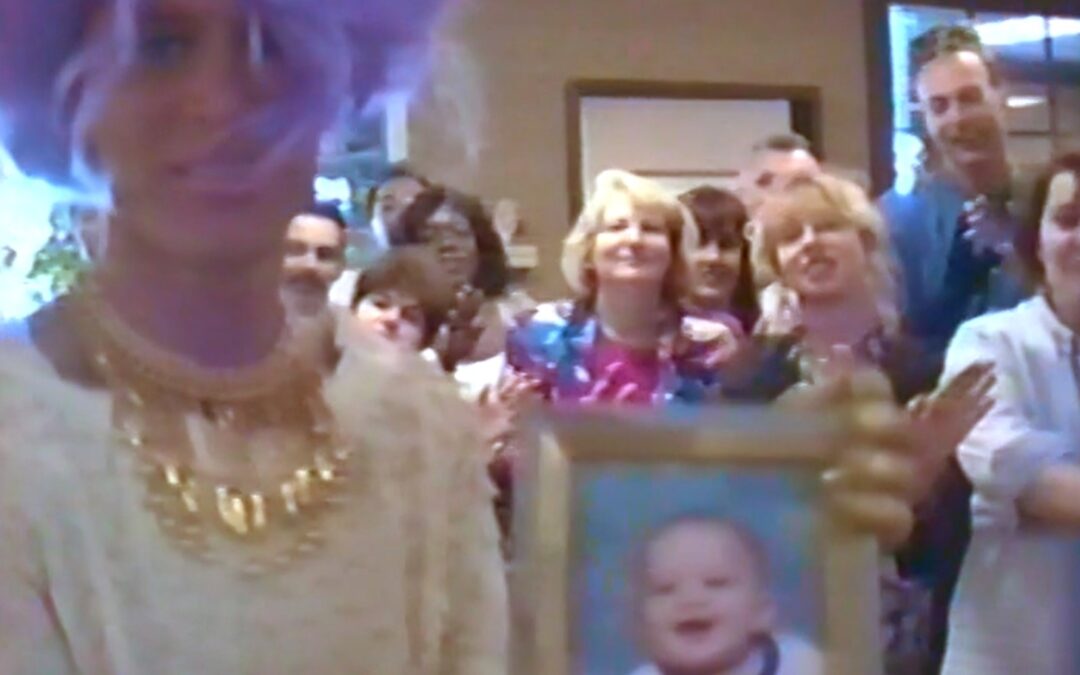
That would happen a year later, when “The Real Poz Guys of Atlanta” was posted on TheBody.com on February 23, 2010. This time we skipped dinner and went directly to dessert, as I taught my friends how to bake my legendary brownies. Then we sat by the fire for a conversation even more intense than our last, sharing about partners lost to AIDS, our sex lives and what constituted “acting out,” and even a round of show and tell, as each of us brought something of meaning to our lives with HIV.

There’s no doubt that I will do another episode with my friends again sometime, but I wanted to update you on their lives as they are today.

Eric, who famously declined to discuss his status with most people because “I’m Southern. We don’t talk about such things,” reports that his life is getting even healthier. “I quit smoking after 32 years on tobacco, I joined a gym, I got a trainer, and I have a new consciousness on eating,” he says. “At this rate, I’m going to live forever.”

Eric is also glad that his Mom remains one of his biggest supporters. But that wasn’t meant to be for Craig, who has lost the mother he so lovingly described in our first episode. “I am still recovering from that ongoing blow and the indescribable loss” Craig told me. “She was one of my best friends and it is still hard to really accept life without her in it.” Craig continues his work as a leading voice for gay men of color and HIV prevention.

The grief is something Eric can relate to, considering the loss of his partner Maxwell, about whom he shared in the second episode. “I don’t want to forget him,” Eric says now. “It’s not really sadness, but more a sense of him that stays with me.”

Antron has stopped writing in the black journals he brought to show and tell, and uses his laptop these days. That will come in handy for the young writer, who has a new project consisting of poems, short stories and rumination entitled Ayo: Lost and Found.

The advice that Craig had for Antron to carefully consider “who he lets into his life, and into his bedroom” hasn’t been lost on Antron, who tells me, “I have a deeper responsibility to value myself more and form a beautiful relationship with me first before pursuing any one.” He is planning to move to New York in January, and maintains a blog for his writing.

The dating life that James was negotiating in both video episodes has slowed, and for some challenging reasons. “I seem to have developed a fear of discussing my HIV and HepB status with potential dates,” he says. “I’m back on interferon for another 48 week treatment.”

The grueling treatment hasn’t affected his work as a massage therapist so far, but James is vigilant about the potential effect on his recovery from drug addiction. “Friends are so important right now, making sure I don’t isolate and relapse like I did during the last interferon treatment. I am blessed to have some really great friends.”

And that sentiment is really what this project was about for me. The healing grace of our friends, and how that support comes in handy during trying times.

Do you have a strong circle of friends who know your status or otherwise have your back? I’d love to hear some of your experiences and what you might advise someone who is considering whether or not to disclose their status to their social circle.

In the meantime, my dear friends, please be well.

Mark

Tags: , , , , , , , ,
Posted in Family and Friends, Gay Life, Living with HIV/AIDS, Meth and Recovery, My Fabulous Disease | 4 Comments »

The Twilight of the Redhead

Tuesday, September 20th, 2011

According to family lore, my arrival at birth with a full head of orange hair was met with shock and awe. My five older siblings ran the gamut from blond to dark brown, but they otherwise lacked my peculiar genetic mutation. Although the hospital nursery staff was abuzz with delight, my own family debated whether the color would last while they double checked the identification tags.

Redhead 1It lasted. In fact, the color bloomed like a Van Gogh painting. Before long I would learn the price of being different… and how intense childhood ridicule can be.

Look, it’s Freckle Face Strawberry! Howdy Doody. Bozo. Opie. I didn’t know whether to chop off my hair or hide underneath it. Only little old ladies and a few teachers seemed to appreciate it, but their cooing and stroking – they always needed to touch it, like a lucky charm – never endeared me to the bullies at school.

Redhead 2When puberty hit and the startling orange hue crept further down my torso I was beyond mortified. How could my body play such a cruel joke? Did this adolescent sissy really need another reason to be kicked and taunted? I actually made it through two years of junior high gym class without once taking a shower, usually by fiddling around at my locker – folding and arranging my clothes, feigning trouble with my combination lock – until it was safe to get dressed.

When I came bursting from the closet while in high school, I managed to finally celebrate my red hair along with my sexuality, and reveled in both. I mastered every hair product known to man, blow drying and spraying my head into a Farrah Fawcett extravaganza before a night out at the local gay bar. I discovered the men who loved redheads, and at last, I’d found the ideal purpose for the trait that once humiliated me.

Redhead actingIt even became crucial to my vocation, during a brief stint in my twenties in television commercials. Casting directors saw dollar signs on my head, and I became the freckled pitchman for everything from McDonalds to Popeye’s to Barq’s root beer. I treated my hair as a gay Samson might, with the latest gels and shampoos and conditioners, and in return it made me money and got me laid.

Whatever I became through the years, this single aspect of my identity pre-dated everything. Before the writer, before the AIDS activist and the drug addict and the actor and the childhood sissy, I was a redhead. From the very womb.

And then, not quite. Sometime in my thirties, the color began to slowly drain from my scalp. The orange and reds eventually surrendered to a strawberry blond, and even those tones became weaker, like watering down a pitcher of Kool-Aid, as my fiftieth year approached.

Redhead 4It must sound ridiculous, but I felt the loss deeply. We had been through so much together, my red hair and I.

I tried to take heart in having, whatever the color, a full, thick head of healthy hair, guaranteed for life by the family gene pool. That is, until a few months ago, when I stood in the shower and felt strands of hair sliding down my face, in a massive march from my head to the drain. After decades taking HIV medications, I had begun a new treatment regimen and its woeful side effects were ruthless and immediate. Within weeks my hair was thinner, dulled and brittle to the touch.

One of my private, most selfish fears has been realized. I have AIDS Hair.

But while removing clumps from the shower drain is a jolt to my vanity, it isn’t the trauma it might have been. After living with HIV for nearly thirty years, I’ve witnessed how creative it can be in its cruelty, down to the slightest of indignities. The sudden damage to my hair has been worrisome, I’ll admit, but part of me knows that it had long since served its purpose. There is something correct, even poetic, in this twilight of the redhead.

Years ago, as I began rebuilding my life after years of drug addiction, my therapist made a withering observation. “You’ve got no second act, Mark,” he said after one of my self-absorbed ramblings. “You make a nice first impression. But then what? Not much.”

The work that I’ve done in the years since his pronouncement have taught me the value of more important traits, of lending a hand or paying attention to friends or standing up for our community. And this evolution appears to have swept away one of my most stubborn sources of willful pride.

The last decade has given me the gift of other, more meaningful assets. They lie beneath, away from the gaze of strangers and first impressions.

My best features are now visible only to those who really know me. And they are just beautiful.

Mark

(I hope you’ll consider sharing or re-posting this, now or whenever you run across something here you appreciate. This blog has become a wonderful outlet and voice for me, and I must admit, I love new visitors!)

—————————————–

PLUS…

TorsoSometimes I blurt out a blog posting that belies my supposed serenity and enlightenment, like the rant I posted on The Bilerico Project (“For God’s Sake, Put Your Shirt On”) about gay guys who can’t seem to keep their clothes on when posting pictures on mainstream social media sites like Facebook. Pecs and traps and biceps? On glorious display. The friends who are beside them in the photo? Cropped out. Guys will even chop off their own faces, as not to distract from the wonder that is their abs (and, as we all know, it’s not the friends you keep, but the abs you maintain). Anyway, I had some fun calling them out about it, and the comments have been kind. Well, except for the twenty-something that claimed I was just jealous I wasn’t sleeping with young hotties. Umm, ouch.

DamariesMy favorite HIV/AIDS online resource, TheBody.com, has just opened a brand new section on the importance of drug adherence and tips on maintaining your regimen. As part of it, I was asked to produce some short “Day in the Life” videos of people living with HIV and how they fit their pills into their schedule. It was terrific to produce a video about Damaries Cruz of south Florida (right), who shares her misgivings about starting therapy at all, and her collaborative relationship with her physician. And the story of Tree Alexander is an inspiration, as he works to maintain his treatment regimen even during a period of homelessness. The reaction of his large family to his HIV diagnosis was wonderful and astounding: they threw him a “stay healthy” party!

Tags: , , , , , , , , ,
Posted in Family and Friends, Gay Life, Living with HIV/AIDS, Meth and Recovery, My Fabulous Disease | 11 Comments »

Those Doggone Days of Summer

Friday, September 9th, 2011

July and August were almost frantically productive for me, and I’ve followed it by the longest period of, well, nothing, since I began producing this blog. Sorry. Sometimes an HIV guy just needs to lay around and catch up on Top Chef and Real Housewives (God bless you, Bravo).

Mark and Jason cropHopefully you caught my most recent videos, such as the my examination of activism in “Should AIDS Activists and Pharma Just Get Along?” (complete with red paint foisting), or the video update on my facial filler procedure with Dr. Gerald Pierone (very informative but not for the squeamish), or the helpful tips for saving money with the knowledgeable Jason King (right) of AIDS Healthcare Foundation, whom the camera adores, and about whom I am harboring a jealous resentment (I may be petty but my grammar is pristine). And finally, it’s always ironic when hours of video editing can’t compete with one written posting the comes straight from the heart, like my tribute to Facebook putting my life together again.

But moving on.

Jim PickettIf anyone deserves being highlighted in the media for his commitment to HIV prevention, it’s Jim Pickett of the AIDS Foundation of Chicago. In a well-written profile of Jim in the Windy City Times, you can follow his journey from waiter to activist to the man touting rectal microbicides as the next best weapon in our HIV prevention toolbox (I keep finding myself wearing a sticker proclaiming “I have Rectal Pride!” after visiting his booth at conferences). I’ve admired Jim’s work for years and this fun profile explains why. “Expecting everyone to use condoms all the time is ridiculous,” said Jim in the article. “People don’t want to use condoms their whole life. As great as they can be, there are a lot of issues with condoms.”

Testing Makes Us StrongerAt the recent 2011 HIV Prevention Conference in Atlanta hosted by the CDC, I was thrilled to meet some of the dedicated members of the HIV/AIDS prevention team. What was even more satisfying was seeing their new prevention campaign targeting black MSM’s (“men who have sex with men,” who don’t always identify as gay). To date, there have been limited data about the factors contributing to the high burden of HIV among black MSM, particularly those who are young – and yet the latest CDC data show that new infections among this group are increasing every year. Fortunately, the CDC is focused strongly on this population, and previewed a major new campaign being developed to increase HIV testing among black MSM – called “Testing Makes Us Stronger” – as the next phase of its ongoing Act Against AIDS campaign.

ANITA BED HRU 2011 cropThank God I’m clean and sober and alive today. If I was still an active crystal meth addict, I would have missed an astounding recovery conference during Labor Day weekend, which introduced me to some amazing people and strengthened my resolve to keep working to restore and rebuild my life. While I’m always coy about which method of recovery I have chosen (I don’t wish to promote one over another), I will tell you that my camp alter ego Anita Mann (left) wasn’t coy at all, and — get this — she actually sang live during one of the evening’s entertainments. Alas, neither she nor I sing very well, but the message of recovery is clear, and she shares some funny, wise words with the audience after her song. Watch the clip here, but be kind.

We Were HereThe emotion of “We Were Here,” the documentary about the darkest days of the AIDS epidemic and its effect on a group of gay men, can be felt just by reading the reviews, like the rave it just received in The New York Times. I’m almost nervous to see it because I know the trauma and grief it could summon, but I also know I absolutely must. If you can’t find it playing at a festival or cinema near you, then for goodness sake, go directly to Netflix or some other DVD rental site and put it on your list. I often speak of honoring the past — in fact, my favorite video on this site, “Once, When We Were Heroes,” recounts those days and is always worth another look.

FACE frame grab 3My (healthy?) fixation on repairing my facial lipoatrophy (also known as facial wasting) continues, and I am pleased to report that I have begun treatments with Artefill, the “permanent facial filler” product, under the continued care of Dr. Gerald Pierone in Vero Beach, Florida. My past treatment with other products is well documented, but I’ve got to say that these results are well beyond those of Sculptra or Radiesse, truly. The bad news: Artefill is not approved specifically for lipoatrophy, so there are no patient assistance programs for those of us with HIV, making the treatment expensive (in the thousands of dollars). While I don’t expect many of my fellow HIVers can afford it, I felt compelled to share with you the very positive results.

POZ CRUISEI am the MC for the annual HIV Poz Cruise Retreat, set for this November 5-12 to set sail from Ft Lauderdale. There was such an abundance of fellowship and acceptance last year that I had to do it again. There are sometimes last-minute rooms and cancellations, so if you would like to check it out be sure to visit the web site. You can also watch my video blog from last year, which gives you a great feel for the event and the fun people aboard. Kudos to the dedicated Paul, a long time AIDS advocate and man living with HIV, who has shepherded the cruises for the last nine years.

ManReach FLASome of the most progressive events for building gay male community and preventing HIV are being developed in the Florida panhandle, of all places. On Monday October 10, I’m honored to be participating in the “Our Gay Generation” forum for gay men in Pensecola, which will explore what it means to be a healthy, satisfied gay man today by looking at our past and rededicating ourselves to one another. Sponsored by the Oasis Community Center (and Butch McKay, the formidable force behind the annual Positive Living conference), the forum transcends political issues like gay marriage, and focuses instead on personal satisfaction, community, and the value of friends. Later in the month, the same group will host a ManReach retreat for 40 gay men at a remote retreat center. Contact Oasis for more information on either event.

Whew! Okay, I’m caught up. Thanks for your patience, my good friends, and please be well.

Mark

Tags: , , , , , , , , ,
Posted in Anita Mann and Acting Gigs, Family and Friends, Living with HIV/AIDS, Meth and Recovery, My Fabulous Disease, News, Prevention and Policy | 8 Comments »

Facebook Put My Life Together Again

Tuesday, August 9th, 2011

Today I accepted the Facebook friend request of someone I knew in high school. We haven’t spoken in more than thirty years. She is married with a load of kids, and God knows why she wants to befriend the scandalous queer who wore knee-high platform boots to the junior dance in our home town of Bossier City, Louisiana.

Facebook dirty logoI did what I always do. I accepted her request and included a link to My Fabulous Disease, labeled as a blog chronicling my life “as an HIV positive gay man in recovery from drug addiction.” Based on past experience, I’m unlikely to hear from her again, and that’s okay.

For most of my life, I’ve kept my social circles far away from one another. The family section never mixed with the gay contingent. These segments were then dissected into those who knew my HIV status and those who did not, which were then divided by whether or not they knew I did comedy drag, and then finally separated into those who knew I did (a lot of) drugs, and those who did not.

When I finally put a stop to my exhausting existence of lies and fakery that accompanied my drug addiction, I knew that in order to live a life of integrity I would need to be the same Mark for every person in my life. No more masks or crafting my personality to suit the audience.

Facebook 2Then I joined Facebook, which allowed me to invite all of these segments into one pool of friendship. My nephew would see my posting about my HIV treatments. My AIDS work colleagues would be treated to videos of me in drag. My friends in recovery would post encouraging words about our shared disease of addiction, and all of this would happily exist on my profile page alongside my nephew’s picture of his baby boy.

Facebook has allowed me to tell the truth again. It has shown me how to be authentic and the same person to everyone in the various corners of my life. Becoming a whole person again cannot be understated. After many years of deceit and hiding out from one group or another, Facebook presented an exercise in transparency that has saved me from the counterfeit personas I relied upon for most of my adult life.

With all the excitement and hype about Google+, I know it’s a format I will never embrace, because it promotes a feature that allows you to separate the people in your life into “circles.” They trumpet this as a real innovation, but it would be a huge step back in my personal development.

I need all the positive structure I can get. Overcoming my addictive nature is still a work in progress, and sometimes my insecurities can still find their way into my Facebook life.

Facebook logo 2I scan every posted update from hundreds of friends, “liking” with consistent generosity. Anyone who wants to be my friend makes the cut, except for the Eastern bloc hoochie mammas that sometimes come calling. Do they knock on your Facebook door, too? They show far too much boob in their photo and love older men and “hanging out.”

Men on Facebook who show too much boob, well, they mostly get a pass. But beware of those who are always shirtless, and their friends are always shirtless, and so on. We’re not talking “at the beach” pictures, but holding-the-iPhone-aloft-in-front-of-the-bathroom-mirror type pictures. If you can’t ask a friend to take a shirtless picture of you, I figure you must be up to no good.

My OCD still sneaks out, and it adores Facebook. Someone might post a picture and I look at it and then I start browsing their other pictures and one of them has some interesting guy I don’t know and so I click on his profile and check out his pictures and stare at his many friends whom I do not know and carefully scan their photo album of a very nice dinner at a restaurant I have never heard of in a city I’ve never visited, and then notice some fabulous pictures of a birthday party for an adorable complete stranger and decide to look at the pictures of each and every birthday party guest and then I look up and it’s one o’clock in the fucking morning.

These behaviors are sometimes slow to change. I’m working on it. In the meantime, you can always friend me. What you see is exactly who I am.

“Dirty Facebook Logo” design by Hawk Style Design.

————————————————————-

PLUS…

Jail photoA little sanity may finally be entering the arena of laws and prosecution of people living with HIV for not disclosing their HIV status to partners (even though, in many cases in which people are in jail, there was no transmission and protection was often used). A blog posting at Housing Works reports that Rep. Barbara Lee (D-CA) is introducing a bill that would require a review of all federal and state laws and policies regarding criminalizing people with HIV. This maddening issue was the topic of my conversation with Sean Strub last year, and it’s about damn time that legislative action (of the sensible variety) is being taken. “Thirty-four states and two U.S. territories have statutes that penalize HIV exposure” says the Housing Works piece. “While their supporters claim these policies protect the public health, evidence shows they do more harm than good.”

Tags: , , , , , ,
Posted in Books and Writings, Family and Friends, Gay Life, Living with HIV/AIDS, Meth and Recovery, My Fabulous Disease | 15 Comments »

Outliving My Father

Tuesday, July 26th, 2011

The descriptions of his decline, in whispered calls from back home, had a dreadfully familiar feel to them. Weight loss at a frightful pace. Losing interest in the world. Suddenly looking very old indeed. Most gay men of a certain age have heard those words, have seen the patient, have buried the friend. This case was different, though. It wasn’t AIDS, it was cancer.

And the patient was Dad.

Dad and MarkThe disease had swept rapidly through my father since his initial diagnosis. The inevitable was approaching, but the territory was completely unfamiliar to my family, who hadn’t seen a death in more than 30 years. They were about to get a tour through hell. I have traveled it many times.

“Well, he’s lost a lot of weight,” Mom said on the phone, “and sometimes, he will say the same thing more than once. That does scare me a bit.” You think you’re scared now, I thought.

“Have you checked into hospice care?” I asked. It’s exhausting for a man in his thirties to care for a dying lover. Mom was 75.

“Well no, honey, I thought we could wait on that…” Her voice drifted.

Something inside me went on AIDS auto pilot.

“Call the doctor and ask about hospice care,” I practically ordered. “They can help avoid another hospital stay, Mom.” The family would do anything to prevent that scene again.

I flew home within days. Still no hospice care. My family was stunned into inaction, it seemed. Had anyone spoken to dad about getting nursing help, about his illness, about how everyone was dazed into speechlessness? Heads shook slowly, eyes looked downward.

After 15 years living with my own HIV infection, my medical choices — powers of attorney, “no resuscitation” instructions — had long been settled. Mom was uncomfortable with the decisions, much less the reality.

On my second day home, I found myself alone with Dad. He was bundled on the sofa, and whatever his thoughts, they seldom found words. His condition looked hauntingly familiar, leading me to a nonsensical conclusion. “Dad has AIDS,” my mind insisted.

“Can I talk to you about what’s going on?” I asked him.

“Yeah..?” he said weakly.

“This is really horrible Dad, and everyone is freaked out and doesn’t know how to act.” His eyes never left me. “Mom is afraid to ask for help. You need a nurse. Do you think that’s okay?”

“Well… yes. I do.” He meant it. “Your mother… your mother works very hard.” I took his hand. “This is hard for your mother, I think…” he continued. “Your mother and I, we are one mind, together. One mind.”

I had never heard anything so romantic from my father. He saw it in my face, and he found the sadness, too.

“Don’t worry,” he said, and his hand tightened around mine. “It’s okay. I’m all right. This is all right…”

I wanted to say everything at once. Every declaration of love I had for my father, the retired Colonel who loved his family fiercely, laughed heartily, and equated only happiness with success.

“I will talk about you my whole life,” I said. “All the stories, all the things you’ve done for us… but how do I explain you to anyone?” My voice choked, and my attempt to properly organize my father’s last days was awash in unexpected tears.

I looked up and was stunned to see damp eyes staring back at my own. A tear escaped and rolled tentatively down and across his cheek, as if unsure of the path, so alien was the terrain.

We began words and abandoned them, floating silently in a moment I hoped could delay the inevitable. I thanked God for a gift that, in the distorted world of AIDS, I had wanted so badly over the years. I would outlive my father.

Only after having collected the courage before to say goodbye, to realize the fear and talk about it anyway, did I have the strength to address it with my dad.

This is not a story about AIDS. But it is a story because of it.

(This was originally published in The Advocate on May 22, 2001, but has never been posted to my blog. Thanks for letting me share it with you now.)

————————————————-

PLUS…

Marius 2In 2000, when Jo Jowett found five children dying of AIDS in a bare room in Romania, she knew she had found her life’s mission. She established Love Light Romania, providing services and end-of-life care to people living with AIDS throughout the area, and if this sounds like dire work, wait until you see the stark beauty of the brief videos created to highlight their services. Told through gorgeous photography and voice over, the first video is Jo with one young man in his last days, as she expresses her devotion to him and explains how the program began. My other favorite is of Marius, a Romanian man very much alive today as a result of loving care (he’s even friended me on Facebook!). The images of his life in Romania as a man with HIV are beautiful and unforgettable.

LabsDo you ever wonder what exactly all that blood is for, when the draw it for your lab work? The dizzying assortment of tests and numbers give me a headache. Lucky for us, D. Gregory Smith has sorted it all out for us in a terrific piece on the Bilerico Project about all the most common labs tests for HIV patients (and trust me, it’s an exhaustive list). It’s a simple primer, printable and ready to take along to your next appointment, and staying informed like this has all sorts of benefits, according to Gregory: “…a proactive stance by a patient is more likely to decrease feelings of depression, helplessness and fear, and increase feelings of strength, health and well-being.” Check out his excellent guide.

davidevansFor those of you keeping score of the Pre-Exposure Prophylaxis (PrEP) debate (whether or not we should embrace the notion of people taking meds prior to risk behavior, as a prevention tool) the latest points go to the pro-PrEP camp. Last week, Regan Hofmann’s searing blog post on Poz.com dismissed PrEP as an overly expensive pipe dream. But this week, Project Inform’s Director of Research Advocacy, David Evans (right), made his inaugural post on Poz.com by countering that, although he agrees with much of Hofmann’s thinking, there may be ways to make PrEP affordable and widely available, and these avenues are worth exploring. Among his many compelling arguments for PrEP, David took offense at Hofmann referring to PrEP as “a profit-driven sex toy for rick Westerners.” He responds, “Whether intended or not, this statement implies that some people in whom PrEP might actually be appropriate (can she possibly mean gay white party boys?) are somehow less deserving of this tool than others.”

Tags: , ,
Posted in Books and Writings, Family and Friends, My Fabulous Disease, Prevention and Policy | 12 Comments »

For Dad: “I am the man my father built.”

Thursday, June 16th, 2011

Never in my short life had I been camping. I hated the grit of dirt and leaves, bugs, peeing outdoors, and the looming prospect of sleeping amongst it all. The woods looked like the terrarium for my pet alligator, and from what I could tell, Wally didn’t sleep all that great either.

MarkDad1984Dad thought it was just terrific (“Want to make a fire with two sticks, Mark?” “Did you count the worms in the bait can?”) and he was getting along well with the other dads at this father/son campout with my Cub Scout troop. For that I was grateful.

At school they were calling me a queer and at church the jocks were chasing me down the halls for wearing platforms. But Cubs was populated with other misfits like me. I wondered if the Scouts was a club that parents paid to give their kid friends.

The dusk air was filled with the sounds of mallets thumping, as duos of fathers and sons pitched their tents. Dad was nearly giddy as he carried a long bag from the car. I’ll bet he bought us a brand new one, I thought, since we never went camping before.

Dad unrolled the bag at our feet. There, stretched across the ground, was clear plastic and some twine. Nothing more.

“Somebody stole our tent!” I said, shocked.

Dad laughed. He was one of those men who began most sentences with a laugh or a “heh heh” sound. It was endearing but not at the moment.

“Nope, sport, that’s our tent,” he said, “let’s get it going.” He started to unfold it. I stared and stared. It looked like the largest plastic leftover baggie I’d ever seen. My face felt flush with embarrassment.

DadDavidSplinter1968cropDad was strange. He always had projects going on in the shop or downstairs, like building a grand piano from cardboard (no special reason) or learning about geodesic domes and making one the size of a Starbucks in the back yard. Out of clear plastic. Getting a splinter removed from my foot became a lesson in physiology, not little piggies.

His obsession for years was box kites, the bigger the better. He started with a six-foot prototype, flying it in a cotton field near home. Then we worked all summer on a box kite the size of a Winnebago that we transported to the field on a flatbed truck. It crashed after a few glorious minutes and Dad, predictably, laughed. “Wow!” he gleefully shouted. “Did you see that crash? Spectacular!”

On weekends you always heard his low, rumbling laugh in the basement when he “had an idea.” Mom hated it when he had an idea.

Dad was now pitching a plastic baggie, and the others were noticing. The mallet thumping slowed and heads turned. Why did we have to be so different? I liked fitting in with this group of Scouts. Dad was ruining everything.

“Dad,” I offered, speaking in the calm manner of a hostage negotiator, “why don’t we borrow a tent?” I looked around and didn’t see anyone who felt like interacting, much less lending. I wondered how long a K-Mart run might take.

MarkatTenHe paused and twirled his wooden mallet. I was surprised it wasn’t made from clear plastic. “Heh heh,“ he replied. “Nobody has one like this. I made it for us! Nobody makes one like this.” He draped the plastic sheet across a clothesline contraption he’d made and then it struck me.

The stares. The withering, judgmental stares of the others. Once inside our leftover baggie, they could still stare as much as they liked. There was no place to hide. I wanted to throw myself on the campfire.

“But Dad,” I tried, a bit more desperately, “everyone can see us. You can see through this…”

“That’s the beauty of it!” and he bellowed a laugh that produced more squinty glances from around camp. “Look up, Mark! We’ll be able to see the stars!”

Those days, and that moment, are lost to time now, and so is my father. Not long after camping out under the stars, our personas traded places. I embraced my sexuality and my misfit charms, while Dad’s struggle to understand my life made him just another parent who didn’t get it. Worst of all, he was made to contend with a teenager who saw him as something abhorrent: typical.

We had many years, later, when our outlooks merged again and we reveled in his various projects and my work as an outspoken gay man. Dad raised exactly what he valued, a man who steps up and asks stupid questions and knows that to soar you must risk the occasional, spectacular crash.

On my best days I live happily in a clear plastic tent of my own design, writing and living as an HIV positive queer for all to see. And on the worst of days, my mind’s eye conjures up a hearty laugh coming from nearby, maybe the basement, where something is being built that will solve absolutely everything.

Usually it’s a box kite, crafted from unlikely supplies and fatherly magic, that carries me far, far away.

(This originally posted in August of last year, but my late father is very much on my mind during this Father’s Day weekend. Thanks for giving this another look.)

Tags: , ,
Posted in Books and Writings, Family and Friends, My Fabulous Disease | 15 Comments »

My Surprising Lack of Gay Pride

Tuesday, June 7th, 2011

For most of my life I’ve been judgmental and a little impatient with gay people who didn’t just come out. Are the risks really that dire? I suspected they were just chicken shit, or unwilling to stand up to their family or to whatever screwed up religious upbringing they had.


Growing up on Air Force bases
wasn’t exactly the Castro, but I didn’t know any better than to walk and talk however I pleased (I was in full sashay mode by the age of twelve). I was sexually active soon thereafter, and stunned my Louisiana high school with an older boyfriend in my senior year.

MarkInRepose - CopyYes, I grappled with my Methodist teachings and suffered through some brutal rounds of dodge ball (affectionately known as “Smear the Queer” where I come from), but making it though my teens was mercifully uneventful.

The bullies were too freaked out by my jumpsuits and platform shoes to approach me, though I must credit my perpetually embarrassed, varsity jock brother for helping keep them at bay. The result of this rather fortunate gay adolescence was my ignorance of the perils of being out, and that arrogance suited me just fine for most of my young adulthood.

And then, years after my own coming of age, Matthew Shepard tried to live openly as a young gay man, too — until he was beaten and left to die tied to a fence in Wyoming. The images and details of his horrific final hours were like blunt force trauma directly to my heart. How could I have been so cavalier about what the real costs of coming out could be?

Today, I never downplay the societal risks of being gay, but I focus my writing on two things that added shameful layers to my identity: HIV and drug addiction. How ironic that the kid who believed there were no dangers to growing up gay would fall victim to two of the most common health risks among gay men: being infected with HIV and using drugs.

I’m still a sashaying, gay stereotype representing the most fabulous social ills, it would appear.

My sense of pride emerged not in response to being gay, but in my response to HIV and my drug addiction, in that order. I found personal self worth by helping my community face AIDS in the 1980’s, and I have rediscovered my self esteem while on the treacherous road back from crystal meth addiction.

Being gay isn’t something I have been proud of, in and of itself. But I take pride in how I have handled what I consider the fallout of being gay.

During this gay pride month of June, I hope we’ll all take some time to assess what we’re so damn proud of. I’ve made that list, and “being gay” isn’t anywhere on it. Do I take my sexuality for granted, or am I ungrateful?

I’m proud of Mark, the man as he is today. I’m proud of my brother for keeping the bullies away. And I’m proud at my success, day by day, of recovering from addiction and having a purpose.

With that, I’ll sashay out of here.

Mark

(The video above is a gay pride message I produced last year, and I would encourage you to watch it. What begins as a funny take on public service announcements becomes something surprisingly different and emotional. As always, my friends, feel free to share my content, and please be well.)

Tags: , , , , , , , , ,
Posted in Books and Writings, Family and Friends, Gay Life, Living with HIV/AIDS, Meth and Recovery, My Fabulous Disease | 12 Comments »

Can I blame gay culture for my drug addiction, please?

Friday, May 20th, 2011

After a lifetime of sporadic, recreational drug use, I became a full-blown crystal meth addict ten years ago, and then eventually got clean and sober in January of 2009. But why would I, or anyone as engaged in life as I was, morph into a drug addict?

It seemed an unlikely turn of events for a gay advocate and outspoken community leader living with HIV. Was my drug addiction some sort of post-traumatic stress from the AIDS horror show of the 1980’s?

Maybe it pre-dated AIDS, and resulted from the stress and shame of growing up gay. It’s easy to understand why anyone who came of age believing they were perverted (and going straight to hell) might need a stiff drink. Research indicates that gay men and lesbians are more likely to smoke, drink and use drugs. Was I born this way, GaGa?

Gay Men and Substance abuseSo I was immediately drawn to the new book, Gay Men and Substance Abuse: A Basic Guide for Addicts and Those Who Care for Them. I thought the book might bolster my hypothesis that I was a victim of gay culture and doomed from the start.

Because, my dear friends, even after more than two years living clean and sober, I still jump at the chance of blaming my behavior on something other than myself.

Alas, the book is a helpful, informative guide but it doesn’t let me off the hook. It hasn’t the least bit of interest in finger pointing. Instead, it offers practical information and advice about addiction, treatment, relapse and recovery – written specifically for gay men and their families. I would strongly recommend it for gay lovers or allies trying to understand the addiction and recovery process, and required reading for those working in the field.

I spoke to author Michael Shelton, M.S., C.A.C., about the ways in which addiction and recovery are different for gay men, and he pointed out the importance of family support, and the fact that gay men often don’t have it.

“The number one precipitant for a person seeking help is family,” Michael told me. “If they have no close relationship with their family or a significant other, there’s no one on their back telling them to get into treatment.”

But what about gay culture itself? Michael wasn’t ready to make blanket pronouncements about gay culture’s perils, but he did note the connection between our preoccupation with sex and the almost mythical sexual reputation of drugs like crystal meth.

“We absolutely have created sexual monsters” he said. “I see these guys every week (in my practice), and the only way they can engage in sexual contact with another man is through the use of substances.”

Michael does allow that gay media plays a role in this hyper-sexuality. “The norms of our community say that one of the primary goals is hot sex as much as possible. Gay male culture is a hyper sexual culture. Pick up any gay paper and notice the sexual content.”

Michael was quick to add that “this doesn’t deny the fact there are many long term gay couples,” but that statement didn’t fit my agenda – Gay culture contributed to my addiction! I had something to blame! – so I ignored it and called my gay BFF Charles to announce my findings.

“Charles!” I began. I had caught him at a subway stop waiting to commute home from his governmental public health work. He does the green thing. “It’s no wonder I became a drug addict, Charles.”

“Really? How do you figure that?” he asked.

“Because I’ve been such a totally gay man!” I was lightheaded with blame deflection. “And being gay is all about hyper-sexuality and taking steroids and looking hot and dancing on boxes at circuit parties, just like I did. Oh, and don’t forget sex parties!”

There was silence for a moment. I could hear a garbled announcement on the subway speakers at his end.

“Well, that pretty much negates my life,” Charles finally said, flatly.

Charles has never been fond of drugs. His sex life has been more conservative than mine, meaning, in the realm of sanity, and his party days consisted of dance floor celebrations that ended before last call. He’s never seen the inside of a sex club.

“Oh Charles, I didn’t mean –“

“Your view is so small, Mark. You think when you stopped that behavior and going to those places… did you think you had reached the far limits of gay culture?”

I was properly chastised. “Yeah,” I said. “I felt like that for a while.”

“Then welcome to the rest of the real world, Mark. Say hello to all the gays who have real lives and real jobs and are standing at subway stops waiting to get home to feed the cat. Is that not gay enough for you, because I’m not stopping at a bathhouse on the way home? I’m going shopping later to find a hippie outfit to wear to a touring production of Hair I’m seeing tonight. I’m thinking love beads or pooka shells. Gay enough? Or should I shoot up meth during intermission?”

“Yes, yes, Charles. You’re plenty gay.”

“Gee, thanks. My train is here. Talk to you later.”

Charles did his usual stellar job of pointing out what should be obvious to me. My self centeredness and limited viewpoint keep getting in the way. There hadn’t been room in that view for other gay men who enjoyed lives without drugs or alcohol, or who were capable of using moderately.

There is a saying among people like me that we are not responsible for our addiction, but we are responsible for our recovery. It suggests that I should not blame myself for how I got in this predicament, and while I’m at it, I probably shouldn’t blame my local gay dance club, either.

My road to recovery as a gay man looks remarkably like the road everyone else must take – paved with equal parts honesty, open-mindedness and a willingness to keep trying. That willingness, no matter how much I try deflecting and blaming others, is entirely up to one person.

That would be me. Big, flaming, gay ‘ol me.

Tags: , , , , ,
Posted in Books and Writings, Family and Friends, Gay Life, Meth and Recovery, My Fabulous Disease | 10 Comments »

How one Mom handles HIV/AIDS in the family.

Thursday, May 5th, 2011

God could not be everywhere, so he created mothers.
~Jewish Proverb

My mother raised six children, topping off this great achievement with yours truly. Yes, I’m the youngest, which explains a lot, but not all. To understand the rest, you’d have to know the woman. Or, perhaps, simply be a mother yourself.

Mom was there for her kids during the years my father spent in far flung corners of the world flying B-52′s as a pilot in the Air Force for more than thirty years. Mom had to be all things: nurturer, disciplinarian, confessor, judge and jury. She was the parental constant, and she performed it all admirably (and stylishly, if you ask me).

Once I was old enough to safely get home from school on my own, Mom went back to school herself. To everyone’s surprise but hers, she got a Master’s Degree — even spending a semester at Oxford — before starting a prestigious career as head of Louisiana State University’s library. She has since retired but could easily keep a smirk on her face for the rest of her life for all of those poor fools who, like me, thought her talents stretched as far as PTA meetings but not much further.

In 1985, she approached the news of my HIV status with the same pragmatic resolve as her career. She studied up, listened when I needed to talk about it, and traveled to Los Angeles to join me for a weekend educational retreat for people with HIV/AIDS and their allies. I’ll never forget her attending a breakout session on safer sex and then catching up with me to say, “Mark, explain rimming.”

Mother - CopyHer life has been the kind of roller coaster you might expect for a woman who has raised six kids, seen a few wars, and watched two gay sons negotiate the AIDS epidemic.

There are questions I have always wanted to ask Mom about finding out about my HIV status during the darkest years of the pandemic, and how it felt for her to go through a family AIDS tragedy. In my video interview with her (above) from last year, she never flinches at the questions.

This Mother’s Day, I hope you are fortunate to have a supportive mother to call or remember fondly. Thank God, mine is not unique in her capacity to empathize or love unconditionally.

——————————————————————————

PLUS…

Jonny Wood - CopyExactly 21 years ago today, my friend Jonny Wood (right) tested HIV positive. Like many of us, he has channeled his gratitude for his good health by giving back to his community, and next weekend Jonny will participate in the grueling AIDS Ride to raise funds for the Emory Vaccine Center. You know I never hit you up for donations, but if you can afford even a modest contribution, his official web page for his AIDS Ride makes it really easy and secure to donate. No donation is too small, my friends. Isn’t it amazing that so many of us who lived through the dawn of this epidemic are not only still walking and talking, but riding their bikes for hundreds of miles in hopes of finding an effective vaccine? You go, Jonny.

Normal HeartLarry Kramer‘s searing indictment of society’s response to AIDS in its early years, The Normal Heart, is back on Broadway and just racked up five Tony Award nominations, including for Ellen Barkin (right). “Powerful” hardly describes this primal scream of a play, and its fitting that this 1985 masterpiece has been remounted as we commemorate 30 years of the epidemic and as our community commitment to AIDS continues to be diluted by time and treatment advances.

As always, my friends, please be well.

Tags: , , , , , ,
Posted in All Other Video Postings, Family and Friends, Living with HIV/AIDS, My Fabulous Disease | 6 Comments »

Trying to put away childish, damaging things.

Tuesday, April 12th, 2011

When I became a man, I put away childish things.
– 1 Corinthians 13:11

We’re on a dirt road in the cotton fields, sitting in the back of his Plymouth. It had been my idea to stop and look at the sky, and it doesn’t come off like a sneaky move now, because the moon is full and bright and gorgeous. I’ve been playing along but I wish he would make his move. This is the part that’s always kind of boring. He’s nice, though, and good looking, maybe around 35.

cotton roadIt’s a balmy Louisiana night in 1975. And I’m fourteen years old.

Everything goes as planned, and he gets me home on time so no one suspects. But he was a lot more nervous about it than I was.

And that was the routine during my teenage years. I had given up trying to mess around with other boys because it took forever to talk them into anything and I didn’t want them to freak out about it. So, I got involved in community theater productions during the summer, playing bit parts or working the spotlight, just to be in the company of gay men. Then it was just a matter of getting some time alone with them.

My strategy for getting laid worked with some regularity, and it never occurred to me there might be something inappropriate or perverse or even criminal about it. Ah, but that’s the catch. It never occurred to me.

People tell me the criminal ramifications most certainly occurred to them. They say I was molested or abused, and that it was the very definition of the word “statutory.” They say I was dealing with adults who had the capacity to know better. And, most bruising to my ego, they tell me that my seductive charms were irrelevant, and that perhaps it was they who were manipulating me.

Now, at fifty years old, I wonder if my teenage memories are trustworthy, and if it mapped an adulthood in ways I’ve failed to acknowledge. Before I became a man, before the failed relationships and the HIV and the drug addiction, there was an adolescent traveling side roads with strangers and taking dangerous walks in public parks. And it is that boy, not the legion of adult accessories, who fascinates and saddens me.

Was my fate sealed in the cotton fields of Louisiana?

The men I coaxed to those dusty roads aren’t villainous to me, and I still can’t allow them to be left dangling in guilt and shame. I won’t reduce them to simple pathology.

I met Jim in August, right before my freshman year in high school. The summer musical was “1776” and I was a stagehand. It was practically an all male cast. It was a busy summer.

After a matinee performance one afternoon, I asked Jim for a ride to a pool party someone was throwing for the cast. Once inside his car I told him I forgot my bathing suit and could we stop at his place so I could borrow one? What followed was a pitiful half naked fashion show in his bedroom, and a brief, furtive encounter between us.

Afterwards, I happily got back in the car but Jim wasn’t talking much. He got real quiet as soon as we were done.

He had driven a few blocks when Jim let out a kind of cough, like he was trying to stifle something and it burst out anyway. I looked over and his whole face was wet.

“What’s wrong?” I asked. I had seen men in rather personal situations, but I had never seen one cry.

He pulled the car over and turned it off. Everything suddenly felt quiet and important.

“What is it?” I asked in a careful voice. “Am I in trouble?”

windshieldHe was searching the car console for something and found a packet of Kleenex. He held it in his lap and started to speak while he opened it.

“I’m twice your age, Mark,” he said into his lap. His eyes were little cups of water, spilling. He turned to me. “You’re fifteen years old. I’m twice your age.”

His mathematics meant nothing to me. He looked like he was trying to read my mind. It made me uncomfortable. I didn’t know what he wanted. I sat there and said nothing.

He turned away and gulped back more tears. And then he asked the most mysterious question of all.

“Don’t you… just want to be fifteen, Mark?”

I had no idea what the man was talking about. I sat staring at him with my mouth open. I was completely stumped. Seconds went by and the car was silent.

My confusion seemed to disappoint him, because he shook his head slowly and looked back out the window. He was still very upset.

He wasn’t simply crying, they tell me now. They insist he was deflecting his own criminal guilt by blaming me for not acting my age. They tell me that he was the one who must have trapped me and I don’t even know it.

Either way, I think Jim got more than he bargained for. I think he was a little frightened by the manipulative and unemotional fifteen year old sitting in his car that afternoon. And I think it saddened him because he cared about me.

And sure, I felt trapped all right. I remember feeling trapped in his car, where things were not going as planned, because after ten minutes we’re still parked on the side of the road and Jim won’t stop crying. I am staring at my shoelaces because I can’t imagine a grown guy would want anyone to see him like this. He must be so embarrassed. And I wish he would start the car, because the party is going on and there’s probably lots of people having fun around the pool and I really want to be there.

I finally look over at him and he’s blowing his nose. Maybe that means we’ll get moving again, I’m thinking. Jim doesn’t say anything else but he does finally turn the ignition and the car rumbles to a start.

I’m so relieved. I really want to see what’s happening at the party.

——————————————————————-
The sounds you hear are the clicks of people unsubscribing to this blog. I know this is a difficult piece (my own partner advised me not to post it), but since I’ve written about so many challenging aspects of my life — HIV, drug addiction, sexuality — I felt compelled to share this. I’m still unable to judge my own actions or those of others with much clarity. If you are are trying to overcome childhood abuse, please consider contacting the Adult Survivors of Child Abuse (ASCA). — Mark

Tags: , , , ,
Posted in Books and Writings, Family and Friends, Gay Life, My Fabulous Disease | 21 Comments »