
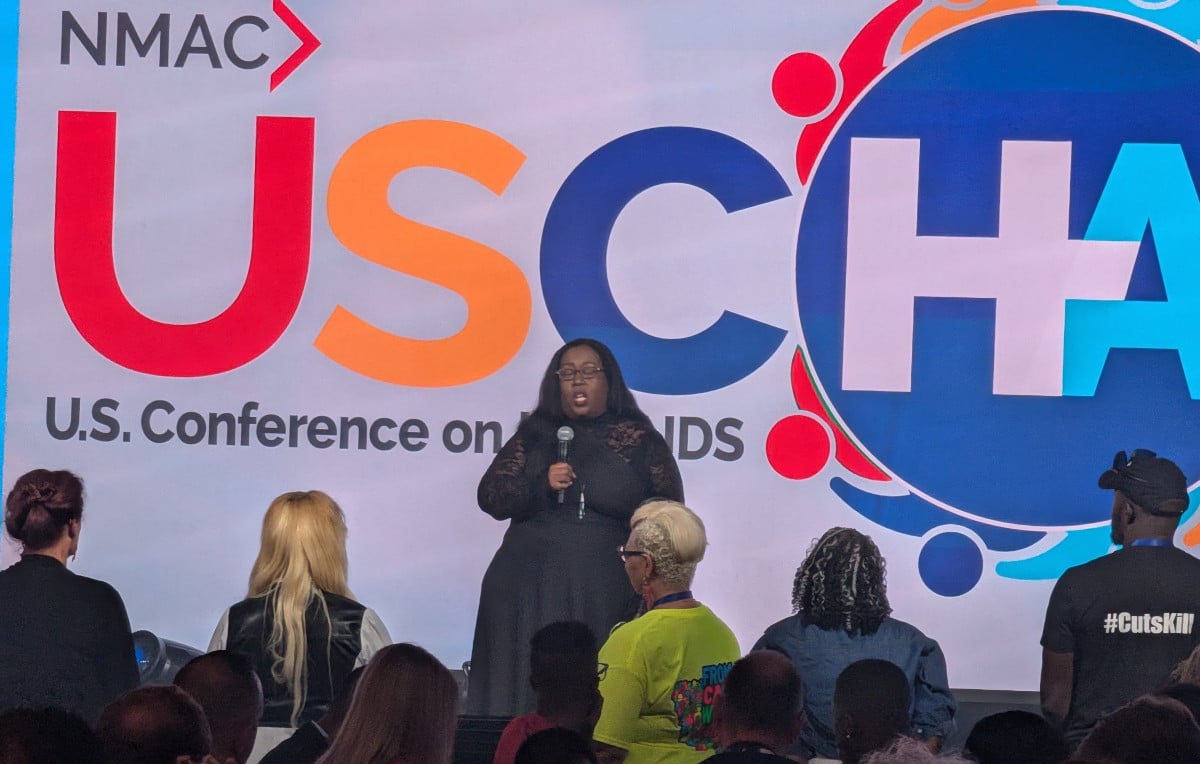
Kamaria Laffrey at the USCHA opening plenary.
The 2026 United States Conference on HIV/AIDS (USCHA), held September 17-20 in Anaheim and organized each year by NMAC, is now history. It brought the usual mix of elation to be in the company of old friends and veteran advocates; worry for the future of our movement in chaotic times; and my usual grumbling about the insidious and overbearing influence of Big Pharma.
Here are my five takeaways from USCHA 2026:
The Opening Reception was Pure Celebration
Let’s start with a high point. The opening reception, held during the early evening in the breezy outdoor pavilion of the host hotel, struck a joyous mix of carnival and family reunion. Men on stilts! A Beyonce lookalike! Expensive cocktails!
The event encapsulated the very best thing that USCHA has to offer: an opportunity to reconnect, hug necks, and remind ourselves that we are all part of a large community of people who care deeply about our work. I could have danced all night.
What if They Scheduled a Protest and Nobody Came?
For the first year in memory, there was no protest during a plenary of USCHA. Wait a second. There wasn’t one last year, either. I don’t care for this trend, given the fact that plenaries should – must – reflect the feelings and concerns of attendees, including our rage at the current administration. If you sought a mirror to that rage, you came to the wrong conference.
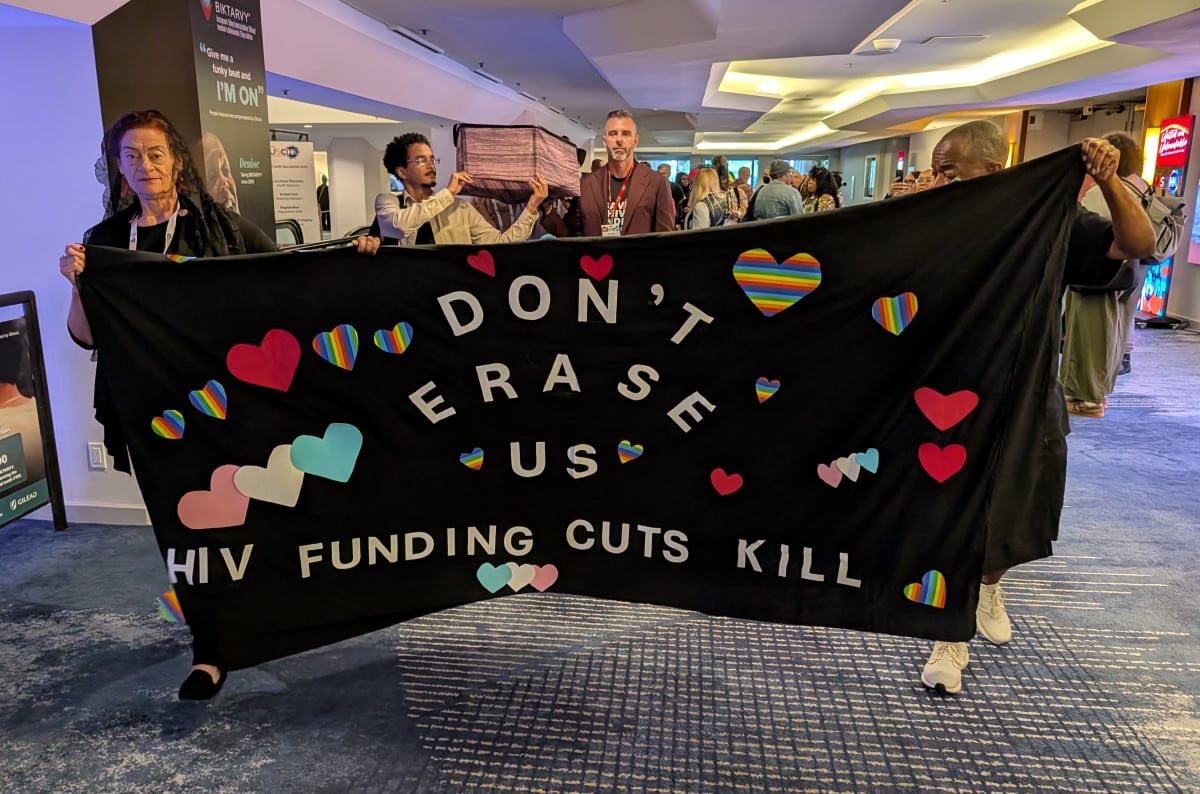
The exception was the tireless people of #SaveHIVFunding, a group of concerned advocates and organizations who would not let the shitstorm in Washington, DC, go unmentioned. Led by immeasurably effective activists such as Jeremiah Johnson and Maxx Boykin of PrEP4All, a mock funeral procession was conducted from the doors of the plenary to a rooftop atrium, where people read their own obituaries, a clever, sadly realistic idea first conceived by Kamaria Laffrey.
I believed, wrongly, that countless people leaving the plenary would join the procession. They did not. I will try my best not to judge them for that. I’m sure there were many obligations at USCHA at that time. Or perhaps they were headed to the Gilead booth for a free latte.
We are in the Suffocating Embrace of Big Pharma
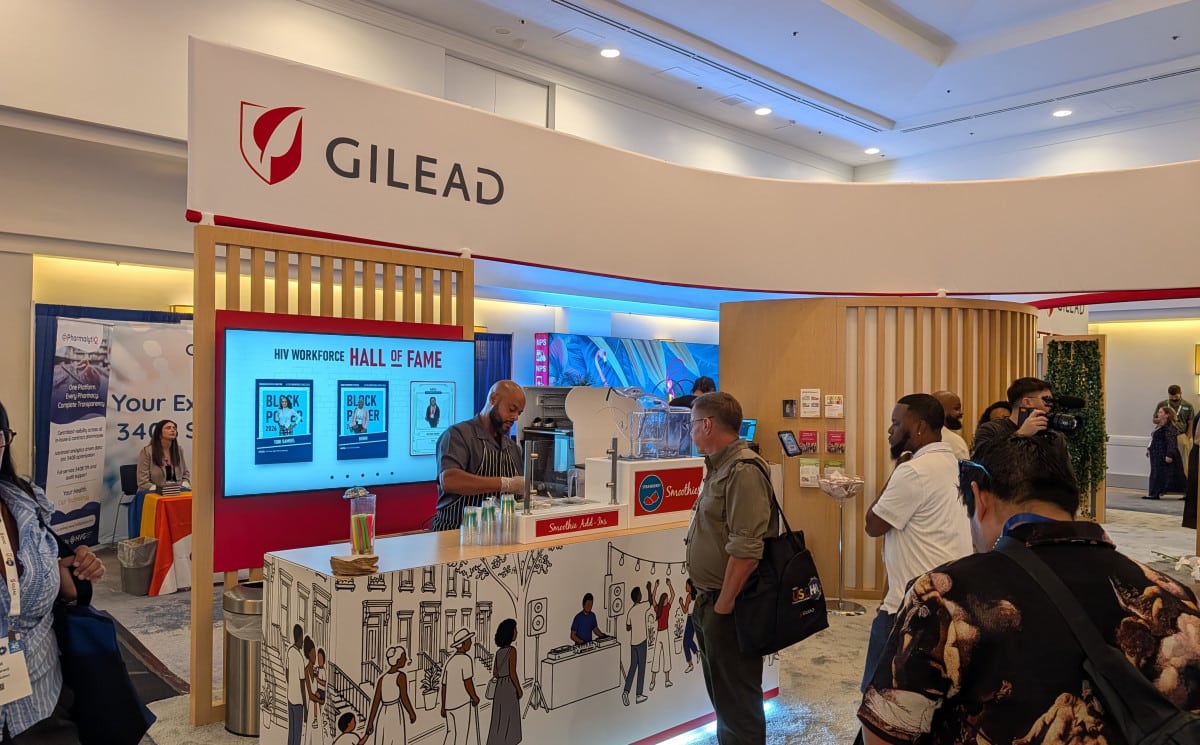
One would gather from the inescapable posters lining every flat surface of the host hotel, featuring smiling faces of people living with HIV and, you know, all empowered and everything because of their pharmacological solution, that Big Pharma is our friend and savior. Listen closely. They are not.
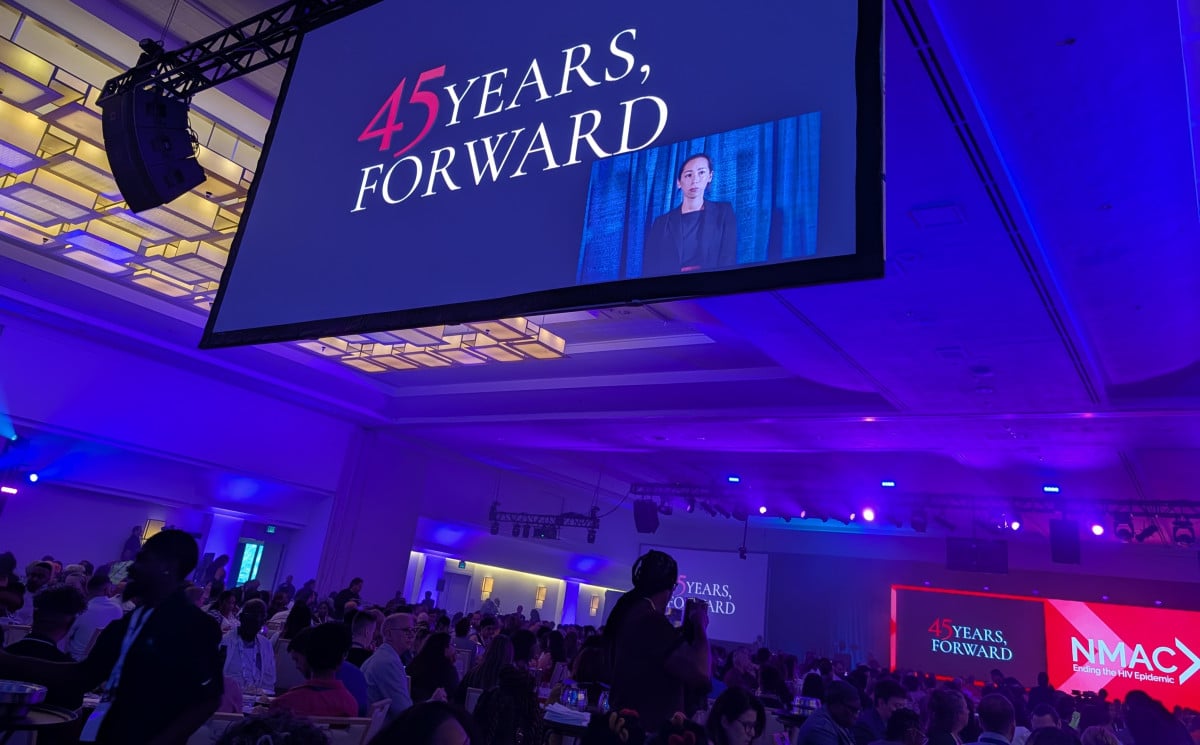
NMAC made the bargain long ago that, in order to mount this fantastically expensive conference, they would sell off the plenaries to pharma sponsors. ViiV gets the first plenary, Gilead the second, and so on. The problem is, except for brief content from NMAC to open each plenary, the content is owned by pharma and you just have to trust they will deliver something of value, rather than simply having the wait staff serve salads with Biktarvy croutons.
The results were mixed, to put it mildly. ViiV gave us a generic history and unmemorable messaging. Gilead managed to provide cross-generational conversations between advocates that were promising but fell flat. Merck gave us the entertainment value of Debbie Allen and Jasmine Guy, and an unexpectedly moving look at the movement then and now through their eyes.
Side note: the career pipeline from non-profit community work to Big Pharma continues. Every smiling pharma face, it appears at this point, is someone you used to work with on the front lines. They cashed in for a livable wage and a retirement plan. Good for them. And how very clever of pharma, to dress their windows with people we know and like. Maybe I’m just resentful, never to have gotten the call, which might have something to do with writing pieces like this one. But still.
There was one small thing Big Pharma, or anyone at NMAC, could not bring themselves to do…
The Man Behind the Chaos is Donald Trump. Say it.
The remarks from the plenary stage should reflect the concerns and needs of the attendees. If that is, in fact, the bar, then USCHA failed. Not once during the four days of programming was the name of our President and the direct destruction he has wrought mentioned from the stage.
Sure, people inferred. Woop de do. Our community is frightened, angry, and we still have enough vigor in our exhausted psyches to fight back. But we got no encouragement to do so at USCHA, except for the conversations happening in hallways and at individual workshops, where attendees were on fire with rage and heartache.
You can bet those pharma-owned pieces of the plenaries were not going to go there, that’s a given, but somewhere couldn’t NMAC have spoken about political advocacy, the midterms, or how to get involved with voter registrations drives – a bipartisan issue – in our own communities?
Is Everyone at NMAC Okay?
The staff at our treasured NMAC spends months preparing for this conference, as well as other conferences and events they produce. I’m used to seeing them a bit worn out by the time the rest of us arrive. They work hard.
But something was missing. Yes, they have had a tumultuous first year with their new executive director, Harold Phillips, who has the right and the duty to shape the organization as he sees fit (he also gets points for stepping in, in real time, during a plenary to announce the breaking news that the administration is trying to take control of NIH funding grants).
Besides layoffs and resignations of key NMAC staff this year, however, the staff that remains seemed resigned and checked out. They looked more weary than usual. I’m just saying.
We need NMAC to succeed. We need their work on Capitol Hill and their conferences to succeed. They may very well be reflecting the same exhaustion as the rest of us. I hope they pull through this.
That’s it folks. Am I in a mood? You betcha. But desperate times deserve vigilance, fierceness, and candor.
Maybe next year.
Mark
Mark, you know I share your frustrations. Two years ago in New Orleans, I felt a palpable fear of what might happen if Trump was re-elected. Last year (though I missed half of the conference), as countless executive orders decimated HIV funding in the US and around the world, there was no mention of Trump. And no demonstration during the first plenary, either (as you recall). The AIDS 101 history lessons are mostly unnecessary, in the context of a plenary. Instead, a pre-conference or first-day conference on this topic for anyone who needs it. Bring everyone up to speed before the conference gets started so we can all get to work.
As a former event planner, I find USCHA to be wasteful. There is no excuse for the cost of attending, especially at a time when nonprofits are slashing travel budgets and people living with HIV are struggling to access their meds. The money isn’t going to the presenters, unless they’re celebs. Scale it back. Skip the fancy hotel. You don’t need a huge budget to have a dance party or to present the state of the epidemic. I get that sponsors want something to show for their support. And ultimately we do want to work with these companies. But this is getting ridiculous.
So, I guess my question is this: what is the purpose of USCHA beyond bringing people together under one roof?
Thanks for the briefing Mark.
So many subjects and informative information.
We are in a critical time of change and movement into a generational perception of who we are and regenerating.
However, a united wave of continued support will strengthen an unconditional bond for survival
I agree with Victoria and also respectfully wonder, aside from bringing people together, what is the purpose and focus of USCHA?
What can they and everyone do to solidify a better path of hope and survival.
NMAC has long towed the line – and not just to pharma. I remember a USCHA in the 90’s, in Anaheim, during Bush II. We were all walkiing out of the plenaries because the leadership at NMAC had stacked them with speakers who railed against harm reduction and sex education.
DISGUSTING.
And being spoon fed only pharma talking points is NOT going to get us to the proverbial “zero” nor will it “end AIDS.” We have to remember that pharma does not serve us – the community/public health. They serve their shareholders. PeriodT. Yes – we have to work with them, and yes, I owe my own life to pharma (31 years with HIV here.) But like hell if I am going to carry their water and consume their propaganda without critique or pushback.
Frankly, it saddens me to see so many “people from community” go over to pharma. But I get it – we all have to make a living, and our non-profit field makes it hard to do that. It just kills me to see so many smart, capable people turned into pharma pawns.