

The systems that make our healthcare clinics tick are not my usual lane. I generally leave that up to clinicians and administrators. When I do get wonky, it’s because something really catches my eye and I think I can help make it understandable.
So, thank goodness for sisters. My sister Elaine King is a former health journalist who sent me the link to an article she thought I would appreciate, “HIV Will End With System Redesign, Not When We Discover Another Drug,” by Scott A. Phillips, DBA, JM, MS, and Joseph Santiago, MA. It appeared in MedPage Today, a magazine for healthcare administrators I never knew existed, much less read. I’m glad I did.
The opinion piece in MedPage Today argues that HIV/AIDS will not end with another pill or injection. It will end when providers and clinics address underlying issues and measure them in meaningful ways that track the how’s and the why’s.
For instance, it isn’t enough to measure how many people didn’t show up for their appointment of medication. Why didn’t they show up? Are they comfortable speaking with their provider about the hurdles they must jump? The metrics we are using don’t address “organizational friction” between who gets care and who falls out of it.
From the MedPage Today article:
Healthcare organizations routinely measure clinical outcomes, yet they seldom measure operational friction. We count HIV tests, referrals, and viral suppression rates, but rarely monitor referral completion, transportation failures, appointment abandonment, PrEP initiation delays, or disclosure comfort. These are management metrics every bit as important as biomedical ones…
Policymakers should continue protecting HIV funding, but funding alone is insufficient. Poorly designed systems remain inefficient regardless of investment. Well-designed systems amplify every public dollar by reducing friction, improving trust, and accelerating engagement.
Ultimately, HIV has become a management problem as much as a medical one. The communities most likely to eliminate new infections will not necessarily possess the newest medications. They will possess healthcare systems intentionally designed to make prevention accessible, treatment immediate, and long-term engagement effortless.
Yes, we all know about the many barriers to care, but knowing them, and measuring them and their impact more precisely, is new to me. It made sense. I wanted to know more.
I spoke with Scott A. Phillips, who wrote the piece with Joseph Santiago. I learned some new and interesting terminology, and how systems are failing people. I ran the article by a couple national HIV figures and quoted them in my questions. And finally, I just had to visit the comments section of the MedPage Today article, and ask Scott about the stigma and discrimination apparent in the comments from (gasp!) actual medical doctors.
Here is our conversation, gently edited for length and clarity.
Mark S. King: First, point of privilege, I went to the University of New Orleans straight out of high school. I’m from Louisiana. I lived in the Gentilly neighborhood there. I terrorized the French Quarter as a teenager.
Scott A. Phillips: Joseph is in Gentilly. I’m in the warehouse district.
I’m sure it is very different now, the warehouse district, compared to my time there in the late 1970s.
Yes. Now it’s all arts and lofts.
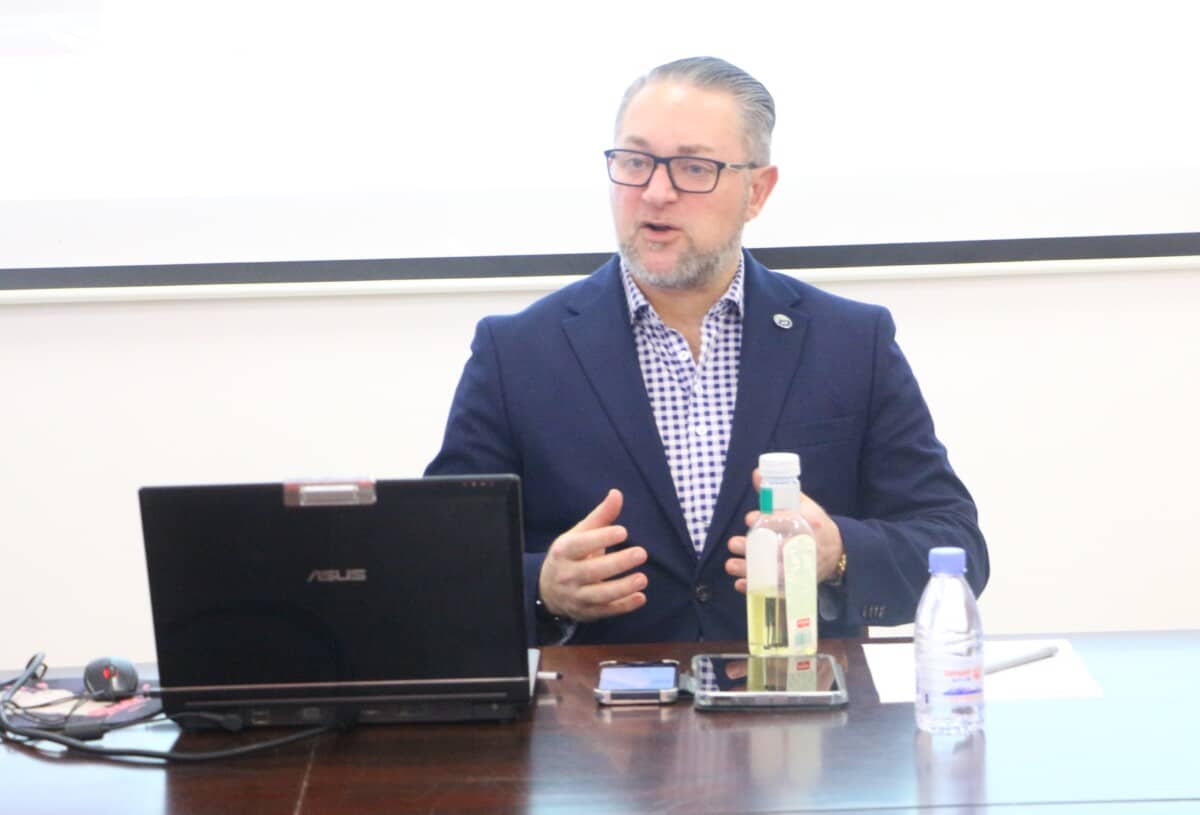
Scott A. Phillips, DBA, JM, MS
What is the nature of your work, that you come up with a think piece like this one about how to approach HIV service provision?
I worked in military medicine and healthcare operations in the civilian sector, and in policy and research. Those experiences have really reinforced my looking at clinical interventions and how systems need to be redesigned to affect care. My studies at Johns Hopkins really opened my eyes to the lack of efficacy in the clinical setting. “Population Health” revolves around the social determinants of health, like transportation, socioeconomic status, etc.
I am interested in all this but I’m not by any means an academic. I want to be sure our conversation makes sense to me and my audience. As much as we can, let’s speak in terms that, well, people like me understand.
Okay.
I liked your opinion piece, because it framed access to treatment and prevention differently. We have known for some time that issues like housing and transportation are critical to successful clinical outcomes. But you frame this differently. You write that we are measuring the wrong things.
In a way. Operational barriers quietly determine whether or not medicine actually reaches patients. The best therapy can’t improve your health if you can’t make it to the clinic. Measuring clinical outcomes only happens when you have referral completion. You have to look at appointment abandonment: what are we doing to meet the patient where they are and identify patient comfort and revealing how well the system is serving the community?
The HIV community has always identified these factors – like transportation, or feeling safe to speak openly with your provider – as driving issues. But you’re saying we don’t measure them in a way that really reveals why people drop out of care. Is that right?
One of the biggest metrics we can capture today is the no show rate. Why does it take place? So we can remediate that.
And yet are there metrics that measure how comfortable someone in a clinic feels? And who has the time to do it?
Time is the hard question. These types of metrics can directly determine whether or not someone can take meds, or make appointments. The question is, who doesn’t have time? You’ve survived a long time, you know the expense of survival, and the co-morbidities involved. To not address it is a shameful question.
I absolutely recognize I am alive right now because of what I look like.
Fair enough.
I love the use of the word “friction” as an indicator of trouble in the flow of healthcare provision. Tell me more about that.
It’s used quite a bit in a management context. People think that decisions in healthcare are made in isolation, but they are really shaped by the environment around them. When an organization removes friction, your healthcare decisions become easier, more routine, and ultimately sustainable.
I do think people rely too much on the next scientific discovery, the next pill or injection, instead of fixing what is already broken. Harold Phillips, the Executive Director of NMAC, read your piece and agreed, saying, “What’s innovation without access? So many systems are not convenient, easy or available and were designed to limit and restrict use.” Does that sound about right?
That is 100% right. We know science has advanced. We already have medications. The challenge is ensuring people have consistent access, trust, and remain engaged, which is fundamental to health system issues.
All of this, of course, is in the shadow of enormous funding cuts from the batshit crazy administration we have right now. Harold Phillips thinks that rebuilding it means changing it. He said, “We can’t just rebuild post this administration, because to rebuild or getting back to where we were, risks repeating the same mistakes and creating similar barriers.” This all sounds like a very tall order, doesn’t it? Do we have the will within organizations and clinics to do this?
I think so. Despite the current administration, healthcare leaders shape their organization culture. They are the ones that allocate funding resources. They redesign workflows and determine how patients experience care. The decision either creates barriers or removes them.
Jeremiah Johnson, executive director of the fierce advocacy organization PrEP4All, also agrees with your piece, saying “PrEP4All has long argued that innovative systems reform–established in partnership with key communities– will be essential to end HIV as an epidemic.” It sounds like you are both calling for a complete overhaul.
It is a systematic redesign. “Sick care” needs to become “health care.” To invest in new therapies is fine, but we have to look at healthcare infrastructure to be sure it can reach the people who need them. The way Joseph and I think, we look at it from an organizational operation lens. The next pharmaceutical breakthrough will come, but organizations must apply the same level of innovation to their systems design.
Service provision is being strangled by more and more cuts yet to come. Harold Phillips told me, “My fear with these Medicaid work requirements is that they are going to create new administrative hurdles and barriers that are going to cause individuals to fall out of care. The technology and new innovations will be there but the system frictions are going to still be present and challenge efforts to keep people in care and prevention services.” I’ll just note that the administrations basically hid provisions like these new work requirements, meaning, they don’t go into effect until January, after the midterms, because the impact will hurt a lot of people. And Harold believes that they will push even more people out of care.
Funding is a fickle piece. It’s only as good as the distribution level. I look at operational barriers as not being funding barriers, necessarily. The biggest problem in the administration right now is we need conversations beyond pharmaceuticals and we must emphasize the role that organizational leadership plays in ending HIV.
Over the years I have seen so many fascinating research studies on HIV prevention interventions and have read think pieces like yours. But research often sits on a shelf and is never widely implemented by the people on the ground. Researchers aren’t program implementers, and program people are often unaware of research into new ways to do things. Will we have the same disconnect between your thoughtful piece and the people in a position to implement these changes?
That’s a great question. Clinicians, administrators, policy makers, even public health professionals wear different hats but play in the same arena. It starts with education, knowledge base, and not waiting until a publication comes out a year after it was researched. Doing things like this interview. When you are talking about system redesign, it is a way of thinking, and where management and medicine need to hold hands.
Let’s say a midsize HIV service organization or clinic reads this and wants to incorporate some of this philosophy or approach. Where do they start?
Start with systems redesign. DHIT Global is a non-profit out of North Carolina. In the past two years they have spearheaded four sprint innovation symposiums. A sprint is a fancy business word for redesign thinking. They bring community partners together and they ideate on how to impact local change within systems. They brought Joseph and I together.
And an HIV organization could reach out and get help or consultation. Is it free?
The sprints, which are like workshops, are free. They have done them in Miami, New Orleans, and Birmingham, and Atlanta.
Okay, I have got to discuss the comments to your article on the MEDPAGEToday site. I mean, good grief. I’m used to stigmatizing language coming from anonymous commenters online. It was more shocking to see people with M.D.s and Ph.D.s – who are presumably working in clinical settings – write this stuff.
Like this remark, from a medical doctor: “It is not just an issue of availing oneself of the resources already available, but exercising personal virtue to avoid the behaviors that lead to the infection in the first place.” There are so many comments that mention “a failure of personal responsibility” that it felt like people blaming all those butt-fucking queers in 1986. How do you handle the clinical and academic community responding this way to your piece?
My father taught me, “Son, you don’t have to engage every argument that is presented to you.” The other part of me wants to stand up and fight. Everyone in healthcare has the same opportunity when everyone has the same opportunity. Meaning, we all don’t have the same opportunities.
Jeremiah told me after reading the comments, “There’s a certain satisfying self righteousness in telling someone who is facing the possibility of HIV that they need to behave better; it’s their problem as an individual, and if we can just scold them enough then we don’t have to worry about it as a society.” He contrasted it with the current diarrhea epidemic people are getting from salads and berries. We value lettuce. We don’t value queer sex.
The comparison to food borne illness is instructive. We identify the source and strengthen safety systems. HIV should be based on that same public health lens: prevention, early diagnosis, timely treatment, and sustained engagement in care. These are medical system responsibilities, not matters of morality. It just disgusts me when doctors say that. The Hippocratic Oath calls for providers to care with no judgment. Trust me when I say I had to resist pressing “enter” in response to comments a few times.
This isn’t my typical area, but your article got me to look at things in a new way. That’s always a good thing. Thanks for that.
Thank you.
Mark



Thank you much for the work you and keeping us informed