Posts Tagged ‘barebacking’
HIV and Gay Media: The Vanishing Virus
Wednesday, February 27th, 2013
The turning point could be traced to August of 1998. It was the month that, for the first time in well over a decade, the Bay Area Reporter did not have a single AIDS obituary submitted for publication. The promise of protease inhibitor medications had been realized, and it felt for many that our long community nightmare was coming to a close.
The milestone in the life of San Francisco’s LGBT newspaper was celebrated around the country and became a media story unto itself. “AIDS Deaths Take Holiday,” trumpeted the Pittsburgh Post-Gazette. “For Once, No AIDS,” said the Wilmington Morning Star. The headline in the Spokesman Review assured us that “No News is Good News.” The Bay Area Reporter’s own front page carried two words in enormous type: “No Obits.”
That could be seen as the moment in which coverage of HIV in gay media began to fade.
Today, the LGBT community is celebrating other milestones with joyful regularity. The right to serve openly in the military. Marriage. Growing acceptance and political muscle.
HIV/AIDS has largely moved off the front page and out of public consciousness. Despite newsworthy data such as increased HIV transmission among gay men and the ongoing slaughter of gay black men in particular, those stories feel stale. It has all been said so many times before. Even new storylines, such as Pre- and Post-Exposure Prophylaxis, cure research advocacy, and tools on the horizon such as rectal microbicides, it’s become harder to capture the imagination or interest of the gay community. When new data was reported recently showing that half of the 20-year-old gay men today will have HIV by the time they’re 50 (and if they’re black, that figure rises to a whopping 70 percent), the news barely rated a tweet or newspaper item.
What, then, is the responsibility of LGBT media in this climate of rising infection rates and a bored readership? Are they simply reflecting the community’s waning interest, or do they have a responsibility to keep HIV in the headlines, to serve as advocates for better public awareness?
I was just in the perfect place to ask these questions: The 2013 LGBT Media Journalists Convening, held in Philadelphia and sponsored by the National Lesbian and Gay Journalists Association. About 100 media professionals, including a healthy dose of bloggers like myself, attended the event, which educates LGBT journalists on various issues so they we might report on them with more authority. Those issues this year were transgenders, immigration, aging, labor, and international rights.
The absence of HIV/AIDS wasn’t lost on me, I assure you (AIDS activists called them out about this in real time in the event’s Twitter feed at #LGBTmedia13) and it became the topic of my interviews with various people in attendance. Their very personal answers – and undeniable passion for the cause of HIV in many cases – sure made it a little easier to understand the tough choices they are making every day. I will be very interested in your reaction.
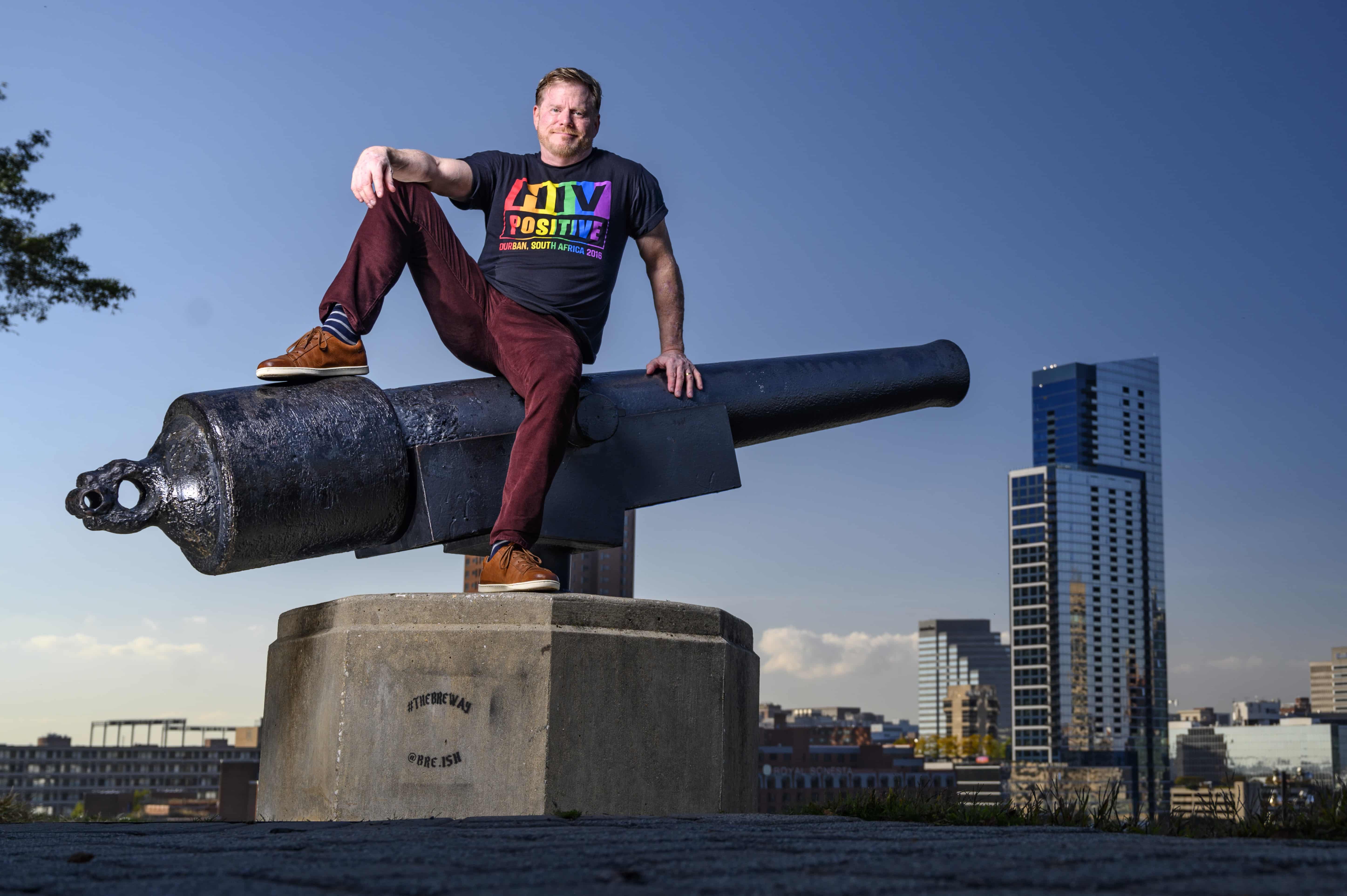
Aside from my griping over HIV coverage, it really was terrific to be in the company of a lot of dedicated journalists, and I appreciate very much the work done to mount the event, including the contributions of Bil Browning of The Bilerico Project (pictured with me above, at right).
Is sparse HIV coverage just a sign of the times? Is it progress? And what can we do to increase visibility again?
The journalists in my video provide some answers, but I especially liked the observation by gay political activist David Mixner, who reminded me that coming out, whether as gay men or as someone living with HIV, is the greatest tool in fighting stigma and helping people see the importance of the issue. I’m glad I have some company in the poz blogosphere, but we can always use more voices. Anyone who has the ability to share their story, online or across the dinner table, can make an awesome contribution.
Meanwhile, I’m going to keep nudging my LGBT media colleagues, and I encourage you to do the same.
Thanks for watching, and please be well.
Mark
Tags: aids, barebacking, criminalization, culture, gay, hiv, politics, research, serosorting, Sexuality, testing
Posted in Books and Writings, Living with HIV/AIDS, My Fabulous Disease, News, Prevention and Policy | 7 Comments »
AIDS2012: The ‘My Fabulous Disease’ Video Collection
Tuesday, July 31st, 2012
AIDS2012 was exactly as I had hoped: an enormous “summer camp” for advocates from around the globe, and I had a blast bringing their stories to you. Let others cover the medical updates and the big name speakers. I wanted to give you a sense of the people who are doing the work on the front lines – with a few bigwig interviews along the way.
Every day I sought out stories I thought would interest you and took a ton of footage (with the help of my talented camera person and schlepper Tina Robles). After a bite of free food from whatever reception was happening, I tried to make it to at least one evening event. And then back to my hotel, where I reviewed the footage, did my best to conceive a theme for the day, and then started editing. I’m quick at the editing part, but it still took 4-5 hours, into the wee hours of the morning. Then I’d sleep for a couple hours and start again. I’ll need the two years between now and AIDS2014 just to catch up!
Here are links and a review of each of the six video blogs I produced during the week. Simply click the title to see the posting and watch the video.
The MSM Pre-Conference (“Gay Day”)
Since less than 5% of the programming for AIDS 2012 is targeting to MSMs (Men who have Sex with Men), a special one-day pre-conference is held the day AIDS 2012 convenes to address the needs and issues of this population.
My report includes a chat with United States Rep. Barbara Lee (right), who has just introduced comprehensive HIV prevention and anti-stigma legislation; the advocates fighting laws that criminalize people with HIV (like Sean Strub and Edwin Bernard), a little social research on Grindr (the gay man’s cruise phone app), a chat with Positive Frontiers editor Alex Garner about getting rejected (and rejected others) during the dating process, and a visit to an AIDS2012 Reunion poz social event.
Opening Ceremonies at the AIDS2012 Conference
In this brief video episode from the first official day of AIDS2012 the party is rolling, with an outdoor concert (steps away from the AIDS quilt) featuring Weyclef Sean and Cornel West (!), dancing dignitaries, and a somewhat surprise ending!
The fact is, Day One was a light day, the calm before the storm, as people poured into DC and braced themselves for the busy week ahead. And it was my last chance to get a decent night’s sleep.
AIDS2012 Day Two: Stigma, Singers and Subways
Day Two of the international AIDS conference (AIDS2012) roared through its first full day on Monday, and there are sights to behold. This episode is a lot of fun.
I spent some time in the exhibit hall critiquing the fashions (and the issues) of various attendees with fashion maven Jack Mackenroth (poz and proud veteran of “Project Runway”), started a YouTube rivalry with inspirational singer Jamar Rogers (“The Voice,” right), and learned about HIV and aging from an expert with the Terrence Higgins Trust. I also had the chance to speak with the head of the CDC’s HIV/AIDS Division about their new “Let’s Stop HIV Together” campaign, in which Jamar and myself both participate.
And, with all the talk at the conference about the devastating effects of HIV stigma, I found validation of my own HIV status in the unlikeliest of places: the Gallery Place subway station.
AIDS2012 Day Three: The March to End AIDS!
I know my tank top looks kinda slutty, but it was damn hot, people.
Several contingents marched and protested separately throughout the city – marching for housing, and civil rights, and in protest of the pharmaceutical industry’s “intellectual property” policies – and then convened in front of the White House. Whereas the march and rally at AIDS2010 in Vienna was a peaceful affair, our proximity to the White House, the aggressive crowd and the police on horseback all lent an air of old time activism circa 1987.
The people included in the video can speak for themselves, and quite eloquently. Maybe it was the emotions of the event — anger, nervousness, pride — but it was an exhausting day. I felt the residue of grief for lost friends in a way I haven’t experienced in years.
This is my favorite, no doubt, and I’m proud of the visual and audio techniques I employed to give some historical context to the event.
AIDS2012 Day Four: The Global Village
It was time for a tour of the heart and soul of AIDS2012: The Global Village. This massive hall is the only part of the conference open to the public, and it has a grass-roots feel, crafted from the love and devotion of hundreds of community groups who are doing “the work on the ground” in cities and small towns throughout the world.
Thank God I’m a video blogger, because words escape me when trying to describe the colors and displays and most importantly, the committed people behind it all. You’re about to meet drag queens who make their living handing out condoms, sex workers demanding an end to criminalization, young prevention workers from far-flung corners of the planet, a stunning photo exhibit from the Ukraine… the list goes on.
AIDS2012 Day Five: Farewell to the Voices of the World
Our little summer camp for global AIDS advocates (and physicians, and commercial interests) had come to a close, and there are images that will be knocking around in my head for weeks to come (and some, forever).
I begin this video with the astonishingly talented performance poet Mary Bowman, a young woman with HIV showing us her heart and soul on stage. It’s a jumping off point for this final, brief video, in which I pay tribute to the people on the front lines who are the very essence of this conference. They are the ones with the “star power.”
This opportunity to share my experiences at AIDS2012 was a distinct honor and privilege, my friends. My deepest thanks to you all for the many cross-postings and shares and tweets. This was a week I will never forget.
Enjoy the videos, and please be well.
Mark
Tags: Aging, aids, barebacking, criminalization, culture, drag, gay, gratitude, help others, hiv, physician, politics, recovery, Recreation, research, Sexuality, testing
Posted in All Other Video Postings, Books and Writings, Family and Friends, Gay Life, Living with HIV/AIDS, Meth and Recovery, My Fabulous Disease, News, Prevention and Policy | 5 Comments »
Is “Dawson’s 20 Load Weekend” the Most Important Gay Porn Film Ever Made?
Monday, July 9th, 2012
The annual Folsom Street Fair in San Francisco is noted for its unbridled embrace of every star in our sexual constellation. Even the fearless leather community that founded the event can sometimes appear tame amidst the outlandish kinks and clothing – and lack thereof – on display along the city’s tilted streets.
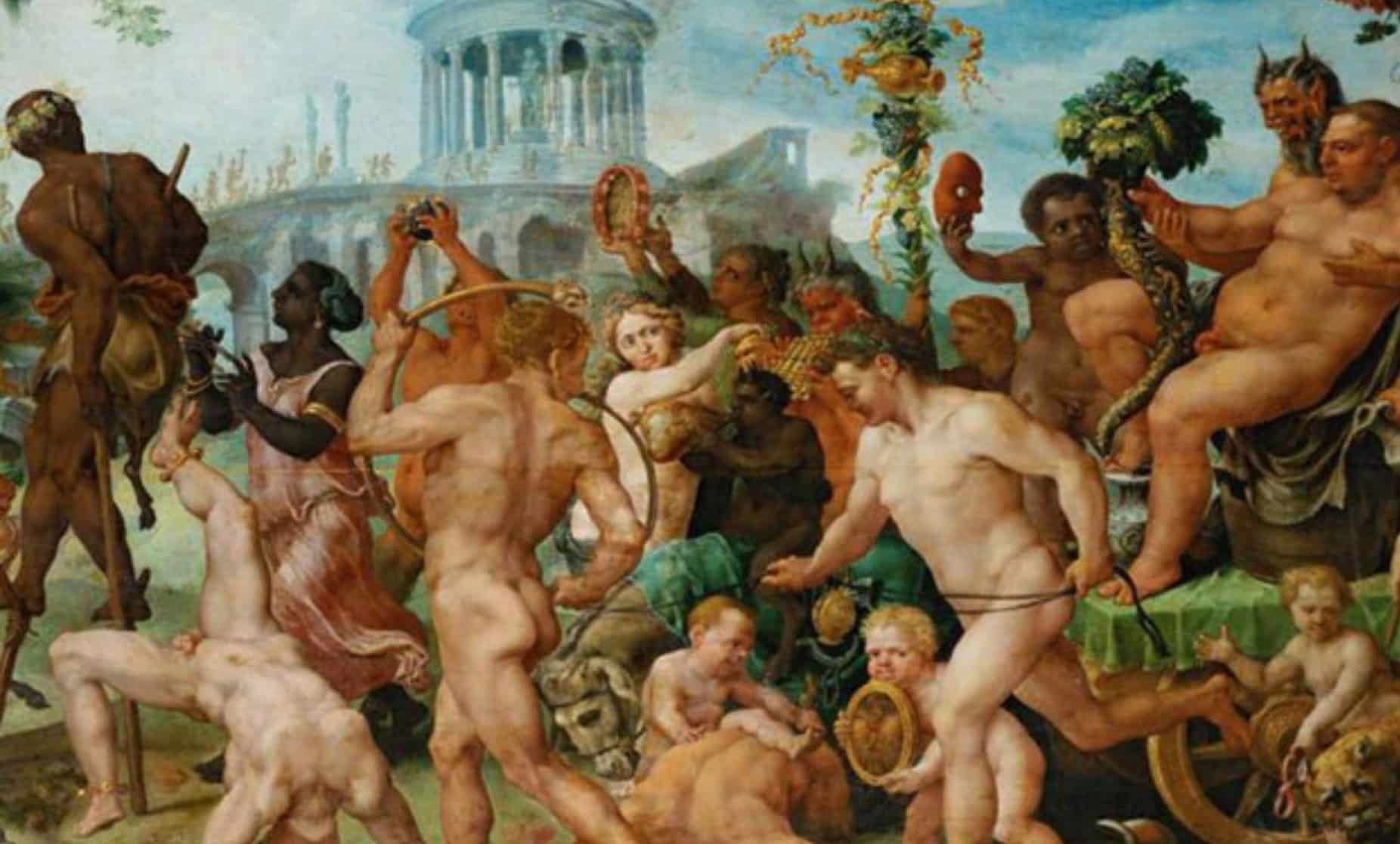
In the middle of this rowdy bacchanalia in the fall of 2003, Paul Morris stood at the booth for Treasure Island Media (TIM), the gay porn outfit he founded that features unprotected sex (barebacking) between its actors. This particular specialty was the singular driving force behind his smashingly successful and relatively new company.
Then, like the legend of Lana Turner fortuitously cozying up to the counter at Schwab’s, a beautiful and achingly masculine young man approached the TIM booth. He liked the TIM videos, he liked them very much indeed, and he hoped to one day document a few fantasies of his own. TIM star Jesse O’Toole was on hand and someone snapped a photograph of the two of them together (right). In it, the grinning young man with a leather cap appears to have found his long lost tribe, and O’Toole looks as if he has found a seven-course meal.
The photo was sent to Max Sohl, a sometime porn actor with a theater background whom Morris had commissioned to conceive and direct what would be Sohl’s first porn film. Sohl met with the aspiring model and asked him to complete a form that included a simple question: What is one of your fantasy scenes? In response, the young man wrote simply, “me getting nailed and seeded by a gang of hot guys.”
“The Black Party was coming,” Sohl explained in a recent interview, referring to the annual New York City weekend of leather men, parties and sexual adventures, “and I thought, ‘Okay. Let’s see how many men he can take.’”
And that is how Dawson’s 20 Load Weekend was born.
Prior to the onset of AIDS, condom usage in gay pornography was nonexistent – but that was before bodily fluids became synonymous with death and disease. For well over a decade after the crisis began, gay porn videos featured not only tightly wrapped penises, but their storylines – indeed, the actors themselves – suffered from a sort of dramatic malaise, as if sleepwalking through their sexual routine while trying to pay no attention to the man with KS lesions behind the curtain. The videos mirrored our own lack of interest in gallivanting about with the pizza man or diving into an orgy with strangers, with or without condoms. Many viewers simply returned to their stash of pre-AIDS pornography, which was condom-less but “justified.”
As AIDS deaths subsided with the advent of new medications in 1996, gay male culture responded with a vengeance. Circuit parties were born of celebration (before succumbing to their own excesses), safer sex behaviors relaxed, and there was a palpable longing to escape the horrors of the previous years. Reclaiming a bold sexuality – something many gay men believed had been lost forever – was a tonic for the post-traumatic stress they suffered. Younger gay men, who had listened to stories of an earlier, sexually liberated time as if it were a lost era of paleontology, were more than willing to explore whatever modern version might await them.
Unprotected sex since the arrival of HIV is nothing new – it is, after all, the primary reason for new infections that have continued fairly steadily since AIDS began – but in the late 1990’s the gay community proved again how comically adept it is at applying a little branding to any phenomenon, and “barebacking” entered the public lexicon. The irony may be that a new word was developed for the oldest sexual activity imaginable: having sex without a barrier. It wasn’t the sex that had changed, but the meaning and judgment associated with it towards, most specifically, gay men. Or, as AIDS advocate Jim Pickett said at a recent conference for people living with HIV, “When a friend announces they are expecting a child, I feel like screaming ‘You barebacked!‘”
But while intelligent minds and passionate advocates argued about the reasons and the proper response to barebacking, no one had dared document it on videotape for the erotic pleasure of others. Yet.
In 1998, two renegade companies formed to make bareback videos exclusively: Hot Desert Knights and Treasure Island Media (links definitely NSFW). None of the leading gay pornographers would consider producing them (although they were eager to market their highly-profitable backlists of videos produced “pre-AIDS” that featured bareback sex). The cheaply made videos by the upstart porn producers brought the sexual choices of an increasing number of men out of the closet and onto DVD players and computer screens.
The videos were uniform in their low production values, the older ages of the actors, and the fact that several of them appeared to have the physical manifestations of HIV. It was as if a group of men who had literally lived through AIDS said, “oh, what the hell,” and demonstrated the kind of sex they had been having amongst themselves for some time. Their exploits were perceived as an underground fetish that would never break the surface of more mainstream gay pornography.
But then Max Sohl met that ferociously attractive man from the Folsom Street Fair who was so eager to “get seeded” by a string of strangers, and with the sexual zeitgeist now primed for their arrival, they made a film that would forever change the porn industry and quite arguably influence the sexual behavior of countless gay men.
Re-christened “Dawson,” the budding porn star was served up in a hotel room over the course of New York City’s 2004 Black Party weekend to an ongoing parade of bareback tops. Their sex was filmed in a documentary fashion, without music, scripted dialogue, or any effort to hide the many cables and cameras crowding the room. Dawson’s fantasy had been fulfilled, and Sohl had the footage to prove it.
In June of 2004, Dawson’s 20 Load Weekend was released and was precisely as advertised.
It might first strike the viewer that the video was created in an unsettling world in which HIV is utterly absent; that is, until a revamped sexual choreography is pointedly repeated again and again. While orgasms in gay porn before AIDS typically showed the top withdrawing from his partner and spilling his semen across his partner’s backside, the tops servicing Dawson had a different and very deliberate mission: to withdraw only long enough to prove their orgasm, and then re-enter Dawson immediately to show the injection of semen.
This was not a film that was made in the absence of HIV, but was created because of HIV. You can practically hear a disembodied voice whispering, “Watch closely. This is how gay men have sex now. That is where semen belongs. Fuck AIDS.”
Depending on your point of view, it is either a transgressive act of eroticism or an incredibly irresponsible act that demonstrates how to become infected with HIV. Or perhaps both.
In the center of all of this was Dawson himself, and never has bareback porn had such a virile and athletic leading man, much less one that bottomed with such disarming delight. “He was a higher quality male model that hadn’t been seen in that kind of extreme scene,” said Sohl. “The movie changed things because of Dawson. He was adorable, and actually smiles and laughs. He is joyful in that movie.”
“Bareback porn companies have blood on their hands,” became a common refrain among gay men and health advocates. Gay sex advice columnist Dan Savage equated the videos to child porn, believing they take advantage of the naïve and the vulnerable. Some accused TIM of making snuff films.
The video was wildly successful, ubiquitous wherever porn was shown. Even Sohl was surprised. “Our staff and even my friends would say ‘I go into a porn booth, a sex party, a hookup, and its playing,’” he said. “It was everywhere.”
Adult bookstores which had previously shunned TIM videos responded to customer demand and began stocking them, even creating bareback sections on their shelves. Gay porn sites that once refused to feature bareback clips began including them. Dawson and the film became the definitive symbol of a bare, wanton sexuality that eschewed condoms and refused to be denied or intimidated by the virus.
Soon, more companies produced bareback porn, and they were able to attract “collegiate jock” types who were younger, more muscular and the very picture of health and vitality. The faces and bodies in bareback videos had been transformed, erasing all evidence of HIV, much like the invisibility of HIV/AIDS in our broader culture.
When considering the legacy of his film, Sohl is more pragmatic than proud. “The concept of taking twenty loads in 2004 was beyond taboo, but to say it in 2012… it doesn’t seem as extreme today,” he said. “I’m sure someone else would have done it. It just so happened to be us.”
Neither does Sohl admit to any trepidation about the safety of his actors, then or now. “I’ve been doing this since 2004, with thousands of men, and have had only one guy claim to get an STD (on my set),” he explained. “Probably 50 percent of my casting job is being an HIV counselor,” he adds, without a hint of irony. “I spend a lot of time talking about HIV. My feeling is that people need to be responsible for their own actions and make informed decisions.”
One of the people making decisions while living with HIV is none other than the actor known as Dawson, who disclosed his HIV positive status to The Windy City Times in 2005. While his HIV status may surprise no one, something else he said in the interview was sadly revealing. “It was after turning positive that I made the decision to look into doing a movie for Treasure Island Media,” he said at the time. “I had seroconverted a few months before…”
After an HIV diagnosis, many people use it as an opportunity to re-examine their lives, make different choices, or otherwise take steps to enjoy their life in whatever ways are important to them. For the man who would be Dawson, his seroconversion was followed by the choice to be an unapologetic cum whore in front of video cameras. This may have been his fantasy, but it certainly fuels the stigmatizing belief that people with HIV are irresponsible vectors of disease, spreading infection and abandoning whatever sexual values they may have previously held.
Perhaps, then, the film was a treatise on the kind of sexual liberation available to HIV positive gay men today, demonstrating the “new normal” for those who take their meds, eliminate the viral activity in their blood, and “fuck freely and without fear,” as TIM founder Paul Morris once put it. Or did it simply portray poz men as sluts, a charge leveled by disgusted (and possibly jealous) HIV negative men?
“What a person is seeing has more to do with them than with us,” said Sohl. “The best mode of action is not to confirm or deny anything. I will see a scene online that I directed,” he says, referring to the many porn sites that pirate pieces of his work and give them new titles, “and it will be renamed ‘negative bottom takes poz loads,’ as if it were a conversion scene. We never said that. Or people think the bottom is using crystal meth. That says more about the guy watching it than what actually happened.”
That relationship, between porn and viewer, is something of particular concern to some HIV prevention advocates who believe bareback porn encourages unsafe sex in real life. This resulted in AIDS Healthcare Foundation’s recent campaign to mandate condom use on pornography sets, a move that was popular on a simplistic level but did nothing to address the myriad of factors associated with actual HIV risk and relative safety, such as an undetectable viral load, serosorting, or the precise sexual behaviors involved.
While social cognitive theory states that we make behavioral decisions based on watching others, very little research has been conducted on the causal relationship between bareback porn and real behavior. In what little has been studied, researchers can’t decide if barebackers watch a lot of bareback porn, or bareback porn makes people barebackers.
It is a riddle that Max Sohl is surprisingly happy to solve. “Absolutely” he said. “Of course it is going to influence what people do.” When asked, then, what is the responsibility of porn, Sohl would have none of it. “The responsibility of porn,” he says impishly, “is to make the guy watching it shoot a load.”
Dawson is, now and forever, committed to videotape and featured on dozens of online porn sites, happily receiving the prize he so ardently desires. He and his progeny of newer, younger porn actors have crossed a line and they’re never coming back. Their video escapades are available online everywhere and for everyone, including young gay men who are just coming out and surfing the internet for validation of their sexuality.
What those young men will almost certainly see online are depictions of unprotected sex, because bareback videos now outperform scenes of condom usage on every site that carries them – and most of them now do. It is unquestionable that bareback sex will be viewed as typical to the uninitiated, and anyone crafting safer sex messages to those young men is going to have a difficult time trumping those images. The “use a condom every time” message is officially dead, drowned in buckets of bodily fluids by Dawson and his barebacking brethren.
Dawson’s 20 Load Weekend redefined bareback porn and the men who appear in them. It influenced subsequent videos and expanded the availability of bareback films. It depicted a prevailing truth about gay sexual behavior “post AIDS,” and arguably encouraged risky sexual adventure-seeking. It led to the saturation of bareback porn online, making unprotected sex normative to whomever might be watching. To dismiss this film, to minimize its social and cultural impact, would be to demonstrate a profound misunderstanding of gay sexuality today.
“Barebacking is a right,” gay anthropologist Eric Rofes once wrote. “After all, practically every straight guy in the world gets to do it without being told they are irresponsible, foolish, or suicidal… Barebacking is liberation. Barebacking is defiance.”
How foolish, prescient, liberating, enlightening or destructive barebacking may ultimately become is something that may only be revealed in the next chapter of our gay community’s troubled history.
(Photo of Dawson and Jesse O’Toole courtesy of Max Sohl and edited for content. Other images courtesy of Treasure Island Media [NSFW].)
Tags: aids, barebacking, culture, gay, hiv, serosorting, Sexuality, testing
Posted in Books and Writings, Gay Life, Living with HIV/AIDS, My Fabulous Disease, Prevention and Policy | 33 Comments »
HIV Criminalization Face-Off: One Poz Man and His Accuser
Tuesday, February 7th, 2012
What if you could witness a face-to-face confrontation between a man living with HIV and the sex partner accusing him of not revealing his status? Wouldn’t you like to be a fly on that wall? The fireworks could be mighty, as emotions raged between the furious accuser and the positive person trying to defend his actions. What might that meeting look like, exactly?
In this video, you’re about to find out.
Amidst the highly charged emotions of the HIV criminalization debate, “sides” are developing. One side believes that those with HIV who do not tell their sex partners about their status should go to jail. Period. But others claim that there is little public health benefit to laws against non-disclosure because they discourage people from getting tested – you can’t be prosecuted if you don’t know your status — and there are often prosecutions in which the risk of transmission is remote or even non-existent.
But taking firmly entrenched sides helps no one. We’ve simply got to get educated beyond our gut reactions to these prosecutions. We all could use more understanding about HIV criminalization laws, how they are being applied, and whether or not they are truly serving the public good. It’s also important that we understand the anger of those who feel they were put at risk and are seeking retribution.
A full list of HIV criminalization laws – and convictions globally (including for each of the states of the USA ) can be found at http://www.gnpplus.net/criminalisation/. To find multiple resources on what to do if one is at risk of prosecution, who to call for help, what the law is in every state, or get palm cards with links to resources, visit The Positive Justice Project.
But back to the video: I couldn’t help but wonder what might happen if an HIV positive man had to sit down with his accuser and explain himself. So, through the magic of some creative editing, I produced this video episode of “My Fabulous Disease” to give a voice to the opinions and feelings of both parties. You can decide if I was successful.
I used this editing technique to comic effect in the “My T-cells Could Use a Facelift” episode (the infamous video about butt padding, among other things). I’ve been looking for a good reason to do it again, and I thought this topic fit the format perfectly.
Thanks for watching, and please be well.
Mark
(I’m always glad when you “share” my postings with the buttons below. But this post could mean the difference between someone understanding the law — and making a mistake that could land them in jail. So I encourage you to share and re-post this one in particular. Thanks.)
Tags: aids, barebacking, criminalization, culture, politics, Sexuality
Posted in Gay Life, Living with HIV/AIDS, My Fabulous Disease, News, Prevention and Policy | 23 Comments »
A Very Special One-Year Anniversary Posting!
Tuesday, March 8th, 2011
When Mark first started My Fabulous Disease, I was pretty sure it was going to directly result in the destruction of humanity. One year later, we’re all still here.
I can’t believe I lost that bet.
Myles Helfand, Editor, The Body, The Complete HIV/AIDS Resource
My father always said, “Raise your hand. Ask the stupid questions. Don’t be afraid to make a fool of yourself.” If he isn’t rolling in his grave today, he’s certainly shifting a little, because if there’s one thing I’ve tried to do with my blog it has been to ask basic questions of others — and reveal everything I can of myself. The result has been a really gratifying experience sharing my life as an HIV positive gay man in recovery from addiction.
One year ago, I launched “My Fabulous Disease,” but the site was birthed and nurtured by the talented staff of TheBody.com. I have been contributing to TheBody for more than a decade as a writer, and producing videos for the last several years. For that I am indebted to Bonnie Goldman, the founding editor of The Body, and to the current Community Manager, Olivia Ford.
In this special video episode, I have some fun answering the most frequently asked questions about my videos — and what it has been like exposing myself, figuratively speaking, to all of cyberspace. The bottom line: it has been an honor to reveal, report, and ruminate on life’s challenges and joys as an HIV positive man.
I realize I’m not exactly an expert in the science of HIV or even a lot of the psycho/social issues involved. What I am, though, is curious. So I’ve tried to trust my own instincts and “ask the stupid questions” my Dad was talking about. Whether it was meeting teens at the AIDS conference in Vienna, exercising with fitness expert Nelson Vergel, or interviewing activists at the recent ADAP summit, I let my curiosity guide me.
Sure, I’ve bombed a few times with my videos. It’s been a learning process, and sometimes I misjudged a topic somehow, or just plain create a boring episode. Trust me ” or ask anyone at TheBody, because they know how I worry ” I keep close tabs on the comments and on the number of hits. And I’m constantly second guessing my choices. As much as I want to trust my instincts alone, I can’t help but want to be popular.
The episodes that mean the most to me have been the ones which were the most personal and didn’t even focus on my HIV (like “Facing Change,” about leaving Atlanta to renew a relationship, or “Taking Care of Hal,” about caring for my dying brother), or the ones that were the most practical and instructive (like “A Facial Wasting Update” about my facial filler process, or helping people select the best physician in “Six Tips for Choosing Your HIV Doctor“).
Along the way I have had the honor to meet people working as activists and elected officials and advocates around the world. How can I not be grateful and happy when I meet such smart and dedicated people? I know our HIV/AIDS crisis isn’t rosy and I know people are suffering. I also know without a doubt that we are in committed, loving hands the world over.
Let me leave you with this: we all have a story to tell. It is the story of how HIV/AIDS has affected our lives. Please, my friend, please tell it. Write an article or speak out on World AIDS Day. If you’re more private, maybe you could just explain to a nephew what it was like when you once lost a friend to AIDS. Maybe it is as simple as asking your friends if they have been tested lately, and why it means something important to you.
There are so many people who write me, and they thank me for giving their experience a voice, because they can not speak out. If you are blessed with the opportunity and ability to share your experience, then please join me. There is so much room, so much loving space in this world, for your voice and your story.
You don’t even have to dress in drag when you tell it. It just helps.
Please be well,
Mark
“A year of My Fabulous Disease isn’t nearly enough. You’ve had the courage to address publicly, with your words and videos, the stuff a lot of gay men and people with HIV are accustomed to only thinking about.”
Sean Strub, Founder, POZ Magazine
Your blog provides a limpid stream of good advice and optimism for anyone who stumbles into it. Your take on living with HIV is clearly the only one worth having, because you manage to inspire and annoy exactly the right people.
Gus Cairns, Editor, HIV Treatment Update
Here’s to many more years of Mark’s disarmingly honest, charmingly sincere, frequently bittersweet, and, above all, community empowering video blog.
Edwin J Bernard, journalist and blogger
Happy Birthday to My Fabulous Disease! You’re just what the doctor ordered.
Robert Breining, Founder, POZIAM Social Network
I feel as if My Fabulous Disease is a sister site to “my glamorous HIV” way of life. More importantly, you’ve been able to create much needed dialogue within the community, and provide information with substance. We love you up here in Canada.
Brian Finch, Founder, PositiveLite
Laughter and lightness of heart have made a comeback in my life, thanks to your nutty taste. I have been reminded often that although our common condition is life (and death), it is no longer life OR death.
Rod Rushing, “On The Ten” Treatment Education Network
If Albert Schweitzer and Joan Rivers had a son, it would be you! Healing and outrageous all at once. Keep “curing” us with “My Fabulous Disease.”
Chris Glaser, author, “The Final Deadline: What Death Has Taught Me about Life”
You and your blog are such an inspiration to others whether they are infected with HIV or someone who is still negative. We are also proud to have you as one of our Dab the AIDS Bear’s Ambassadors of Hope!
Dab Garner, Founder, Dab the AIDS Bear Project
Happy Birthday! You are doing such a great job at portraying the face, humor and humanity behind a terrible disease that will continue to proliferate in our community if people like you don’t continue to remind the rest of us that it still exists.
Zack Rosen, Editor, The New Gay
Tags: Aging, aids, barebacking, culture, family, gay, gratitude, help others, hiv, lipo, meth, physical, physician, politics, Radiesse, recovery, Recreation, research, serosorting, Sexuality, testing
Posted in Anita Mann and Acting Gigs, Books and Writings, Family and Friends, Gay Life, Living with HIV/AIDS, Meth and Recovery, My Fabulous Disease, News | 14 Comments »
Touring an HIV+ gay sex club. Plus: the porn stars that got away.
Tuesday, March 1st, 2011
The idea that HIV positive people still want sex is as old as The Denver Principles, the 1983 manifesto drawn up by gay men with AIDS that demanded “as full and satisfying a sexual and emotional life as anyone else.” The document also stated that people with HIV/AIDS have an ethical responsibility to share their status with others.
Fast forward to today, and HIV positive gay men are as open as ever about their status and their sexual preferences (setting aside, if we can for the moment, the increased stigma and discrimination facing HIV positive people of all stripes who disclose their status these days). And those sexual choices may not include HIV negative people at all, thank you very much.
Last year I taped a tour of a sex club that hosts a monthly “Poz4Play” party, and sat down to interview Bill, the party’s disarmingly unflappable host. In this video blog (the video, above, is PG rated but the language is explicit), I revisit the tour and get an update from Bill about the strong reaction to the original video, which includes a frank conversation on barebacking, the risk of other STD’s, and serosorting.
Serosorting, or limiting sexual partners to those who share your HIV status, has become the de facto prevention technique for many gay men with HIV. Research indicates that the tactic may have value in containing the spread of HIV, but as you might guess, it isn’t so effective when it comes to HIV negative gay men who attempt to serosort amongst themselves. People who claim to be negative are often wrong, misinformed or simply lying. HIV positive men who claim to be positive are less likely to be wrong about that fact.
On an important side note: is avoiding HIV enough? Research indicates that poz-on-poz sex is much more likely to include barebacking (unprotected sex), and that means the potential of pitting a sometimes compromised immune system against other sexually transmitted diseases. If the idea of catching gonorrhea simply makes you feel nostalgic, what about (the far more dangerous) Hepatitis C? A recent study found that 75 percent of new hepatitis C virus (HCV) infections in HIV-positive men occurred in those with no history of injection drug use (IDU) — the more typical transmission route for HCV. Barebacking is the suspected culprit.
Everywhere on the gay hook-up radar, positive men are asking, telling, and serosorting. “Disease free, UB2″ in online profiles is being countered by the cheeky “HIV positive and plan to stay that way, UB2.” Meeting sites are engaging in some serosorting of their own by offering poz dating and hookup options.
And over at the gay bareback porn company Treasure Island Media (TIM), director Paul Morris has named it “the year of living positive (sic),” with a series of videos featuring openly HIV positive actors. While one might appreciate Mr. Morris’ enthusiastic wish that everyone “fuck freely and without fear,” he’s a little light on the real-life implications of such a lifestyle.
I exchanged e-mails with Paul Morris in an attempt to interview a real-life couple he just re-signed to exclusive bareback video naughtiness. The couple includes an HIV negative top and a positive bottom, and I thought this would be a great opportunity to educate gay men by going “behind the scenes” and speaking to these two actors in a way that focused on their real life and didn’t demonize them.
Paul was complimentary of my blog and confident that his actors would communicate with me if I would e-mail my questions to them. I did so, and my queries included: how big an issue was HIV to them? Did one worry for the other’s long term health? Was the positive partner on meds? How did they handle feeling judged by those who disagreed with their bareback porn star habits?
Note to self: do not attempt to “get real” with bareback porn studs or their handlers. I never heard from the actors, or another peep out of Paul Morris. His silence betrays his grandstanding on the topic (his own press release gleefully refers to him as “universally reviled,” which would look great on his name tag at the next Gay Erotic Expo). Or, perhaps Paul Morris really does know his audience, and figures they’re uninterested in his stars once the DVD is back in the sock drawer.
It’s also possible Treasure Island Media is just distracted with appealing their recent $21,000 fine by California OSHA for, among other things, not developing procedures for things as basic as Hepatitis B vaccinations. Maybe the Oscar winning song is right, and it really is hard out there for a pimp… or for a porn empresario.
Please be well,
Mark
—————————————————–
For another view of gay men, porn and barebacking, check out my most Googled post of last year, “Did the Bareback Time Machine Kill Chad Noel?“ It is a melancholy epilogue on the brief life of a gay bareback porn star (right) and what his childhood friends remember about him most.
One of my favorite HIV sites, LifeLube, has started an ongoing series called “Andrew’s Anus,” and it’s about sexual health for gay men and the human papillomavirus, or HPV. But wait! The series is written from the point of view of Andrew’s anus! It’s fun and witty and has great information and I hope you’ll check it out.
There’s a lot in the news about marketing the female condom to gay men. If you’d like a frank demonstration on using the appliance for anal sex, check out my video from AIDS2010 in Vienna with Wendy of The Pleasure Project (right). She leaves no question unanswered, and trust me, I ask them all. Our interview begins at the 4:05 mark.
Mike Barr has returned to the pages of POZ Magazine, or at least to their web site, as a blogger on the topic of Traditional Chinese Medicine and HIV/AIDS. His knowledge on HIV treatment is stellar, so if you have any interest in eastern approaches, his blog would be an excellent start.
Tags: aids, barebacking, culture, gay, hiv, research, serosorting, Sexuality, testing
Posted in Gay Life, Living with HIV/AIDS, My Fabulous Disease, Prevention and Policy | 13 Comments »
My Fabulous Disease: The Top Ten Postings of Year One
Tuesday, February 22nd, 2011
“The suspense is terrible. I hope it will last.”
– Oscar Wilde, The Importance of Being Ernest
How was this judged, exactly? I was afraid you might ask. Not on the number of hits or any formal voting procedure. I relied purely on feedback received through the year and from posted comments, but mostly, umm, I picked my favorites. So there.
presented in reverse order
—-
#10. The Wisdom of Youth at AIDS2010. My skills (and physical stamina) were sorely tested when TheBody.com sent me to Vienna for the 2010 International AIDS Conference. Every day was a sprint around the massive conference center in search of stories that inspired or amused me. In this episode, I was blown away by a collection of teenage (!) activists from around the globe who gave a press conference and then chatted with me (try being nineteen and an HIV advocate in Afghanistan). Then I interviewed an actual muppet with No Strings, a program that uses puppetry to communicate with African children about AIDS, transmission, and grief. Awesome.
#9. The Real Poz Guys of Atlanta. Nothing has been more important to my long term sanity and well-being than the support of friends, so I decided to let you meet a few of them in this ongoing series of videos. In this, our second get together, my friends Craig, James, Antron and Eric and I (all of us are living with HIV) bake brownies — recipe included in the post! — and dish about our HIV, doctors, families and love lives. To top it off we all engage in some surprisingly moving “show ‘n tell,” by bringing things to our dinner that represent something about life with HIV. If you need to feel the love of friends right now, check this out.
#8. Locker 32, your room is ready… to be hosed and sanitized. Okay, so here’s my bawdy comedy side, in a farewell essay to the gay baths. In my former, youthful and/or drug fueled days, I was a staple in such establishments, and the value of how one looked sauntering about in a towel was a misguided priority that, frankly, I’m still working to shake from my world view. But there’s no such depth in this funny essay, just a final look at the baths on my very last visit, or as the piece begins, “the last time I went to the baths… I stepped in poop.” Hold your nose, and enjoy!
#7. The Price is Right, thirty years after coming on down. “When I was 19 years old, I vacationed to Los Angeles and won a car on The Price is Right.” So begins my book “A Place Like This,” my first-person account of my years in Hollywood in the 1980′s. I use the game show story to reflect on the young man I was and what dreams I had, while AIDS looms in the near distance ready to wreck the plans of a generation. I’ve always liked this as its own essay, though, and thought it would be fun to include the actual footage of my winning the car, so the reader can watch the little story come to life.
#6. My T-cells Could Use a Facelift. I’ve probably posted the heart and soul right out of this poor video, using it more than once this year, but it remains a favorite of mine because it strikes the heart of my issues as a gay man, a man with HIV, and an aging one at that. We’re the guys that can still remember being youthful but we just don’t quite hack it in the cruise clubs anymore. I know I shouldn’t miss it, and yet… The video also lets me show off my butt pads and discuss my not-so-subtle tactics to avoid growing up. Maturity is hard won in my household, my friends.
#5. A Facial Wasting Update. This is when I realized the real potential of my little digital camera: when Dr. Gerald Pierone agreed to let me film our consultation about my facial wasting (lipoatrophy), and the procedure to remedy it. This episode is actually our second video together, when I returned for a follow-up treatment — it reviews footage from the first visit but also gives a more accurate look at the treatment results. At the end of the first episode, I was so pleased with my new face that I shot my closing with such bright light I looked like I was voguing in a Madonna video. I don’t make that mistake again.
#4. I am the man my father built. Why are there passages in our life that we return to, again and again, those milestones that shape us and serve as references points our entire lives? Camping in the woods would seem an unmemorable scenario for a young gay boy like me (behold my pubescent self, right, in repose). Dad wasn’t trying to butch me up, he simply reveled in being different, like pitching a clear plastic tent when all the other fathers and sons on the campout had normal ones. But every time dad instilled in me the value of being different (“that’s the beauty of it,” was his most common exclamation), he was preparing his son for the world in a way he never imagined. A love letter to my dad, and I hope you’ll read it.
#3. Examining death, including the one I caused. To be honest, I thought I was doing my ex-partner Chris Glaser a favor by reviewing his most recent book. But that blithe arrogance evaporated when I read his elegant book about death, “The Final Deadline.” Chris devotes chapters to manners of death and their lessons for the living, and to my surprise includes one about the death of our relationship and there, suddenly and in black and white, was the wreckage of a romance, and the crushing hurt I had caused when I chose my escalating drug addiction over my partner. Reading this book would enlighten anyone, but no one more than me. Chris’ capacity for forgiveness and finding teachable moments is more beautifully rendered in his book than anything I might conjure.
#2. Once, When We Were Heroes. Another one I’ve posted to death — the video version has been on my main page for ages — but it’s as if I’m afraid I’ll never write something quite like it again. It sprang from my observations about so many of us that lived through the horror of the 1980′s and how mundane our lives are today. So many of us were called upon to do courageous things, or withstand terrible grief, and today we’re shopping at Macy’s and planning brunch. Which is a miracle and perfectly allowed, of course. It just makes me realize that you can never know what the man on the treadmill at the gym might have once withstood, or how resilient our own spirits are, when we once thought they might never survive.
#1. The Day Larry Kramer Dissed Me. Pure whimsy, no doubt about it, and the funniest part of this fictional account of a disastrous trip to the mall with Larry Kramer was how many people didn’t know I made the damn thing up. Not until they read the footnote. Reactions were all over the place: how dare I ridicule an icon, they wanted to know. I would be dead if it were not for him, they wailed. And “this is hilarious, please do HRC next!” I have not had the honor of meeting Larry Kramer but idolize him as an activist and as a writer. And if my “six degrees of Larry Kramer” friends are telling the truth, the man himself got the joke and liked it (and even left a posted comment for all to see).
Honorable mentions: My provocative chat with activist and POZ Magazine founder Sean Strub, “Five Things About HIV They’re Not Telling You,” had prevention advocates either impressed or aghast, and that’s a good thing. My favorite little video was the Gay Pride PSA That Will Never Air, which begins with funny stories before it punches you in the gut with a message about drug addiction. And speaking of addiction, there’s a precious vision of recovery is in the simple essay “A Dance to an Atlanta Night,” in which I enjoy some simple pleasures with friends who have seen me at my worst.
I feel like I’m hitting my stride. Thanks to all of you for your words of encouragement, and I mean that. This has been an awesome adventure because of you. As always, please be well.
Mark
——————————————–
I hope you will consider “sharing” this via the buttons below with anyone who might enjoy an introduction to the blog. I love reaching new readers. Thanks.
Tags: A Place Like This, acting, Aging, aids, barebacking, culture, drag, family, gay, help others, hiv, lipo, meth, physician, politics, recovery, Recreation, serosorting, Sexuality
Posted in All Other Video Postings, Books and Writings, Family and Friends, Gay Life, Living with HIV/AIDS, Meth and Recovery, My Fabulous Disease, News, Prevention and Policy | 2 Comments »
My Fabulous Disease: The Complete Video Collection
Tuesday, February 15th, 2011
Here is a brief description and link to the entire collection of My Fabulous Disease videos, stretching back to the premiere episode in 2008. The videos have been viewed in classrooms, at conferences and in support groups, and you’re welcome to re-post and share with proper credit.
This list is always available to you for browsing — just look under Categories on your right for “A LIST OF ALL “MFD” VIDEOS.”
Treating My Facial Wasting with Artefill January 24, 2013. For several years now, I’ve made the occasional pilgrimage to Vero Beach, Florida, to be treated by Dr. Gerald Pierone for facial wasting, or lipoatrophy. And for all of these years, we have battled The Look: the sunken cheeks and sagging face of someone who has been on HIV medications for a long time. In my latest video blog below, you’re going to see our progress, step by step.
The Night Don Lemon Hugged Me December 13, 2012. We talked about HIV stigma and Madonna lighting. He shared a story of seeing an AIDS patient on a New York City street years ago. We were two very different men comfortable in our own skin, who refused to allow shame a place at the table. At the end of our interview I began to shake his hand and something remarkable happened. Don stood and reached out for a hug. The humanity – and perhaps even bravery – of his simple act wasn’t lost on viewers, many of whom wrote to tell me how moving it was.
On Board the 2012 HIV Cruise Retreat November 15, 2012. Sailing from Ft Lauderdale to various islands of the Caribbean, the Cruise Retreat included more than 200 gay men, women and our supporters. Along the way, there were games, shore excursions and even budding romances. The protective walls that often surround those of us living with HIV came crumbling down, replaced with new relationships, email addresses and phone numbers. I don’t expect that everyone has the ability to afford the trip, but the message of the event – reach out for support and friendships where ever you might find them – echoes in my mind and heart today.
Is There Pride in Being HIV Positive? October 30, 2012. During the Atlanta Gay Pride Parade, it struck me how many contingents there were of people from all segments of the LGBT community celebrating their pride. And then it struck me how absent the HIV/AIDS organizations were, or at least people living with HIV themselves. What, then, is the intersection of HIV and Pride? Is there pride in being HIV positive? I posed this question to various people attending the parade and festival, and came away with some very surprising answers.
AIDS2012: The Complete Video Blog Collection. My adventures at the international AIDS conference in Washington, DC, are all documented here, in a review of the six video blogs (!) I produced during the week. The videos are funny, dramatic (the March to End AIDS may be my favorite), and feature both HIV/AIDS “stars” and the amazing people doing the work on the ground who never can get enough credit. Includes Jack Mackenroth (“Project Runway” and POZ Army), Jamar Rogers (“The Voice”), Daniel Bauer (“Beyond Belief”), Dr. “Johno” Mermin of CDC, Sean Strub (The SERO Project), Edwin Bernard (HIV Justice Network), protesters, drag queens, sex workers, and so much more!
HIV Criminalization Face-Off: One Poz Man and His Accuser. February 7, 2012. What if you could witness a face-to-face confrontation between a man living with HIV and the sex partner accusing him of not revealing his status? Wouldn’t you like to be a fly on that wall? The fireworks could be mighty, as emotions raged between the furious accuser and the positive person trying to defend his actions. What might that meeting look like, exactly? In this video, you’re going to find out. I was proud of how this video turned out, and gratified by advocates who considered it a solid and well balanced look at this controversial issue.
The ‘My Fabulous Disease’ Holiday Spectacular! December 13, 2011. That’s right folks, this is fun for the whole family! In fact, MY whole family gets in the act, as we share holiday cheer, get a lesson on Christmas cookies from Mom, and even get a visit from Santa. When we filmed this video, I told my family that there were people watching my blog who didn’t have a close relationship with their family, and discussing HIV was out of the question. They took this to heart, as you will see, and their compassion shines through. Merry merry!
The Long Road Home from Relapse. November 29, 2011. Okay, this isn’t a video but I didn’t want you to miss it so I’m making an exception. This is a honest account of my drug relapse and it quickly became the most viewed blog posting in the history of this site. While my perception of the reasons and fallout from my relapse continue to evolve, this is how I felt at that time. I hope it might help others — either to give you a sense of addictive thinking, or remind you why you never, ever want to go back to using.
Sailing the 2011 HIV Cruise Retreat. November 15, 2011. I realize how fortunate I am. So many of us are not able to take the time or devote the money for a cruise like this. It’s my hope that this video blog will inspire you to seek community, in whatever way you can, and never forget that a sense of humor sure does help the journey. And what a journey this 7-day Caribbean cruise was! There was plenty of social events, educational workshops, excursions to the shores of various islands, and let us now forget the parties — The Mad Hatter Party was worth the fare alone, but then The Blue Party, hosted by my comic alter ego Anita Mann, reached new levels of madness and joy. You can get more info about the event at www.HIVCruise.com. The event welcomes men and women, gay and straight, and they are a truly inspiring, fun filled group.
Divorce, Stress, HIV… and no jokes. November 3, 2011. This is a rather personal blog video, there’s no doubt about that. I was even a little apprehensive because it doesn’t offer the usual helpful tips or the “entertainment value” of my other videos. But one of my problems has always been trying to be the life of the party when I’m not feeling it. So I was relieved and pleased that there was so much love for this video, in which I sit down with my friend (and a therapist) David Fawcett to discuss divorce, loss, HIV, and what to do when life isn’t all that damn fabulous. This is a different Mark than you might be used to, unplugged and exposed.
Finding Support in an e-Patient World. September 26, 2011. You’re part of a healthcare revolution in cyberspace, my friends. It’s changing the way people find treatment information, relate to their doctor, and support one another. In this video blog from the e-Patient Connections conference, you get to meet some of the marvelous people who are leading the charge. And guess what? It turns out that there are people living with a wide variety of conditions who are online and advocating for themselves and others. This moving and funny video will teach you something.
7 Ways to Save Money on Your Meds. August 16, 2011. With all the doctor appointments and wellness activities we engage in, living with HIV/AIDS can be a full-time job. And the truth is, it doesn’t pay very well. We’ve all been feeling the pinch of tough economic times. So I hope you’ll find some savings in this video blog, “7 Ways to Save Money on Meds,” featuring Jason King, a patient advocate for the AIDS Healthcare Foundation. Jason has some tips that your pharmacist may not be telling you.
I’m Gonna Wipe That AIDS Right Off of My Face. August 2, 2011. Most of us know “the look,” and I’ve started to get it. It’s the telltale gullies and sunken cheeks associated with longtime HIV infection or (more likely) medications. Many of my friends and colleagues in this struggle suffer from it, and they may either be comfortable with it, proud of it as a badge of honor, or simply resigned to it. I salute us all, whether our features tells our HIV story or not. But meanwhile, I’ll do what I can to wipe that shit off my face. In this video, I revisit Dr. Gerald Pierone for a treatment of Radiesse and Sculptra, and get information about the more permanent facial filler, Artefill.
The Entire 2011 ADAP Conference in Nine Minutes! July 19, 2011. The 2011 ADAP Advocacy Association (aaa+) conference held July 5-7 in Washington, DC, was bursting with spirit. Dozens of advocates from across the country met for three days of workshops and speakers, and in this video blog, you’ll see the entire conference boiled down to only nine minutes. I’m the cliff notes of HIV/AIDS events! The AIDS Drug Assistance Program waiting list continues to grow on a daily basis, denying patients the very medications that can keep them alive. This national disgrace deserves our attention and our phone calls to our elected officials, urging them not to forget the most vulnerable among us.
Should AIDS Activists and Pharma just get along? July 12, 2011. Am I an AIDS activist, ready to question authority and demand high standards of service for those living with HIV/AIDS? Or am I a “resource” for the pharmaceutical industry, so that they might craft more effective community programs that will lead AIDS patients to “care.” This video on treatment activism mulls over the conflict, provides some historical context, and keeps the red spray paint at hand, in case the activism needs to go “old school.” This became the most “shared” blog posting of mine to date, and very quickly, too. I think people responded to the mix of education and edgy advocacy.
Dab Garner’s 30 Year Story of Survival. June 28, 2011. This video is quite simple, really. One man explains to you what happened to him, from becoming one of the first AIDS patients in San Francisco to his life today in the service of others with HIV. Dab Garner has clearly put things into perspective, and his calm manner shows a man at peace with his fate, his survival, and the ghosts around him. It’s an amazing story, actually. And considering the importance of passing our history down to younger people, it might not be a bad idea to share this video with someone you know, maybe even someone under 35 years old.
Vacations and Retreats for People with HIV/AIDS. April 28, 2011. Summer is approaching and vacation plans are being made ” but have you ever considered a retreat or getaway with other people living with HIV/AIDS? It might sound odd to seek out a vacation event just for people with HIV. For me, my status is only a part of who I am, and I’ve gotten pretty good at disclosing when I need to. But for many of us it’s tough getting past that hurdle. So joining a group of others living with HIV might be a fun solution if you’re looking to make friends with other people living with HIV and build your support network.
The Hard Facts on Erectile Dysfunction: Pills, Pumps and Prosthetics. April 6, 2011. My friend and HIV fitness author Nelson Vergel (“Testosterone: A Man’s Guide”) returns for another visit, this time to discuss erectile dysfunction and HIV, including the treatments available and issues specific to those of us with HIV. He also gives detailed information on the use of testosterone replacement therapy. Quite an informative video.
A Special One-Year Anniversary Posting! March 8, 2011. After weeks of teasing you with announcements and Top Ten listing, I finally put an end to milking the occasion with this, a special video celebrating one year of blogging on my site. This is lightweight, no doubt, but I do answer the most popular questions I get about myself and the blog, and it gives me a great opportunity to thank you, my readers and watchers. It has indeed been a great first year, and this video demonstrates my gratitude.
Touring an HIV+ Gay Sex Club. Plus: The Porn Stars that Got Away. March 1, 2011. I revisit a video tour of a public sex venue from last year and catch up with the host of “Poz4Play,” a monthly gathering of HIV positive gay men. Along the way we discuss serosorting (limiting partners to those who share your HIV status) and if these parties offer real prevention or a false sense of security from other STD’s. Meanwhile, I share what happens when you get “too real” in your line of questioning with porn stars (hint: they stop returning your e-mails).
The Hilarious Idiocy of Anonymous Gay Sex. February 7, 2011. When someone brought this YouTube video to my attention, I laughed out loud at its amazing recreation of an online hookup between two gay men, and the level of stupidity that is often involved when negotiating sex. The person who created this video prefers the anonymity of cyberspace, but I think he deserves a medal for perfectly demonstrating what we’re up against when it comes to making intelligent sexual choices.
Hitting the Gym with HIV Fitness Expert Nelson Vergel. February 3, 2011. Fitness expert and author Nelson Vergel gets my growing waistline to the gym for a lesson in aerobic activity and weight training and the benefits and risks to those with HIV. Part Two in an ongoing series of fitness and nutrition videos with Nelson.
AIDS Activism 101: Steps to end the ADAP crisis. January 31, 2011. An interesting and practical look at the steps to take to have a voice with your elected official, by getting the activists at the 2011 ADAP Summit to cle4arly explain what was happening with the program, and then easy directions to contact your elected official about this (or any!) advocacy issue.
Five Things About HIV (They’re Not Telling You). January 18, 2011. Activist and POZ Magazine Founder Sean Strub stops by for a game of ping pong and then a very provocative discussion of why public health campaigns keep getting it wrong in terms of messages to gay men, and some things that gay men should know that have not been widely reported.
HIV Fitness Stud Nelson Vergel Raids My Fridge. January 11, 2011. The first in a series of fitness and nutrition videos with HIV fitness expert Nelson Vergel. In this video, Nelson raids my fridge and gives simple, practical tips on eating right, mysterious “diet” labels, and the importance of proper pooping!
Recovering Joy. December 14, 2010. Why include a video of my performing in drag at a Christmas benefit for people in recovery from drugs and alcohol? Because it’s funny. And because I wasn’t very funny when i was an active addict, and there are a lot of wise messages contained in this very funny rendition of “Twas the Night Before Christmas,” as read by my alter ego, Ms. Anita Mann.
Once, When We Were Heroes. November 28, 2010. This is an essay that won a 2008 award from the National Lesbian and Gay Journalism Association, for best written piece of the year, but I created this video version because I wanted another way of sharing its message. It potently describes the early days of the AIDS epidemic, and draws a bittersweet line between life than, and now. The best of my work.
My T-cells could use a facelift. November 11, 2010. This is the video that might be my personal favorite because it is funny and speaks to my issues of aging and regret and selfishly trying to hold on to old behaviors. Watch as, through video editing magic, my mature self and my young, selfish self argue about the effects of aging in a gay culture. Funny and wise, I think.
My Video Report aboard the HIV Cruise Retreat. November 1, 2010. During my maiden voyage as M.C. for the HIV Cruise Retreat, I didn’t know what to expect. But as you’ll see in this rollicking video diary, our group bonded and laughed and learned. Absent were so many of the social tensions that usually follow a group of largely gay men around. We all just cared for one another and had a terrific time. I hope I can return every year!
The Price is Right, 30 Years after Coming on Down. October 18, 2010. Would you believe I won a car on the Price is Right, back in 1980 when Bob Barker still had dark hair, and I have the video to prove it? I sure do! You’ll watch the video and get to read an essay about the entire experience, and how it haunted me for years, when the advent of AIDS ruined all those wonderful plans I had told Bob Barker I was making for my life.
In Praise of HIV Negative Gay Men. October 13, 2010. Oh man, did this one ever get me into trouble. Here I thought I had such a great idea, doing a video to praise an encourage HIV negative gay men for staying that way, and acknowledging the fact that, in many ways, their struggles without HIV are harder than mine with it. Oops… this video offended just about everyone, mostly for a perceived sarcasm in my delivery. I’ll let you watch and decide for yourself.
The 2010 HRC Dinner (in under four minutes!). October 10, 2010. I attended this national dinner for the Human Rights Campaign in Washington, DC, and had fun teasing the event by presenting the bloated evening in less than four minutes. My snarkiness was rewarded — it has become my most-watched video because, as it turns out, there appear to be quite a lot of people who like people being snarky about HRC. Just sayin’.
Fighting Back Hard Against Bullying. October 5, 2010. This essay about gay bullying includes the video “It Gets Better with the King Brothers,” the video I made with my (also gay) brother Dick. We had no idea it would become one of the most watched videos for the project, and it now slated to be included in the “It Gets Better” book out in March, 2011. People seemed to like our brotherly love!
Condoms & Bareback Sex at the Gay Summit. (September 20, 2010.) As gay sexual advocates met at the annual Gay Men’s Health Summit in Ft Lauderdale, there was an assortment of workshops and speakers focused on a golden oldie: promoting condom usage among gay men and how to address barebacking. Included is an interview with activist (and one-time bareback poster boy) Tony Valenzuela.
My Forbidden Love for Gay Monsters. September 28, 2010. This essay on my crush on Quentin Collins from Dark Shadows, and love for horror movies, gave me a chance to show off a video I produced for a stage production of Night of the Living Dead. I had such a blast making it!
HIV Stigma (and my lover Jack) at USCA. September 14, 2010. At the United States Conference on AIDS held in Orlando, I learned about a new project to address HIV stigma (which seems to be growing, not shrinking) and the reasons why. I also provide a tour of the conference itself and get some designs lessons from Jack Mackenroth, the Project Runway hunk who is HIV positive and is behind a public awareness campaign.
Sex While HIV Positive: The New Criminals. September 6, 2010. This video was significant to me for two big reasons: making it introduced me to the heroic activist Sean Strub for the first time in person, and it gave Sean a chance to very clearly outline a misunderstood topic. At a time when treatment successes and public acceptance of HIV/AIDS has made strides, why are there horrific laws that not only unfairly fault those with HIV, but are based on bad science?
Does the Gay Men’s Health Summit make me look fat? August 26, 2010. Also while at the Gay Men’s Summit in Ft Lauderdale, I attended a workshop on body image and gay men — and not a moment too soon, since my expanding waistline was threatening what my culture (and I) valued about the perfect body.
AIDS2010 for Dummies: An Entertaining Review. August 3, 2010. This is a collection of ALL the videos I produced while in Vienna for the 2010 International AIDS Conference, and it’s quite a colorful collection. I left the research-oriented reporting to others and followed the people, sights and sounds of this amazing conference — teenagers from around the world teaching about condoms! An AIDS prevention musical featuring sex workers (STAR WHORES)! The rallies and the protests and the celebrities are all here. My thanks to TheBody.com for sending me to this event as their correspondent!
The Gay Pride PSA (that will never air!). June 15, 2010. What begins as a funny reflection of what gay pride has meant to me (organizing a parade starring ME as a drag queen — when I was eleven), becomes something much, much different in this short video. I guess the wreckage of my drug addiction was still haunting me. What results is a sweet message about PRIDE that suddenly punches you in the gut. I’m proud of this one.
Six Tips for Choosing Your HIV Doctor. May 28, 2010. When I began making plans to move from Atlanta back to Ft Lauderdale, the most daunting task was having to find the right doctor in my new city. Luckily, my Atlanta physician, Dr. David Morris, walked me through some practical tips that anyone can use. Watch his advice — and then watch as my cameras capture my very first meeting (really!) with my new doctor in Ft Lauderdale, as I follow the tips and grill him with questions!
What It Feels Like for a Mom. May 4, 2010. How does our HIV status affect the ones who love us most? What fears are they not telling us? I’ve always wondered, so I sat my mother down for an interview about my HIV, what it was like raising two gay sons, and how it affected the family when we experienced our own AIDS tragedy. She never flinched at the questions, and her answers are sincere and revealing.
Has My AIDS Crisis Ended? April 18, 2010. As the annual AIDS Walk strolled through my community, I remembered the crisis mentality of earlier Walks — and how getting myself to a Walk at all no longer seemed so important. Has my “crisis” lifted? As part of this video I sat down with U.S. Congressman Barney Frank and asked him about the difference between the emotional toll to gay men, “then” and now.
Facing Change. March 25, 2010. While packing for my move back to Ft Lauderdale from Atlanta, the chore of separating my belongings (“deciding what to keep and what to throw away…”) brings up some emotions (it also brings up a face in a box, more than ready to tease me for feeling blue). I give the packing a rest long enough to get honest about the reasons for the move, and the beauty of second chances.
The Real Poz Guys of Atlanta. March 11, 2010 (originally posted on TheBody.com on February 23, 2010). Another fun evening of friendship and chocolate and secrets with my supportive group of friends in Atlanta. This time, we bake brownies and talk about everything from our doctors to our love lives, and then have Show ‘n Tell! A great example of the value of strong social support for people living with HIV/AIDS.
Anita Mann’s Infamous TV Set Number. (Filmed in 2008). Set to Nancy Lamott’s “Don’t Get Around Much Anymore,” my drag queen alter ego battles herself locked in a TV set in this, her finest hour on stage. This performance was taped at a fund raiser for gay and lesbians in recovery from drugs an alcohol, since Anita (and I) are in recovery from crystal meth addiction. Laughter isn’t just good for my t-cells, it is also vital to my recovery from addiction!
A Facial Wasting Update. (Originally appeared on TheBody.com on February 2, 2010). In a previous video I took you along to my first appointment with Dr. Gerald Pierone to address my facial wasting, and that video focused on how my wasting affected me personally. This video, told more from the perspective of Dr. Gerald Pierone, takes you along on my third visit for facial fillers to treat my wasting (lipoatrophy) with Sculptra and Radiesse. Hope you’re not afraid of needles.
Serosorting and Sex Clubs. (Originally appeared on TheBody.com on January 4, 2010.) This quickly became my most-viewed video blog to date. Was it the intelligent discussion about serosorting (limited one’s sexual partners to those who share your HIV status), or was it the guided tour of a gay sex club? Hmm. At any rate, Poz4Play sex party host Bill Trimble leads me through the titillating hallways of his monthly sex party “exclusively for HIV positive gay men.” Then we have a seat next to the sling and enjoy an equally interesting conversation about the sexual choices gay men make — and why Bill believes he is providing important HIV prevention.
My Search for Meaning. (Originally appeared on TheBody.com on May 27, 2009.) Such a tiny topic, eh? And yet when you are faced with such tragedy like the AIDS crisis you can find yourself asking, “What’s it all about?” I’ve shared my frustration with the topic and then conduct interviews with psychiatrist Dr. Jesse Peel, AIDS physician Dr. David Morris, and gay theologian Rev. Chris Glaser. Interesting food for thought.
You Gotta Have Friends. (Originally appeared on TheBody.com on April 22, 2009) So many people wrote to express their appreciation of this video and its simple plot: I invited four friends over for dinner and conversation, and all of us are living with HIV. The intimacy of the conversation is real; these are, in fact, good friends of mine. We cover everything from how we disclose our HIV status to friends and dates, to what our mothers think (and which ones are supportive). Antron, Craig, Eric and James demonstrate that in the sometimes stressful world of HIV, friends really matter.
Treating My Facial Wasting. (Originally appeared on TheBody.com on March 25, 2009.) After dealing with facial lipoatrophy (wasting) and seeing it so evident in my videos, I decided to do something about it by visiting Dr. Gerald Pierone in Vero Beach, FL and being treated with injections of facial fillers. Facial wasting and fat displacement are common side effects of both HIV infection and the medications used to treat it. This topic was updated in a later video when I returned to Dr. Pierone, “Facial Wasting Update.”
Mark’s R-Rated Sex Pig Blog. (Originally appeared on TheBody.com on January 28, 2009.) Barebacking, glory holes, casual sex and disclosing my HIV status are all discussed in this bawdy, provocative episode. Aging and negotiating sex as a gay man is as funny as it is frustrating, if you ask me. My favorite part: negotiating safer sex through a glory hole. The video is notable for another, unrelated reason: I was only one month clean from my crystal meth addiction and you can still see the ravages of drugs on my face, which is a lesson all its own.
The Drug Addict Takes a Holiday. (Originally appeared on TheBody.com on January 13, 2009.) Ouch. This one is tough for me to watch. After my former partner Ben ended our relationship when I ended up in drug rehab, I visited him in the home we had shared in Ft Lauderdale and tried to make sense of our past and what may happen in our future. This video is also a visual testament to age, past drug abuse and HIV meds catching up with me, as evidenced by the lipoatrophy (facial wasting) so apparent on my face.
Taking Care of Hal. (Originally appeared on TheBody.com on November 20, 2008.) I never dreamed I would be spending two months in Michigan helping my oldest brother through chemotherapy. But it got me outside of my head, beyond my own HIV diagnosis, and helped me focus on helping someone else. Sometimes, that’s the best medicine of all. (My brother, Harold R. King, Jr., passed away in the Fall of 2010.)
Oprah Comes Calling. (Originally appeared on TheBody.com on November 10, 2008.) In this, only the second episode of my ongoing video series, Oprah reaches out to touch me! It leads to bittersweet memories of Louise Hay (the “Hayrides” of the 1980s in West Hollywood), and of my gay brother Dick and his partner’s struggle with AIDS. Also, I get an annual physical with Dr. David Morris. Interesting in that you can see me trying to find a balance between humor and helpfulness.
The PREMIERE of My Fabulous Disease! (Originally appeared on TheBody.com on September 24, 2008.) In September of 2008, my video series “My Fabulous Disease” debuted on the best HIV resource on the net, TheBody.com. Here is that episode, which introduces me as a gay man in recovery living with HIV/AIDS. Little did I know what video adventures would lie ahead!
Tags: acting, Aging, aids, barebacking, culture, drag, family, gay, gratitude, help others, hiv, lipo, Louise Hay, meth, Oprah, physical, physician, politics, Radiesse, recovery, Recreation, research, Sculptra, serosorting, Sexuality, testing
Posted in A LIST OF ALL "MFD" VIDEOS, My Fabulous Disease | 1 Comment »
The Hilarious Idiocy of Anonymous Gay Sex
Monday, February 7th, 2011
The cute robots in this video are about to get down ‘n nasty after hooking up through a gay chat site. There’s just one problem: the horned up bareback bottom forgot to ask the top about his HIV status. What follows is a funny, pornographic (NSFW), painfully realistic “negotiation” in which stupidity rules the day.
I have had conversations exactly like this one. And I’ll go even further: in my crystal meth days, I had chats like these through glory holes. “If you’re clean, we’ll do it raw,” the gentleman in the adjoining booth would suggest, to which I would reply, “You’re going to take the word of a stranger you’re talking to through a three inch hole in the wall?”
The joke, if there really is one, is on the bareback bottoms who “restrict” their hookups to men who claim they are negative. These misguided folks are almost certainly already positive and don’t yet know it, leaving the door open for them to infect others.
The lesson in all this, of course, is not to put your life into the hands of someone you’ve known for five minutes. Or five months. The responsibility not to get exposed to HIV (and hepatitis and other STD’s) is entirely yours. And another thing: if you’re a sexually active “man about town” and your last HIV test was months ago, the results don’t really matter anymore. Go get a new one.
I exchanged e-mails with the producer of the robot video, who prefers the anonymity of cyberspace but nevertheless has strong feelings about the curious mating habits of the gay male. “If (HIV negative) guys are out there having anonymous sex with strangers, they’re having plenty of contact with HIV+ guys.” he wrote me. “Is there really something that they’d do with a stranger from Manhunt or Grindr that they wouldn’t do with someone who says he’s HIV+? It seems that what bothers them is knowing the truth.”
“I’d like to think that gay men could educate themselves enough to apply a safety standard to their conduct that doesn’t stigmatize anybody,” he goes on, perhaps a bit optimistically, “rather than hide behind a curtain of fear and blame.
I explored a lot of this territory is one of my older videos, “Mark’s R-Rated Sex Pig Blog.” In the video I discuss risks like barebacking and reenact my glory hole conversations (left), complete with a wall, a hole, and my friend Brian playing “the mouth.” And since the video was done before I got a handle on my meth addiction, you can see the ravages of addiction on my face, which is a lesson all its own.
This funny, bawdy robot video says more about the state of gay male sexual risk than any of the horrid public health campaigns out there today. It is exactly the kind of message I would have praised in my recent video conversation with HIV activist Sean Strub about HIV prevention campaigns.
If you want to do something about new HIV infections among our gay brothers, here’s an easy task: send this video to every sexually active guy you know.
Sometimes the truth hurts. In this case, it’s also hilarious.
————————————————————–
Kudos to Maureen McCarty of The New Gay for flagging this video for me. Finding potty-mouthed robots chatting about risky sex is exactly what makes a good editor, I always say. — Mark
Tags: barebacking, culture, gay, hiv, research, serosorting, Sexuality
Posted in Gay Life, My Fabulous Disease, Prevention and Policy | 10 Comments »
Five Things About HIV (They’re Not Telling You)
Tuesday, January 18th, 2011
In the early 1990′s, I was invited to participate in a roundtable discussion with national public health officials. They wanted to gauge what those on the front lines were thinking about HIV/AIDS prevention campaigns. I gave them an earful.
“Why won’t you tell gay men that being a top is less risky?” I lamented. They always resisted “promoting” anything that might conceivably transmit HIV, no matter how remote the odds, and it drove me nuts. “Give us something to feel better about…” I said. “Won’t you even say that oral sex is lots safer? Why can’t you throw gay men a bone?”
Gay men are still forced to piece together the latest facts about HIV, largely due to the reticence of public health messages — or in some cases, just plain homophobia.
Thank goodness for people like Sean Strub, lifelong AIDS activist and founder of POZ Magazine. In his blog posting on Poz.com last month, Sean joined a chorus of advocates who are furious over a fearful New York City public health commercial. The spot says “it’s never just HIV,” and shows horrific HIV outcomes that include broken bones, insanity and even a gruesome shot of anal cancer.
Sean sees the campaign as another example of how public health gets it wrong, investing in failed “fear-based” messages while keeping a lid on information that could make a real difference.
In this video episode of My Fabulous Disease, Sean and I discuss five things we believe either represent what is wrong with prevention campaigns, or demonstrate strategies being ignored by public health officials. Pay attention to my links in this post, because I document the research and campaigns we discuss.
We refer to Swiss experts who suggest people with HIV with undetectable viral loads may be non-infectious (for more on this topic check out a great video interview with AIDS physician Paul Bellman, M.D. and his article “Vanquishing AIDS” posted on AIDSmeds). We discuss an infamous 1987 Australian commercial called “The Grim Reaper,” (photo, above) and refer to research that concludes that fear-based messages do not change long-term behavior.
You might enjoy comparing the difference between the NYC “It’s Never Just HIV” spot (in all its frightful foreboding) to the endearing, life-affirming Japanese campaign “Little Taiko Boy,” (left) which presents sexuality in an honest and entertaining manner — complete with music, shirtless dancers, and a drag queen goddess! By the time the goddess presents the film’s lovers with bejeweled condom packages, I was enchanted… and happy for them and their impending bout of safer sex.
Does anything in our talk surprise (or offend) you? Did you know HIV negative people could take a drug regimen immediately after exposure (sexual and otherwise) and greatly reduce the risk of becoming infected? Do you agree that stigma against those living with HIV may be greater now than ever before? This is an important community discussion, and I’m always up for constructive debate or dissent.
Meanwhile, my friends, please be well.
Mark
—————————————–
Guess what, everybody? This is my 100th posting on My Fabulous Disease! I want to thank you for your warm welcome to the blogosphere since I launched in March, and I hope you will help celebrate by sharing this post with friends or colleagues. And I just joined Twitter! Follow me @MyFabDisease. Thanks!
Tags: aids, barebacking, culture, gay, hiv, politics, research, Sexuality, testing
Posted in Gay Life, Living with HIV/AIDS, My Fabulous Disease, News, Prevention and Policy | 15 Comments »